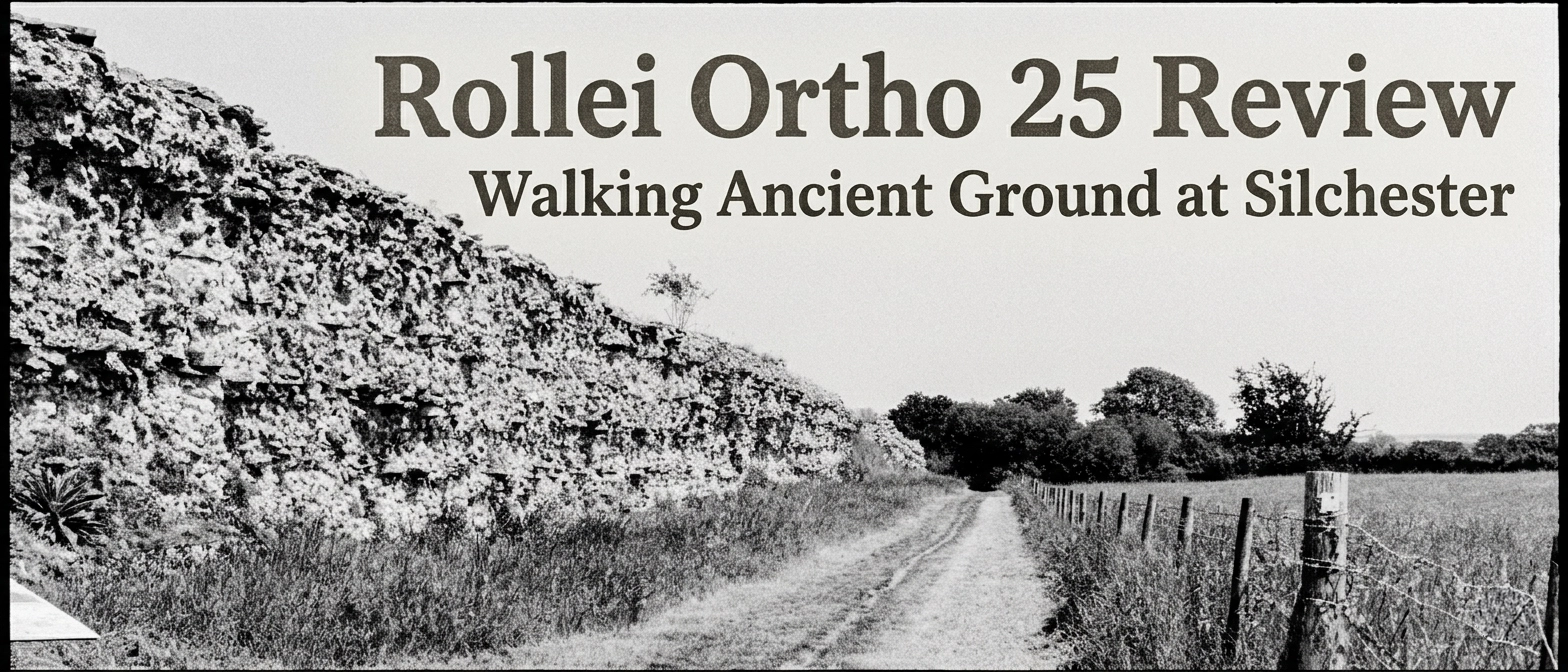
The old Roman walls at Silchester do not rise dramatically from the earth. There are no towering arches waiting beyond the trees, no broken columns catching evening light. Instead the place survives quietly — grass grows over stone, earth lifts gently where walls once stood, paths still follow lines laid down nearly two thousand years ago. The landscape remembers even when it says very little. It felt like the right place to carry a roll of Rollei Ortho 25 — a film as unhurried and precise as the ground it was asked to describe.
| Film at a Glance — Rollei Ortho 25 | |
|---|---|
| Film | Rollei Ortho 25 |
| ISO | 25 |
| Film Type | Orthochromatic black and white |
| Format | 35mm (also available in 120 and sheet) |
| Camera | Canon EOS 300V |
| Lens | Canon EF 28–70mm f/2.8 |
| Location | Silchester Roman Walls (Calleva Atrebatum), Hampshire |
| Developer | Rodinal 1:25 |
| Spectral Range | Approx. 380–610nm |
| Resolution | Up to 330 lines/mm |
| Film Base | Polyester |
What Is Rollei Ortho 25 — and Why Does It Matter?
Rollei Ortho 25 is an unusual film in the modern black and white landscape. Most photographers reach for panchromatic emulsions — films that respond across the full visible spectrum and behave in broadly predictable ways. Rollei Ortho 25 is different. It is orthochromatic, meaning its sensitivity is concentrated in the blue and green wavelengths and falls away sharply in the red. The world it records is not quite the world the eye sees — it is slightly older, quieter, closer in feeling to the archival and technical photography of an earlier era.
The film’s background sits closer to technical and repro photography than to the pictorial tradition. It was designed around applications requiring extraordinary resolving power, extremely fine grain, and clean, precise negatives. Up to 330 lines per millimetre is a specification that belongs more to the laboratory than the landscape — yet once you understand how that precision translates in the field, it begins to make a great deal of sense for certain kinds of work.
The orthochromatic character changes tonal relationships in ways that take some learning. Blue skies respond strongly and can render darker than expected. Greens hold well. Reds and warm tones shift — brick can reproduce deeper than anticipated, warm sandstone changes register, human skin takes on a cooler, more formal quality. For ancient landscapes built from flint, chalk, and weathered earth, these shifts work in the photographer’s favour. For a broader introduction to the range of black and white films available, see my guide to types of 35mm black and white films.
Rollei Ortho 25 does not interpret or exaggerate. It simply records what is there, then steps back and allows the structure of the scene to speak for itself. Around ancient ground, that restraint feels entirely appropriate.
Silchester Roman Walls — Calleva Atrebatum, Hampshire
Silchester has always felt less like photographing ruins and more like photographing memory. The Roman town of Calleva Atrebatum survives not in standing monuments but in suggestion — a raised bank, a slight curve in the field boundary, grass standing a little taller where stone still lies beneath the soil. The town remains under your feet rather than before your eyes, and there is something genuinely affecting about walking ground that has been walked continuously for two thousand years without quite understanding why you feel it so clearly.
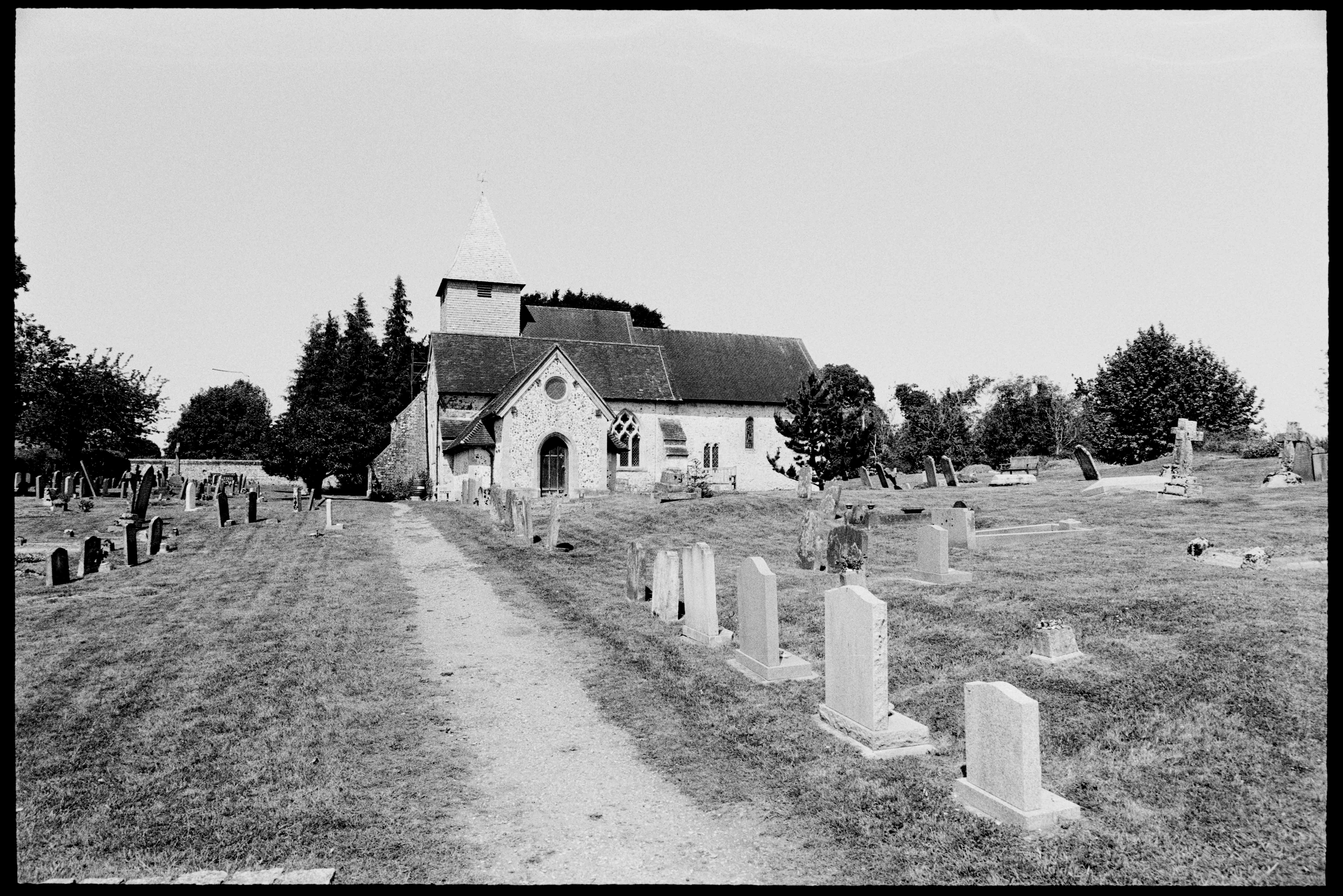
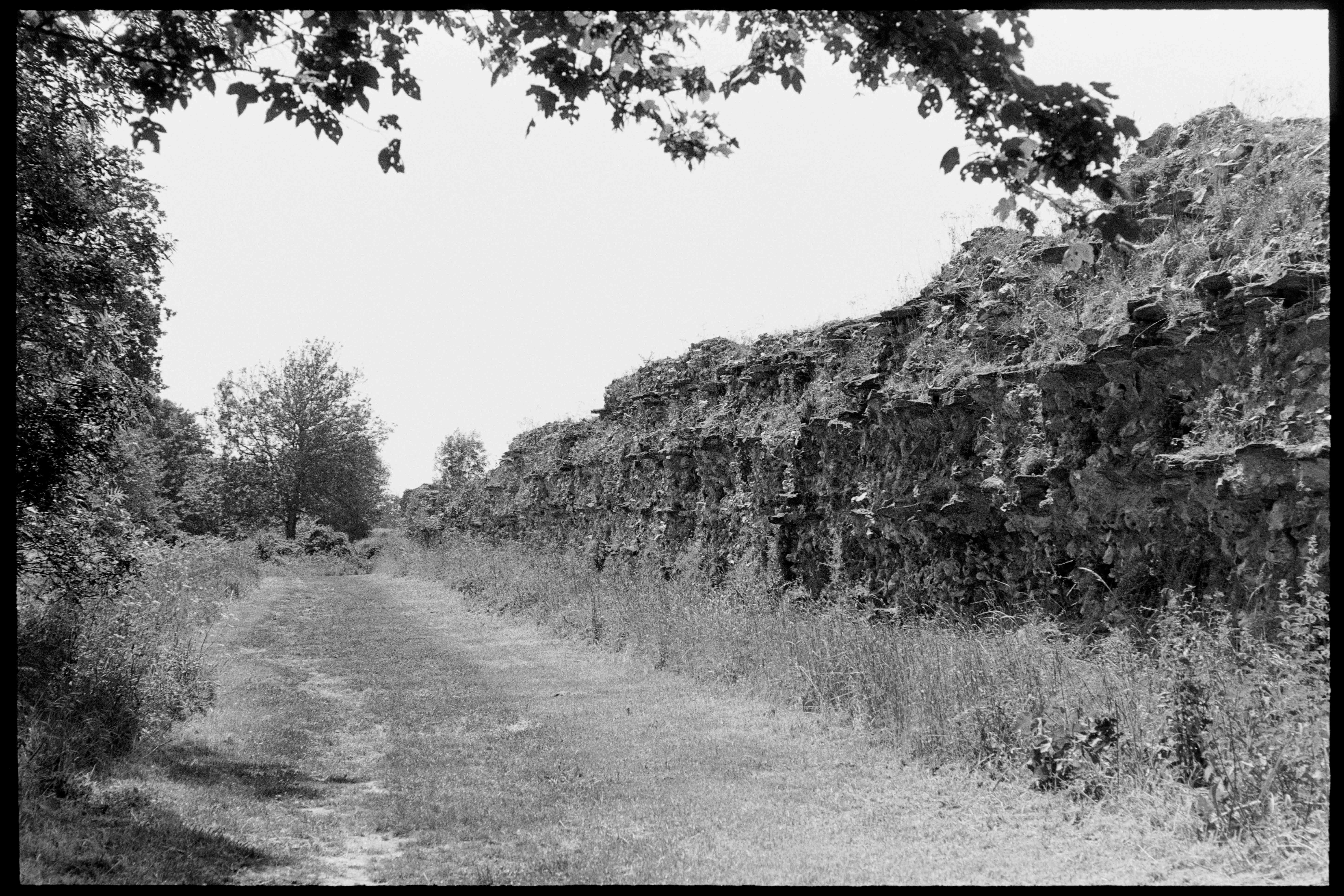
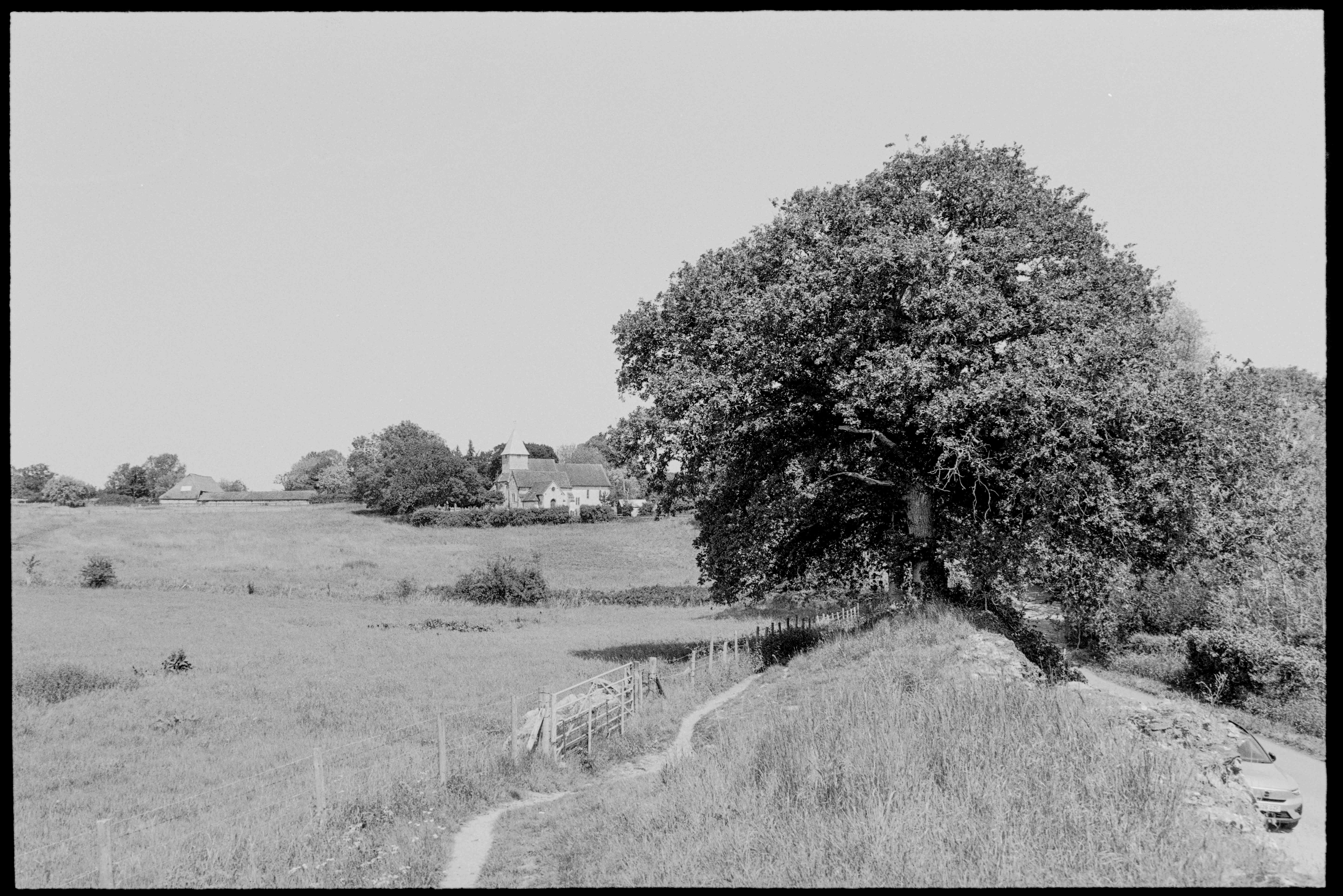
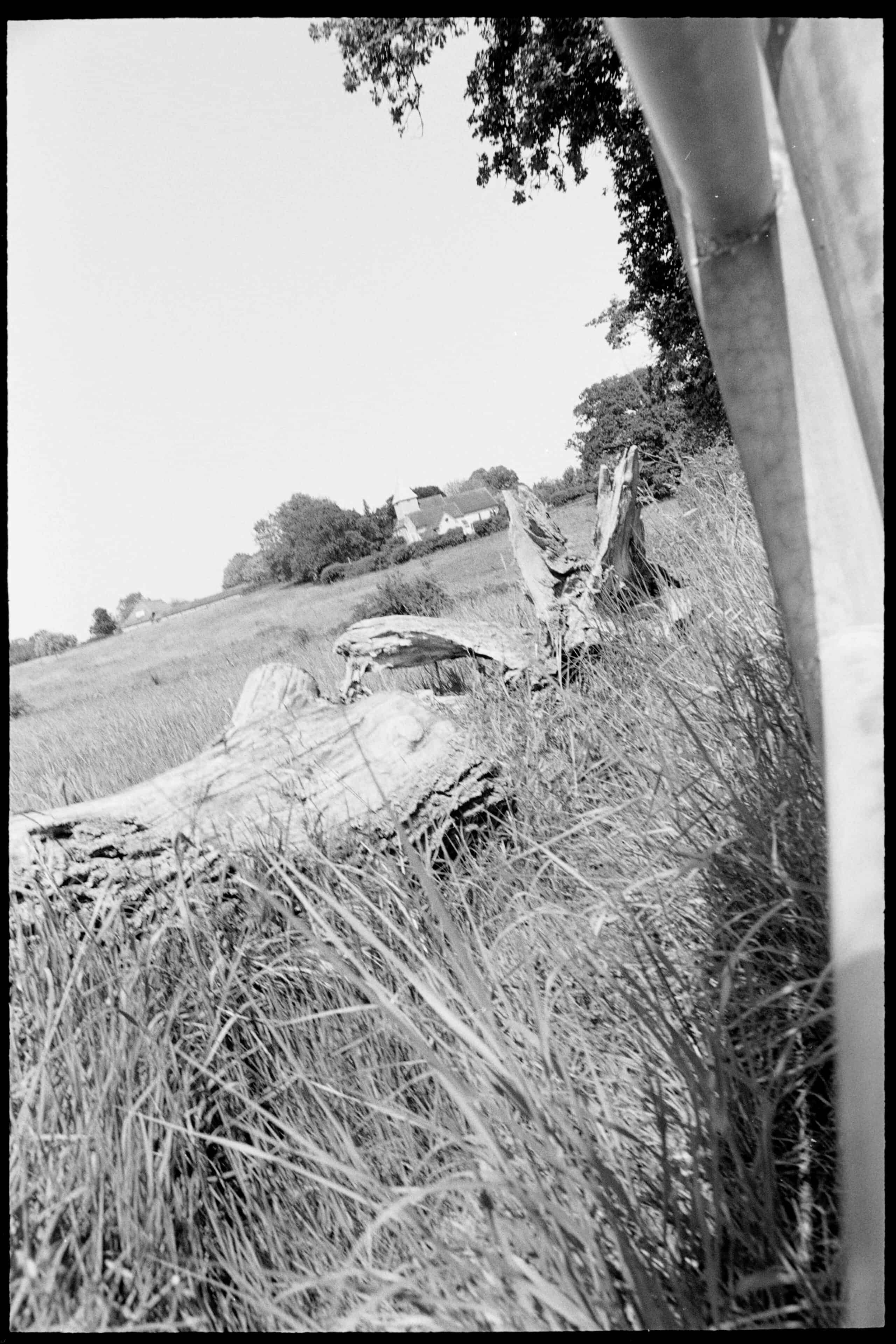
The walls themselves — nearly two miles of Roman flint and tile, the most complete circuit of Roman town walls in Britain — still stand to several metres in places, rising from the Hampshire farmland with a quiet authority that no amount of familiarity quite diminishes. St Mary’s Church, Norman and medieval, occupies the centre of the old town plan, accessible across open fields, surrounded by no other buildings. On a clear day with the light dropping from the west, it is one of the most photographically compelling places in southern England.
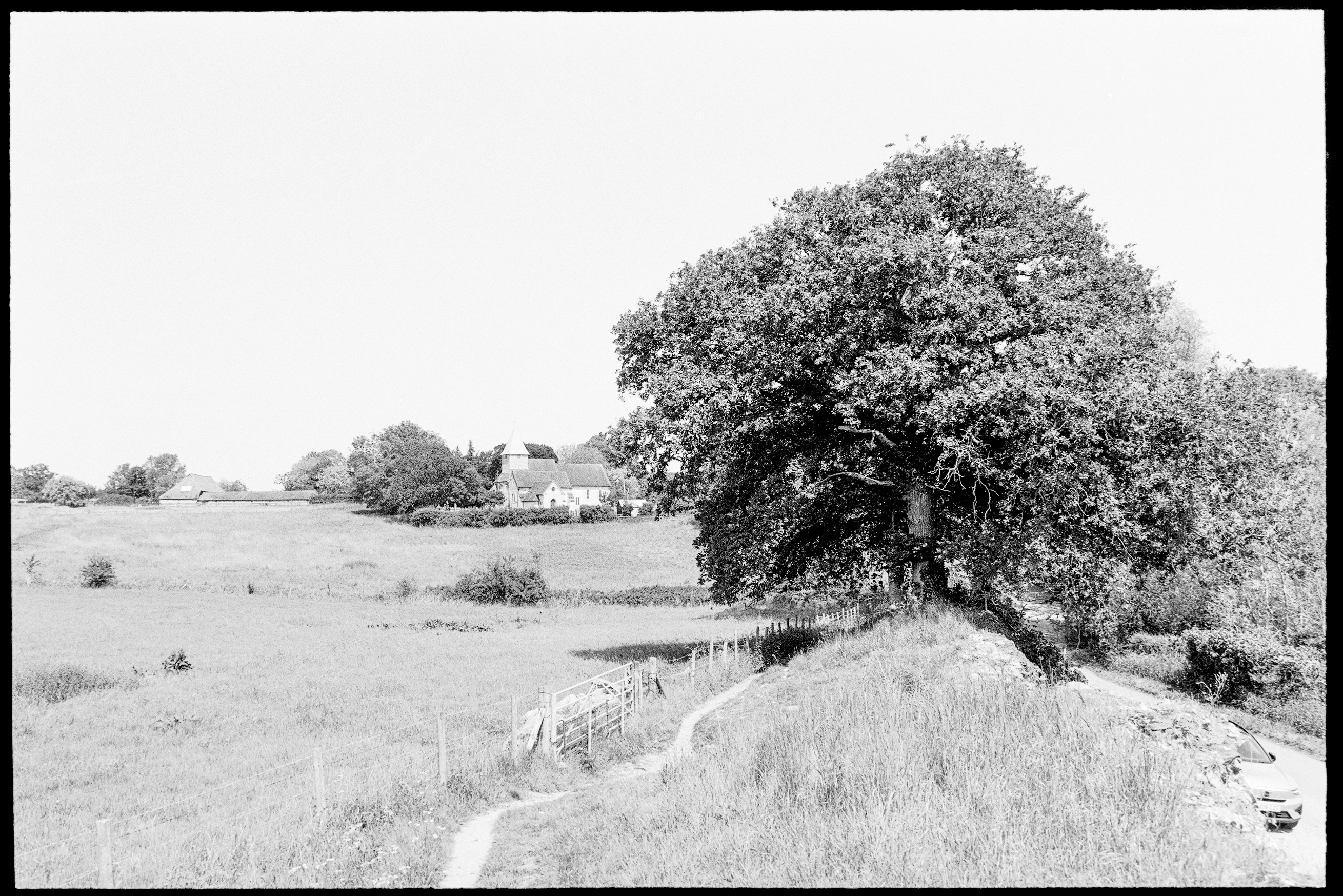
Silchester appears repeatedly in my work. It is a place I return to rather than visit — each roll of film a new conversation with the same landscape. Earlier visits have shaped projects including Walking Ancient Ruins with Film Photography and the broader ancient landscape photography work that runs through much of what I do. Rollei Ortho 25 simply seemed to join that ongoing conversation from a new angle.
Understanding Orthochromatic vs Panchromatic Film
The distinction matters more than it might initially appear. Most black and white films today are panchromatic — they respond across the full visible spectrum, from blue through to red, and translate the world in broadly the way the eye expects. Orthochromatic film responds strongly to blue and green wavelengths but has very limited sensitivity to red. This changes how colours are translated into tones in ways that are subtle but accumulate significantly across a full roll.
| Feature | Rollei Ortho 25 | Ilford FP4 Plus | Ilford HP5 Plus |
|---|---|---|---|
| Type | Orthochromatic | Panchromatic | Panchromatic |
| ISO | 25 | 125 | 400 |
| Grain | Extremely fine | Fine | Moderate |
| Speed | Slow | Medium | Fast |
| Ancient Landscapes | Excellent | Excellent | Good |
| Red sensitivity | Very limited | Full | Full |
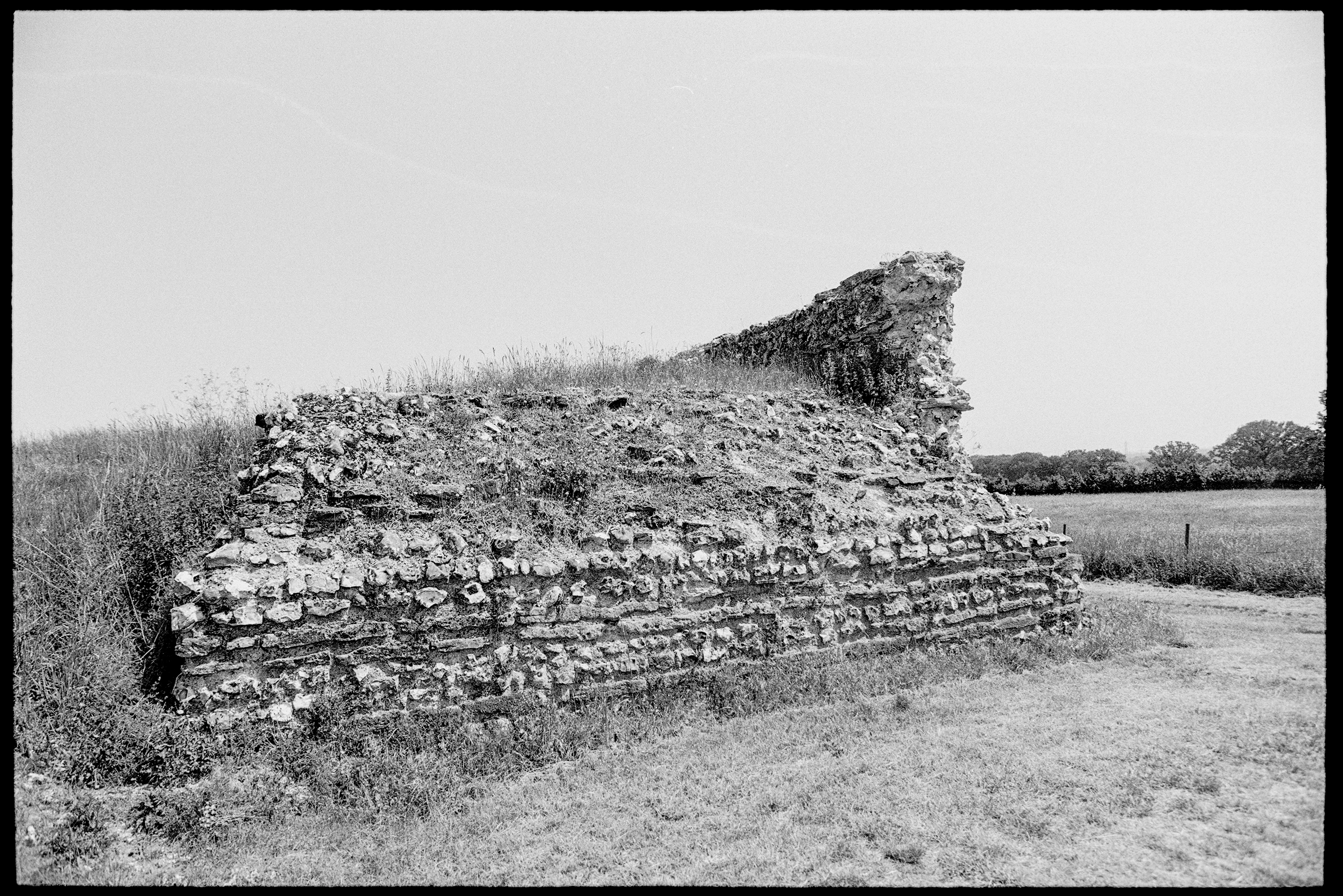
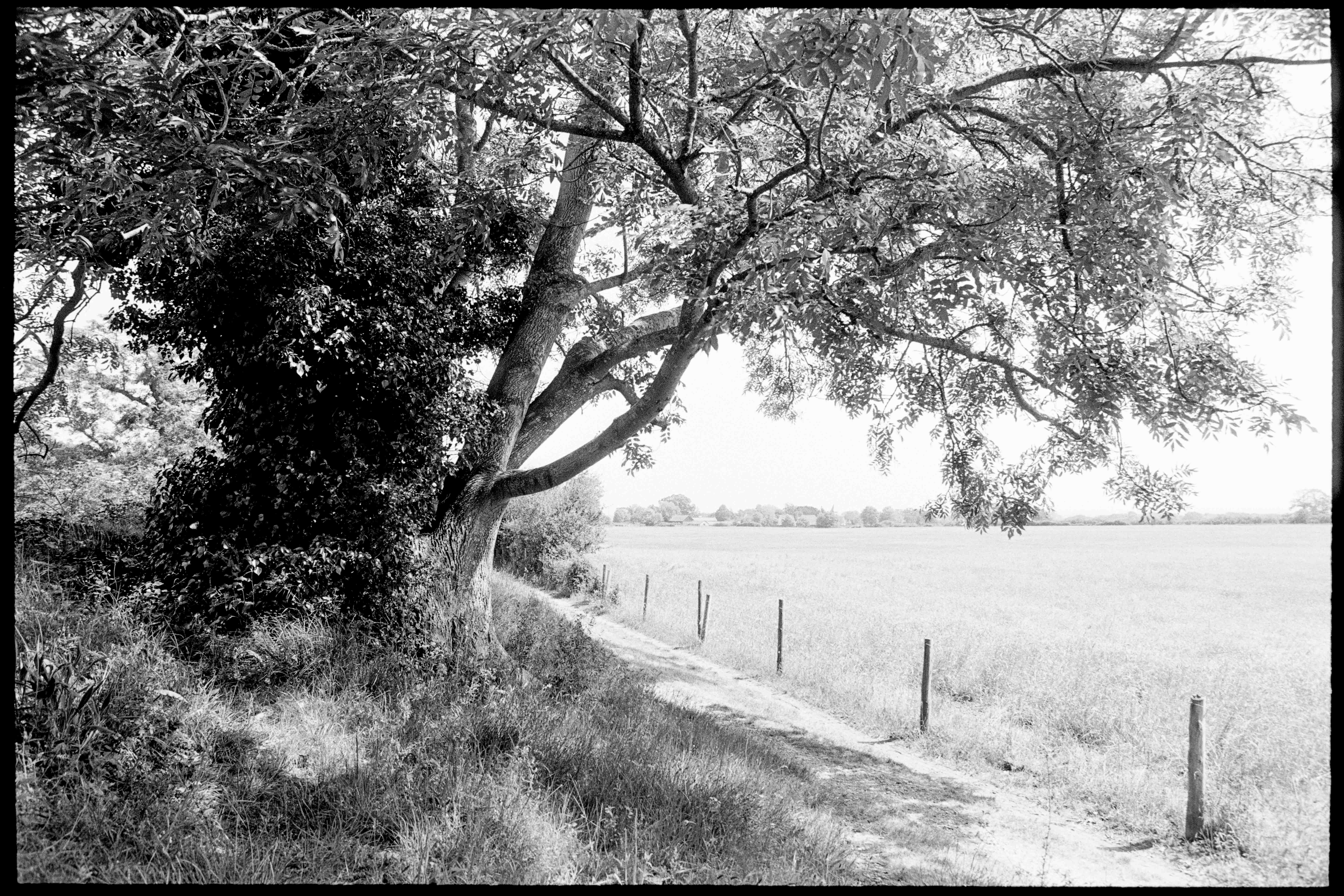
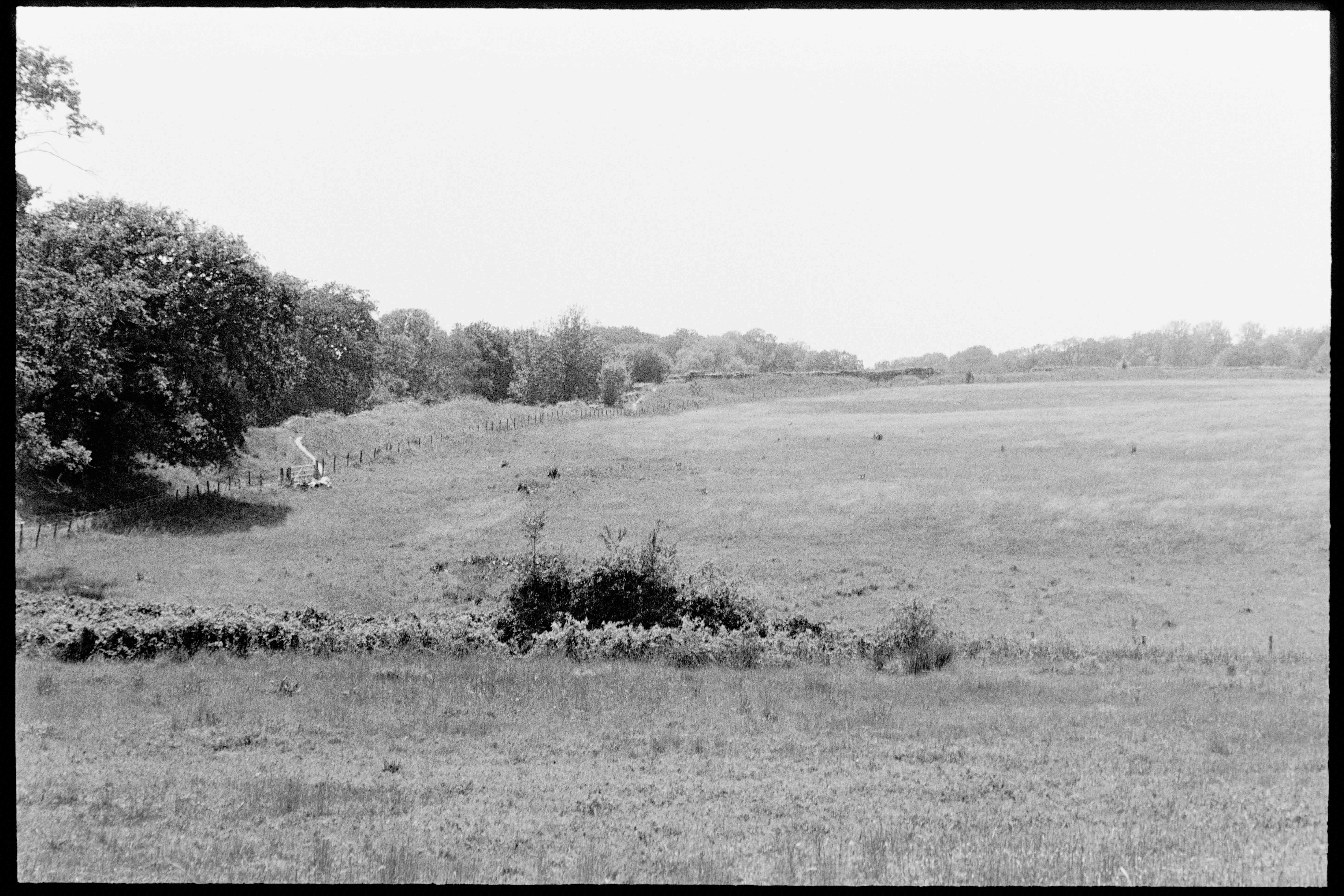
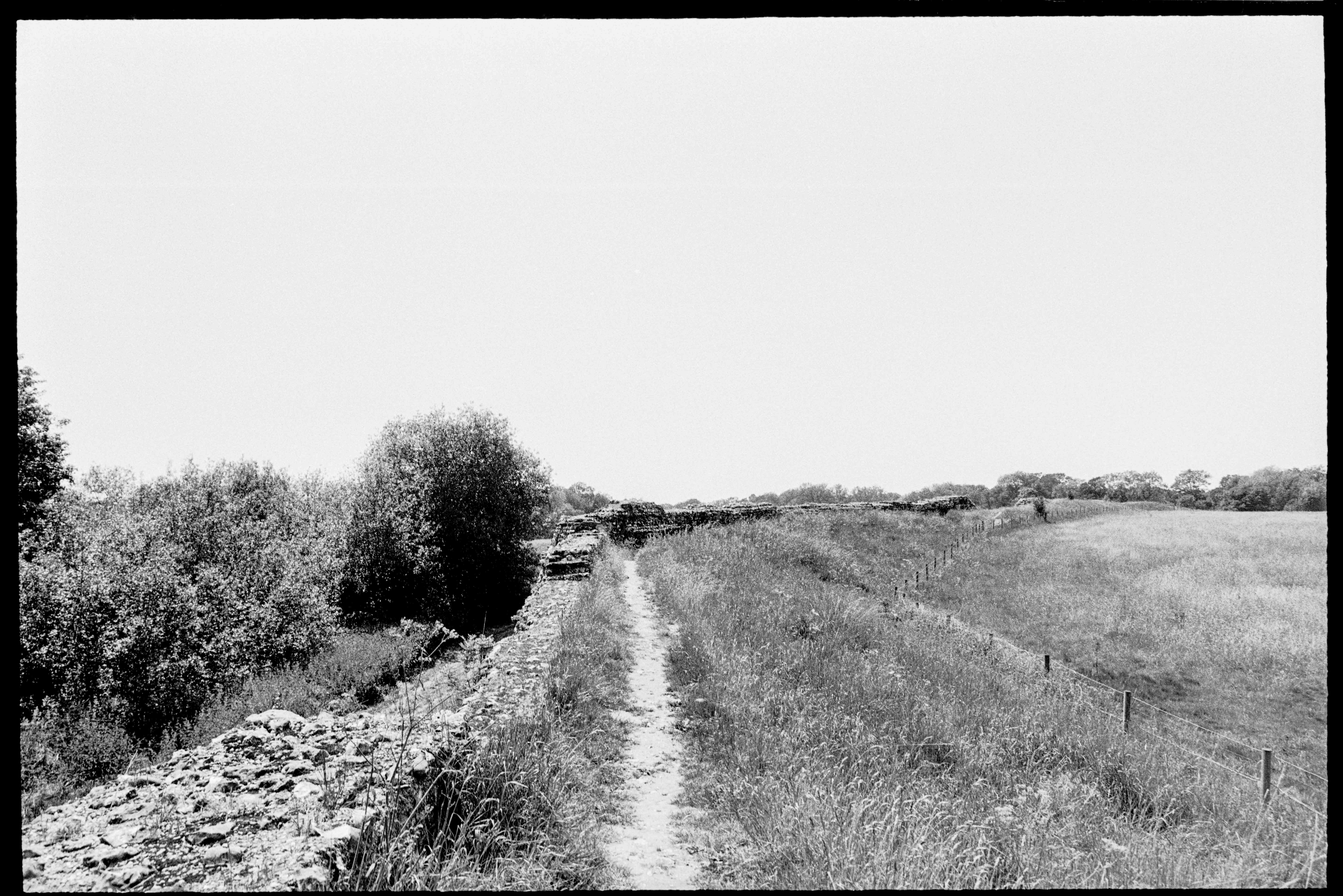
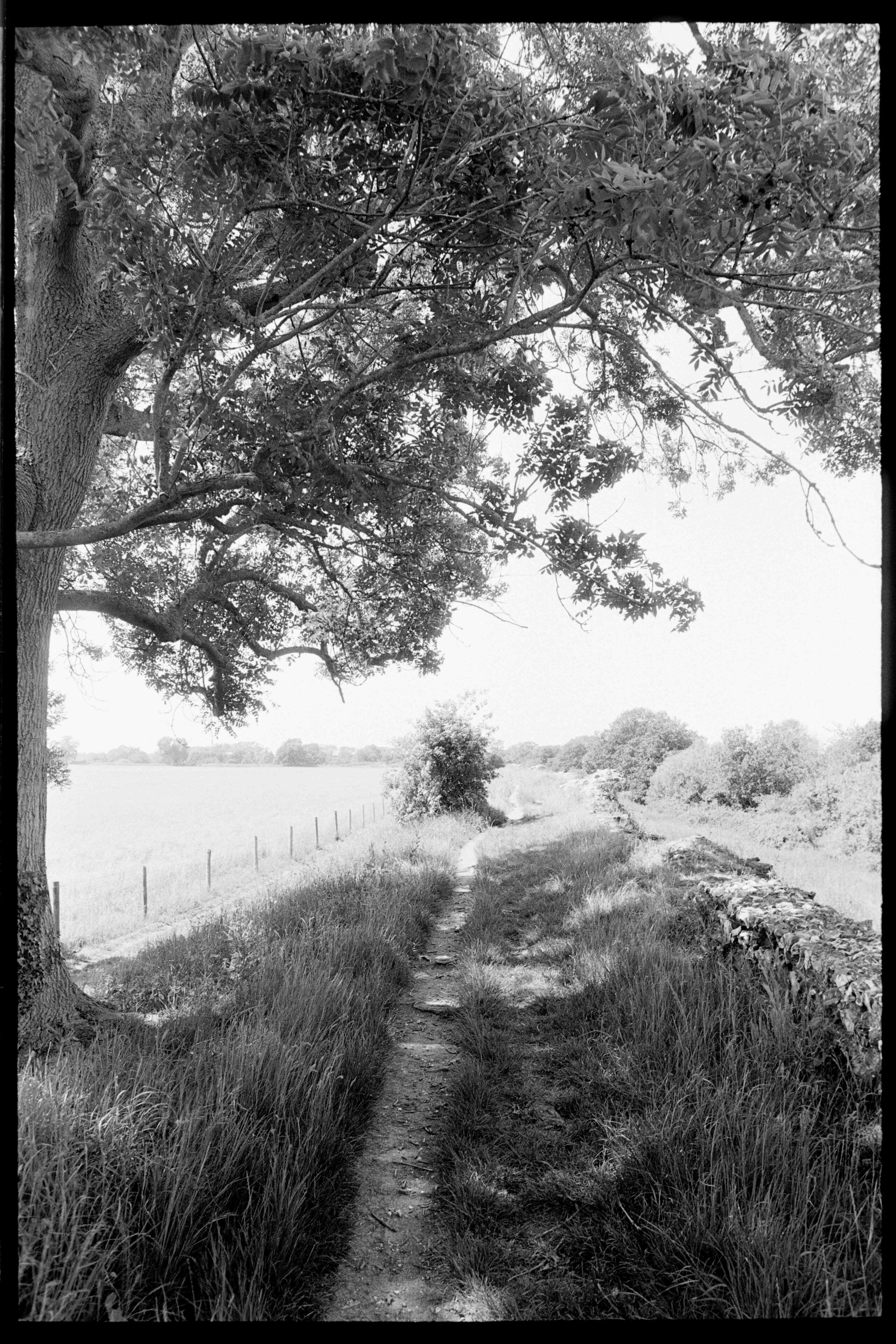
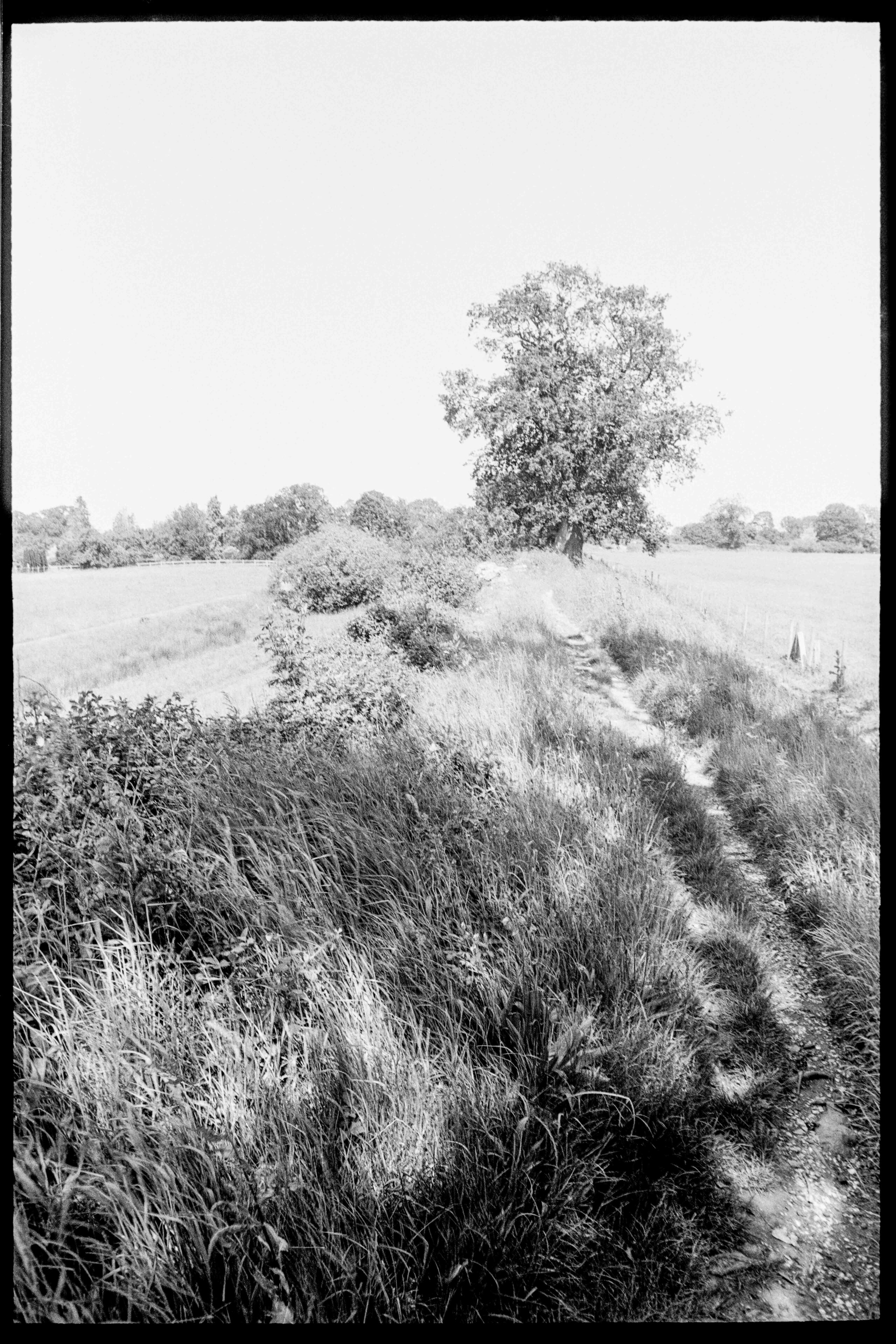
Around Silchester this orthochromatic character became particularly noticeable. The earthworks felt cleaner. The lines in the landscape carried more presence. Subtle changes in ground texture — the difference between compacted path and open turf, between flint rubble and chalk bedrock — appeared more distinct. The sky, responding strongly to the blue channel, sat back slightly from the land rather than competing with it. The result felt less like a modern photograph and more like something from the archive of a careful field surveyor — precise, considered, slightly removed from everyday seeing.
Canon EOS 300V — Unobtrusive and Dependable
The Canon EOS 300V is a camera that disappears once you start working with it. Lightweight, unobtrusive, easy to carry over longer distances without drawing attention to itself — it is the kind of camera that earns your trust gradually and then simply gets on with the job. Paired with the Canon EF 28–70mm f/2.8, it gave me a versatile range for moving through the Silchester landscape without changing lenses, covering both the wider establishing shots at the walls and the closer, more intimate framings around the church and fieldpaths.
For a film as slow as Ortho 25, the 300V’s metering is reliable enough in open conditions but benefits from a handheld spot meter or some caution under broken cloud. I shot predominantly in bright sunlight, which kept shutter speeds manageable handheld — but as the afternoon wore on and cloud began to break the light, I was conscious of the need for steadiness that ISO 25 quietly demands. For notes on a significant reliability issue with this camera that every owner should know about, see my post on Canon 300V shutter failure.
What It Feels Like to Shoot at ISO 25
ISO 25 changes the way you move through a place. It slows everything down in a way that becomes noticeable almost immediately — not as a frustration but as a discipline, a quiet insistence that you pay attention before you press the shutter.
In bright open conditions the film remains manageable handheld. But as soon as the light shifts — when clouds soften the sun or trees begin to break the frame — things become more deliberate. Shutter speeds start to matter in a way they don’t at ISO 400. You become aware of your own steadiness, of small movements in the wind, of how easily a moment can slip past if you’re not quite ready for it.
| Conditions | Experience with Ortho 25 |
|---|---|
| Bright sun, open ground | Easy handheld — comfortable working |
| Broken cloud | Manageable — requires more care |
| Woodland edge | Slower speeds — watch for camera shake |
| Evening light | Tripod becomes helpful |
| Heavy shade | Careful metering essential — tripod needed |
Silchester suited that rhythm perfectly. Nothing there is hurried. The walls have already waited nearly two thousand years, and another few seconds of careful exposure feels entirely in keeping with the place. You begin to work with patience rather than against it — and that shift in approach, once made, changes what you see. You start noticing textures that would otherwise pass unremarked: stone fragments caught in afternoon light, flattened grass where a path has been walked for centuries, the movement of cloud across open ground that carries all the weight of time and almost none of the drama.
There is no rush in this film, and eventually you stop expecting there to be. The walls have already waited nearly two thousand years. Another few seconds of careful exposure feels entirely in keeping.
What the Film Gave Back
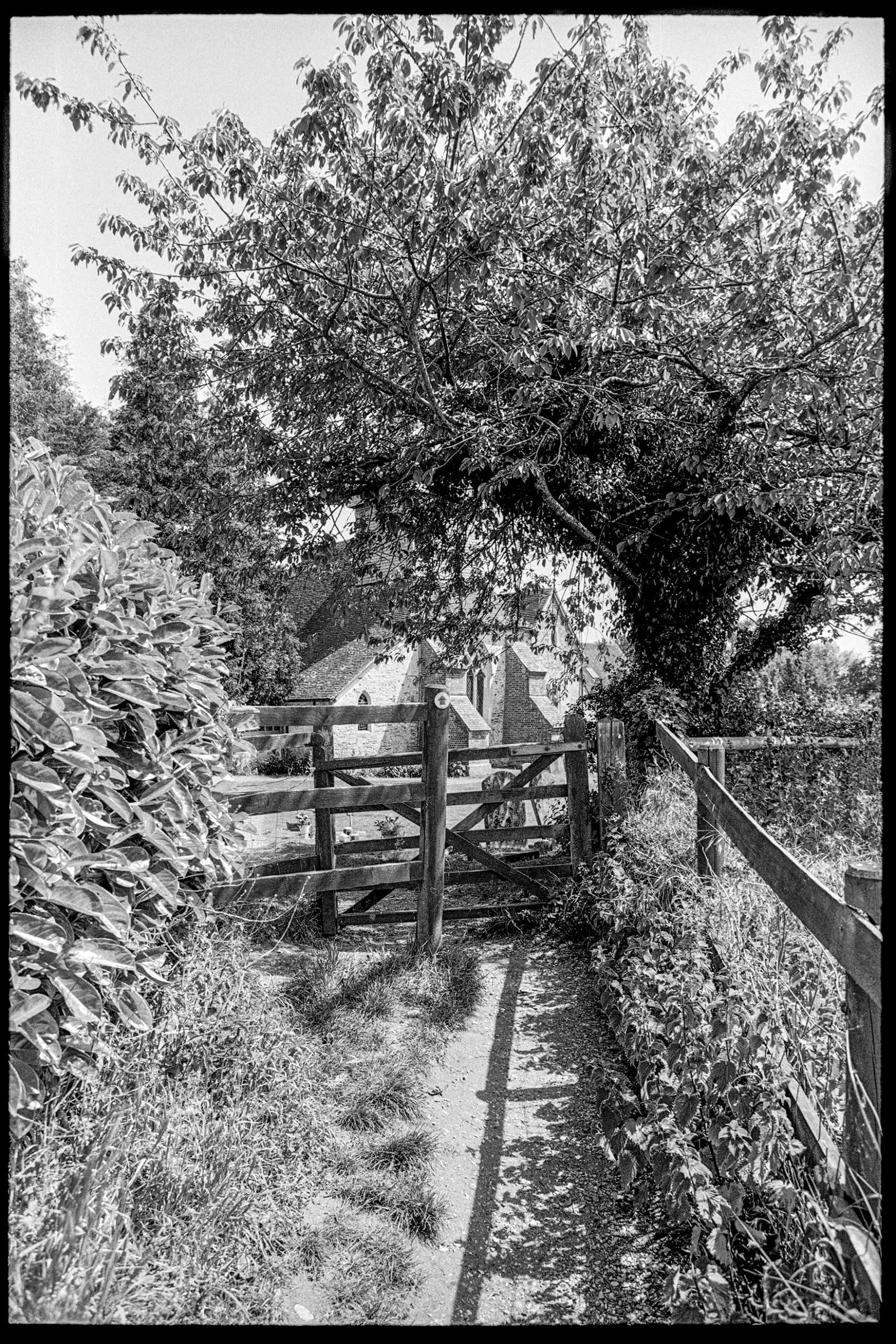
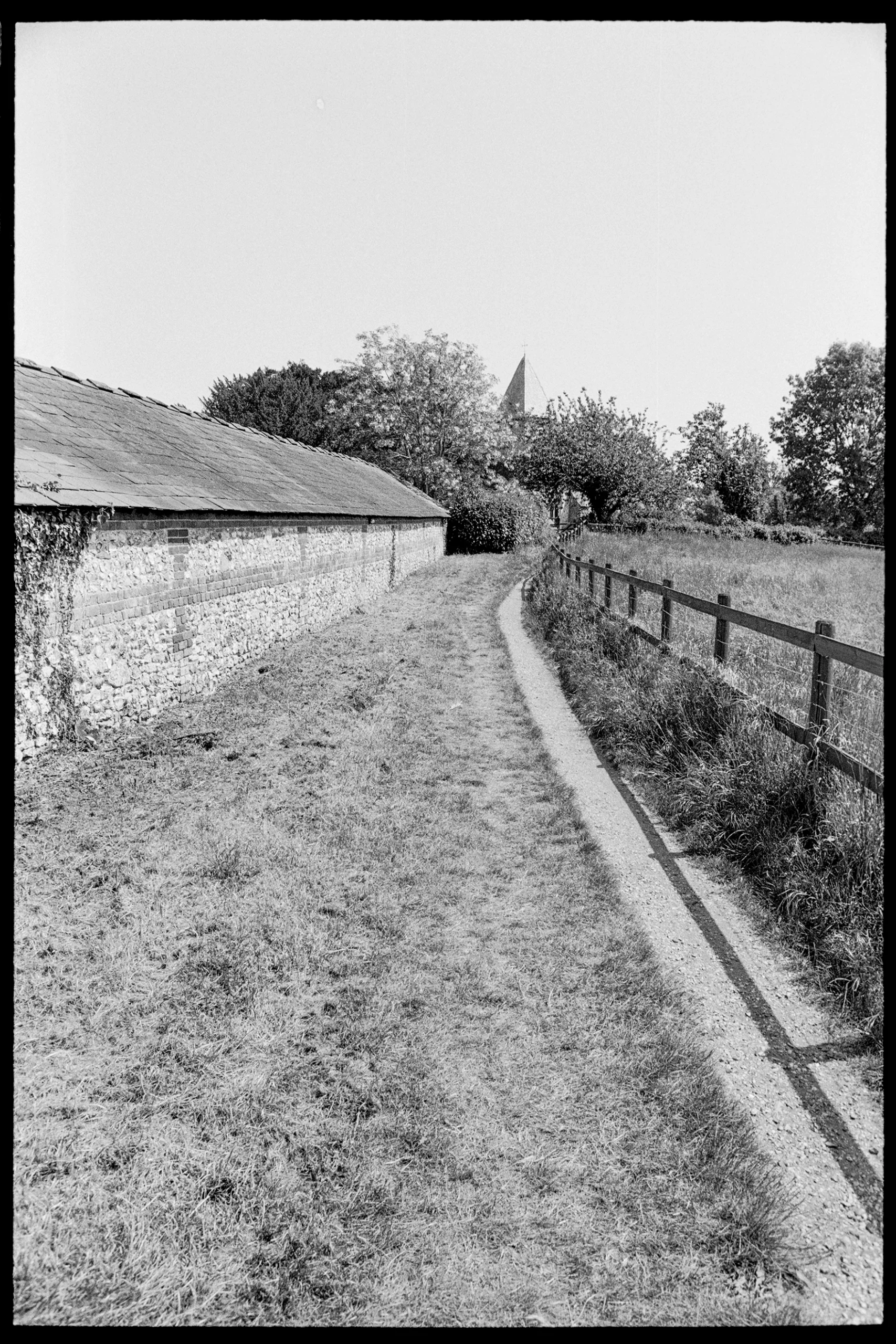
What came back from the roll felt less like a set of photographs and more like a series of careful notes made while moving through the landscape. Small observations. Quiet acknowledgements that something has remained here longer than memory can comfortably hold.
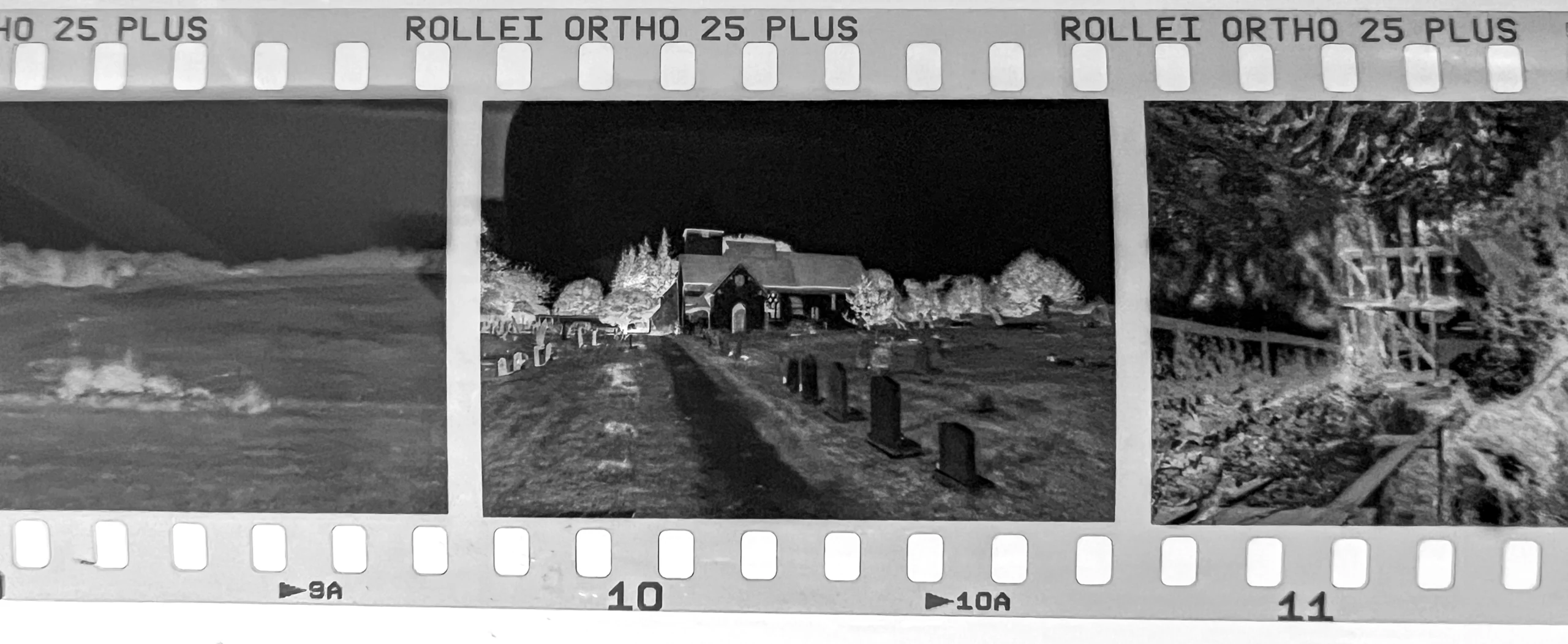
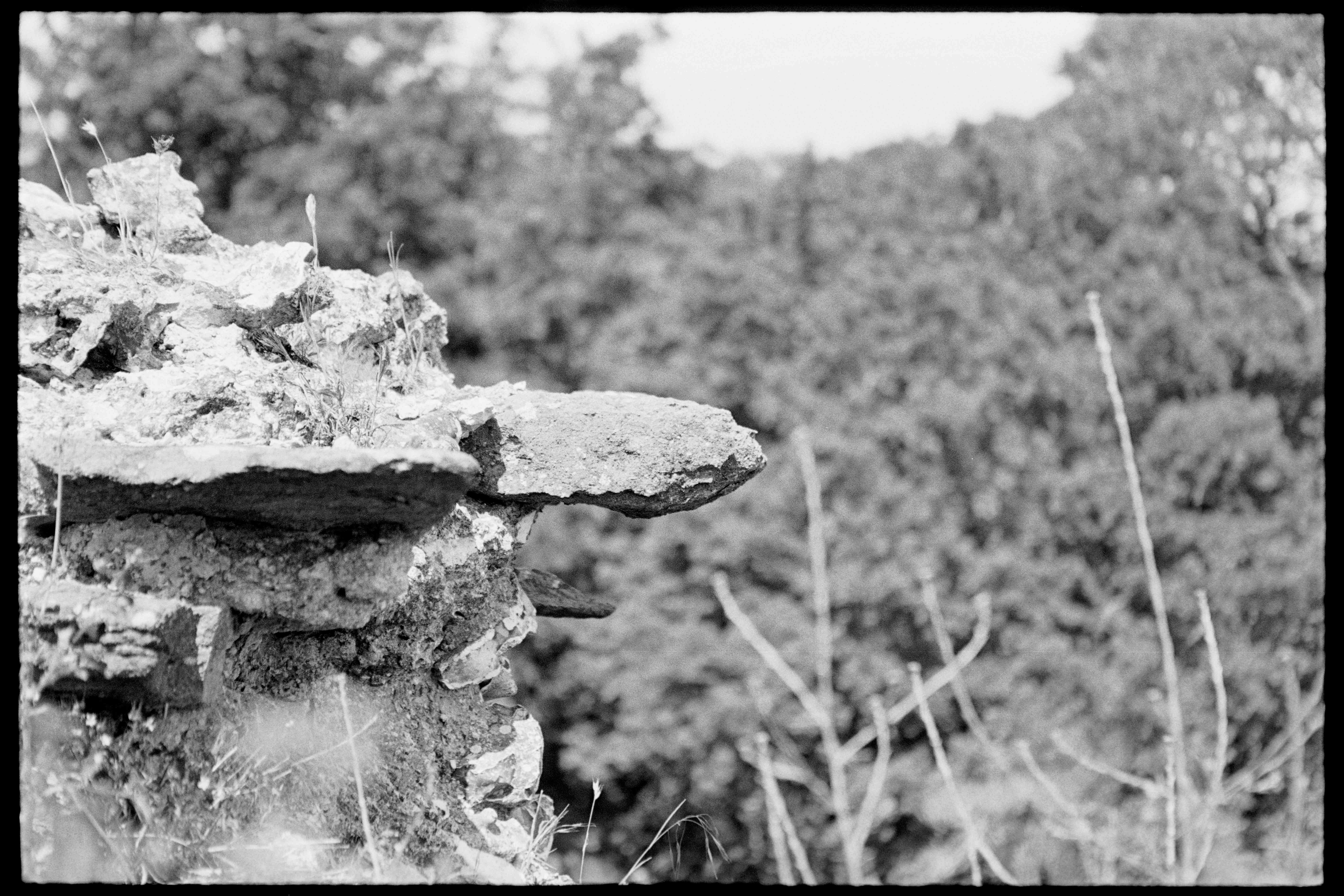
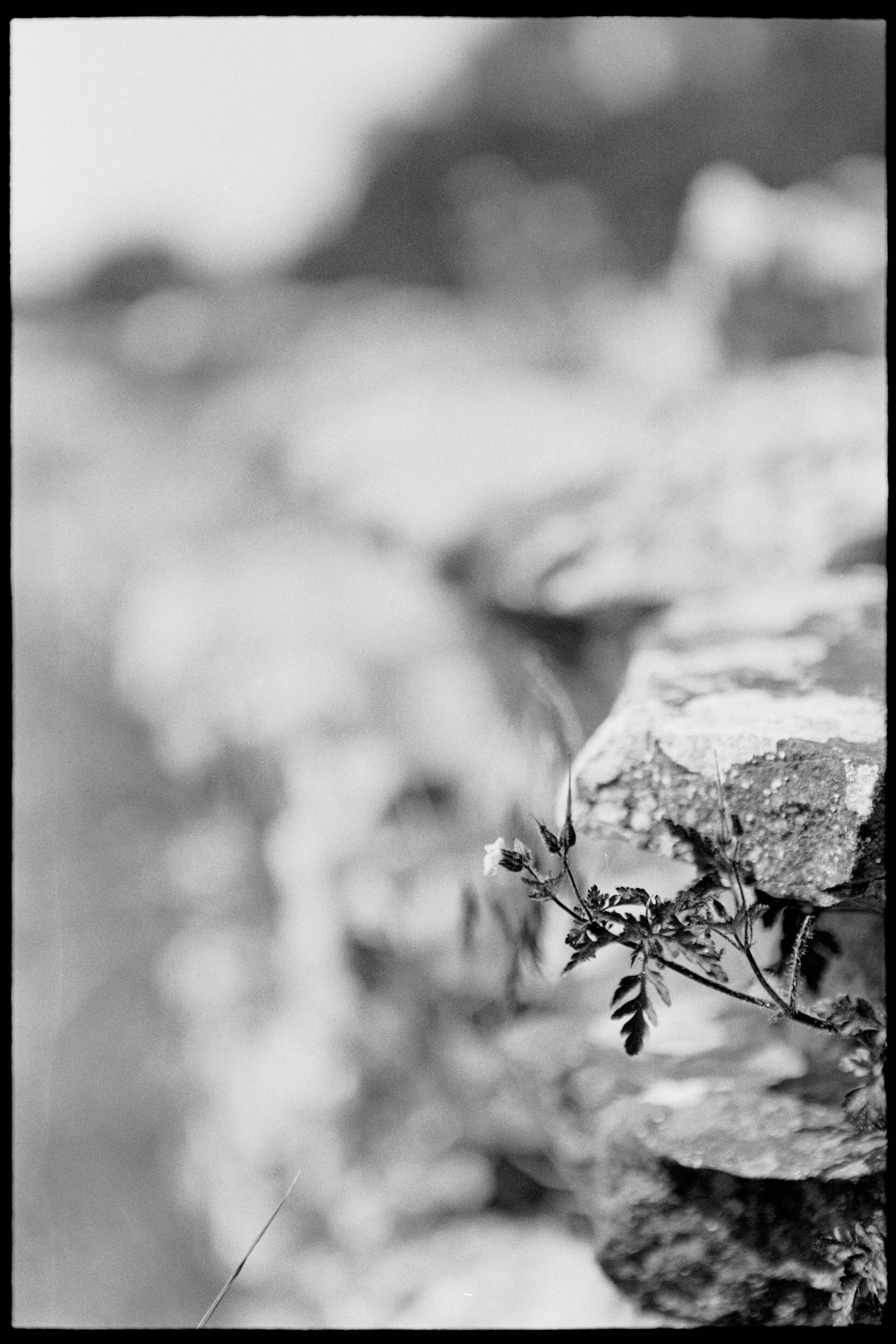
Scanning this roll was perhaps the most surprising part of the entire process. What first stands out is the sense of detail — not in an aggressive or clinical way, but in how much of the landscape seems to carry through the negative with ease. Grain is present but so fine it almost disappears once scanned at a reasonable resolution. What remains is clarity: grass keeps its structure without becoming brittle, stone edges stay defined but never harsh, subtle transitions in earth and weathered ground remain readable in a way that coarser films simply cannot manage.
| Image Quality | Result |
|---|---|
| Grain | Minimal — almost disappears at normal scanning resolution |
| Sharpness | Extremely high — architectural in its precision |
| Scan Detail | Excellent — holds more than expected from 35mm |
| Enlargement Potential | Strong — behaves closer to medium format |
| Texture Rendering | Outstanding — grass, stone and earth superbly differentiated |
Rodinal Development — 1:25 at the Tank
Part of the experience of film doesn’t end when the shutter closes. In many ways, that is where it begins to shift into something quieter. There is a rhythm to it — mixing chemistry, preparing tanks, loading reels in dim light, and then the slow uncertainty of waiting. Rollei Ortho 25 suits that slower rhythm particularly well. It is consistent with the way it asks to be photographed in the field: deliberate, careful, unhurried.
This roll was developed in Rodinal at 1:25 dilution — my developer of choice across all my black and white work. What came back from the tank was immediately striking: clean negatives, strong separation, and a clarity that feels almost architectural in its precision. There is a sense with this film that it holds detail very honestly, without exaggeration or softness getting in the way. It simply records what is there, then steps back. For those beginning their own journey into home processing, my simple film development guide gives a practical starting point.
| Developer | Dilution | Approx Time |
|---|---|---|
| Rodinal | 1:25 | Around 4 mins at 20°C |
| Rodinal | 1:50 | Around 6 mins at 20°C |
Always test and adjust development times for your own chemistry, temperature, and agitation pattern.
Rollei Ortho 25 at Silchester — The Full Set
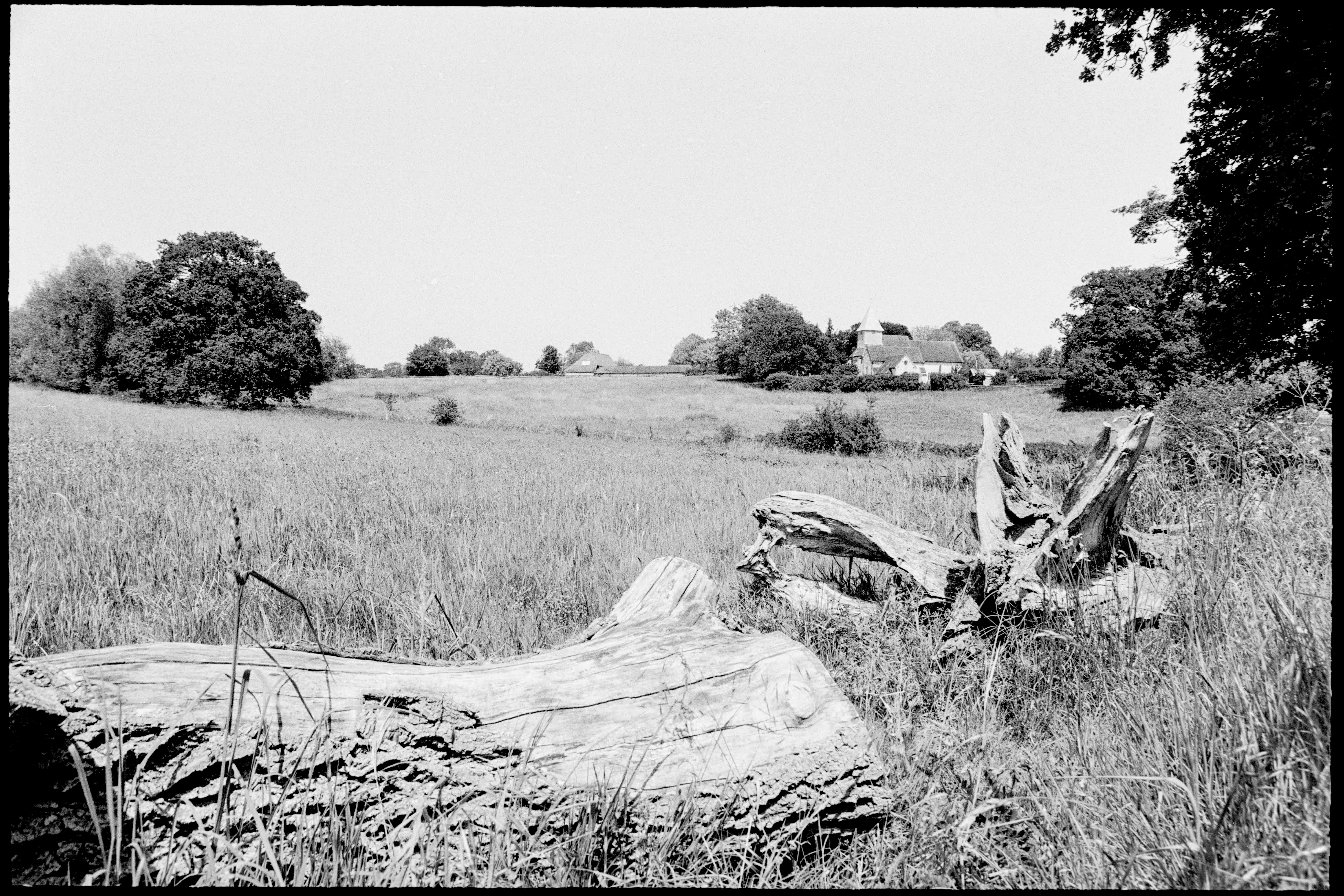
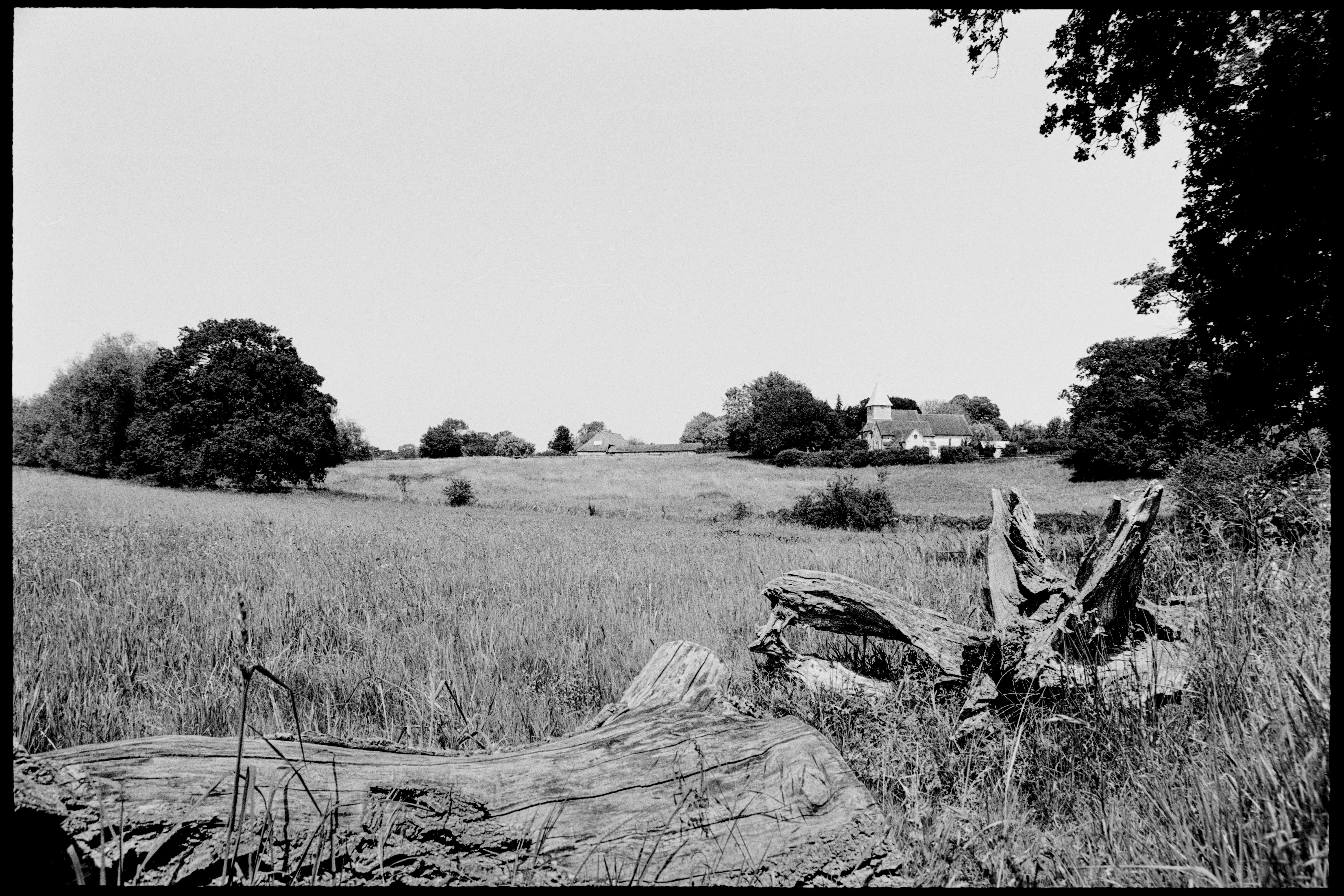
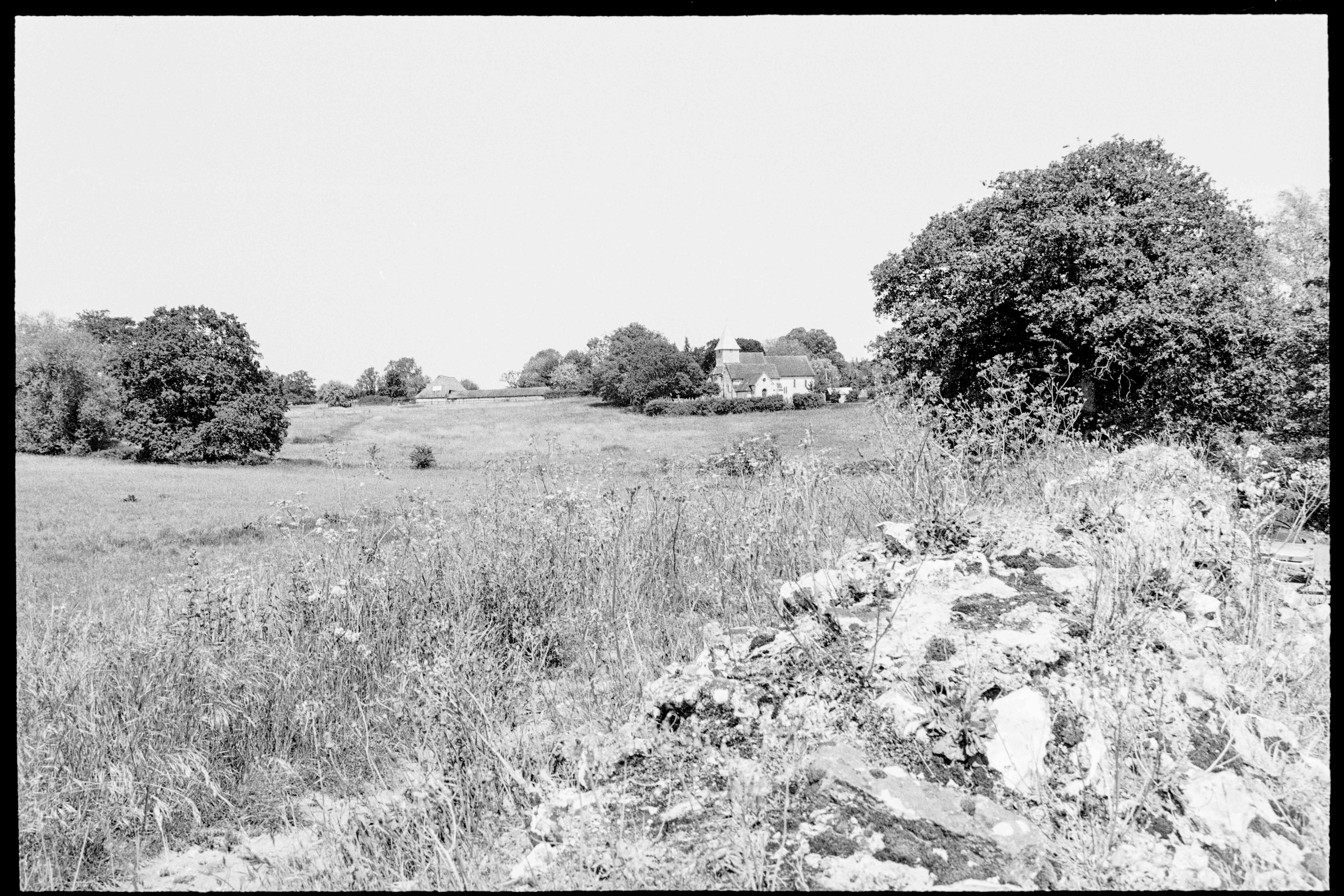
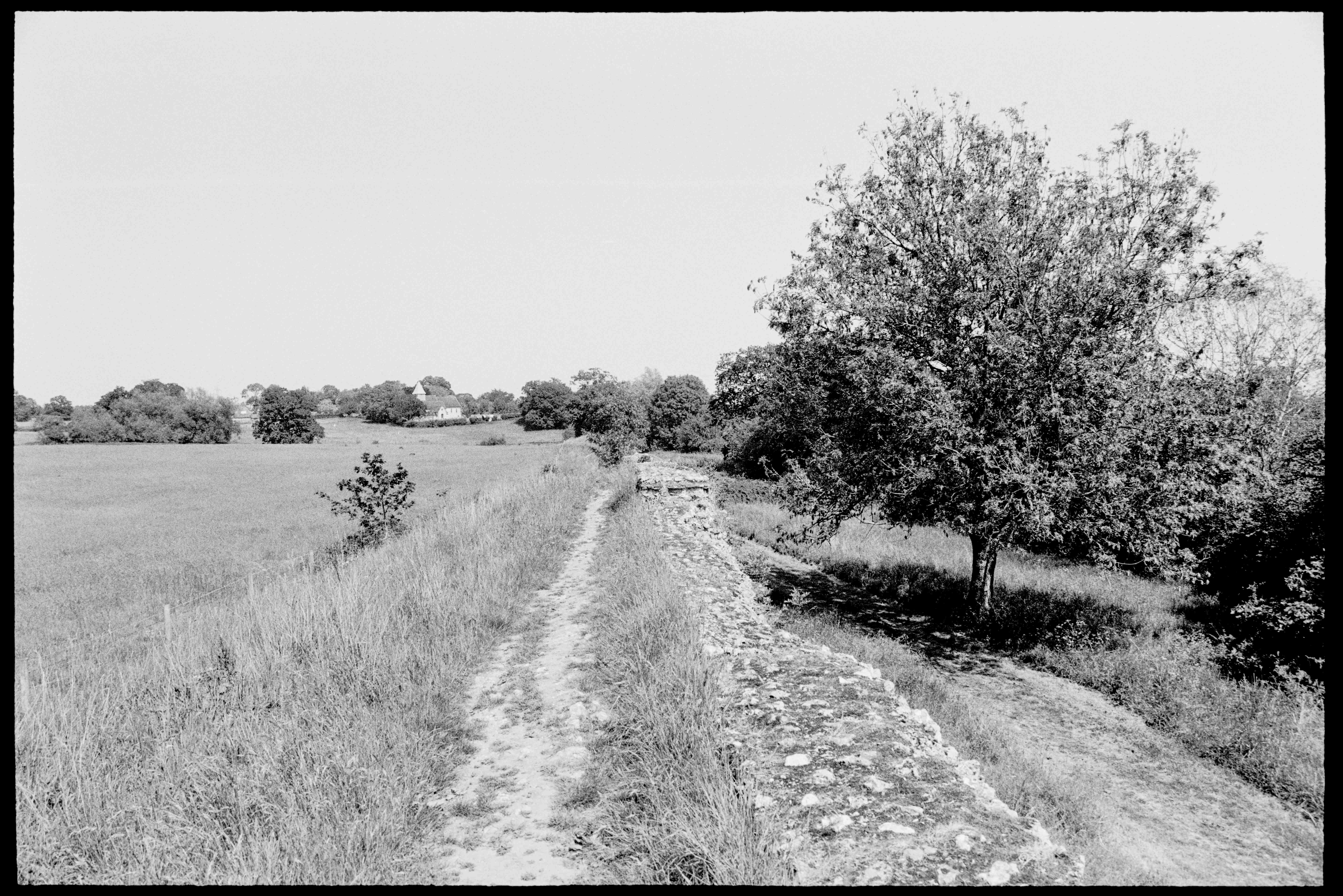
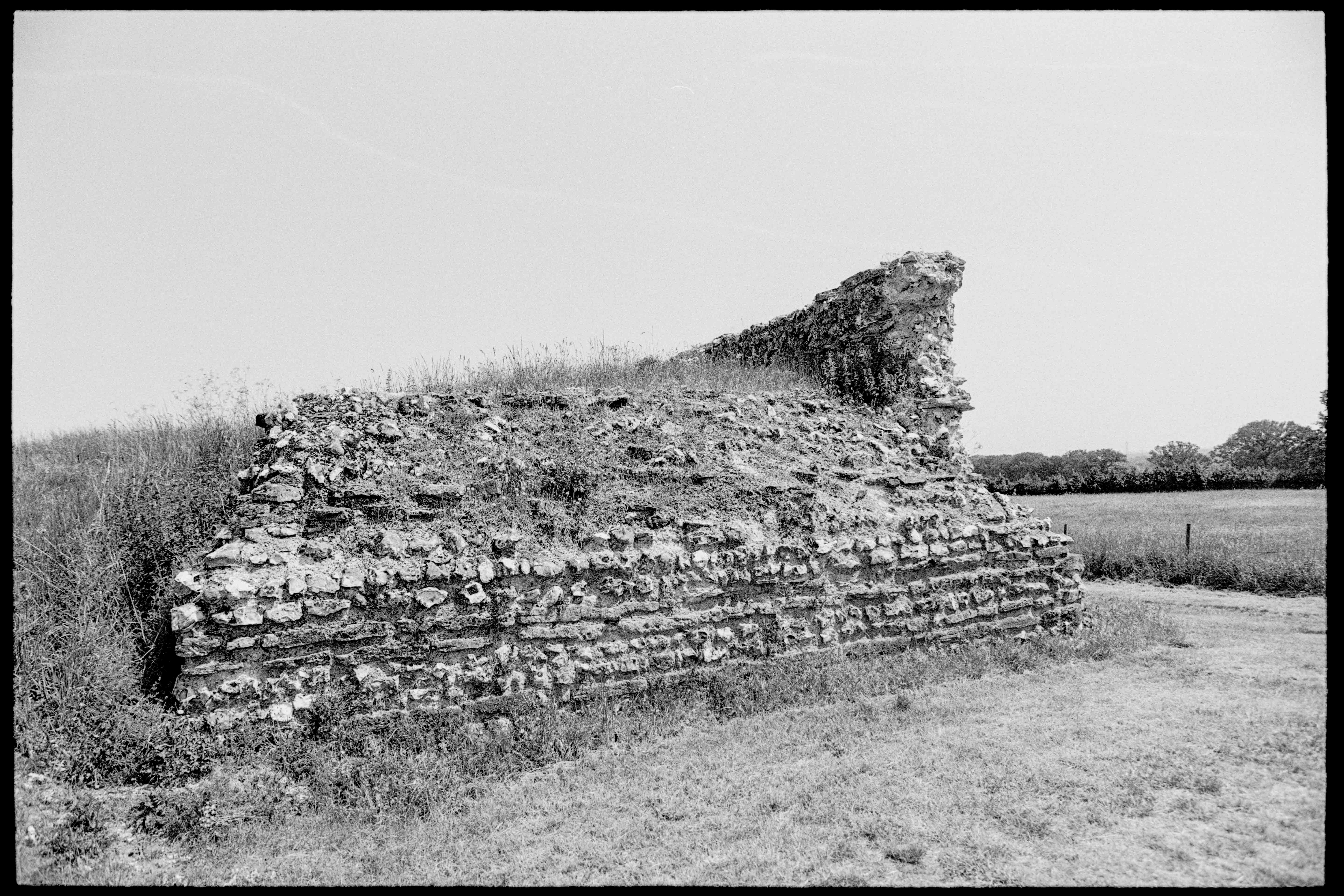
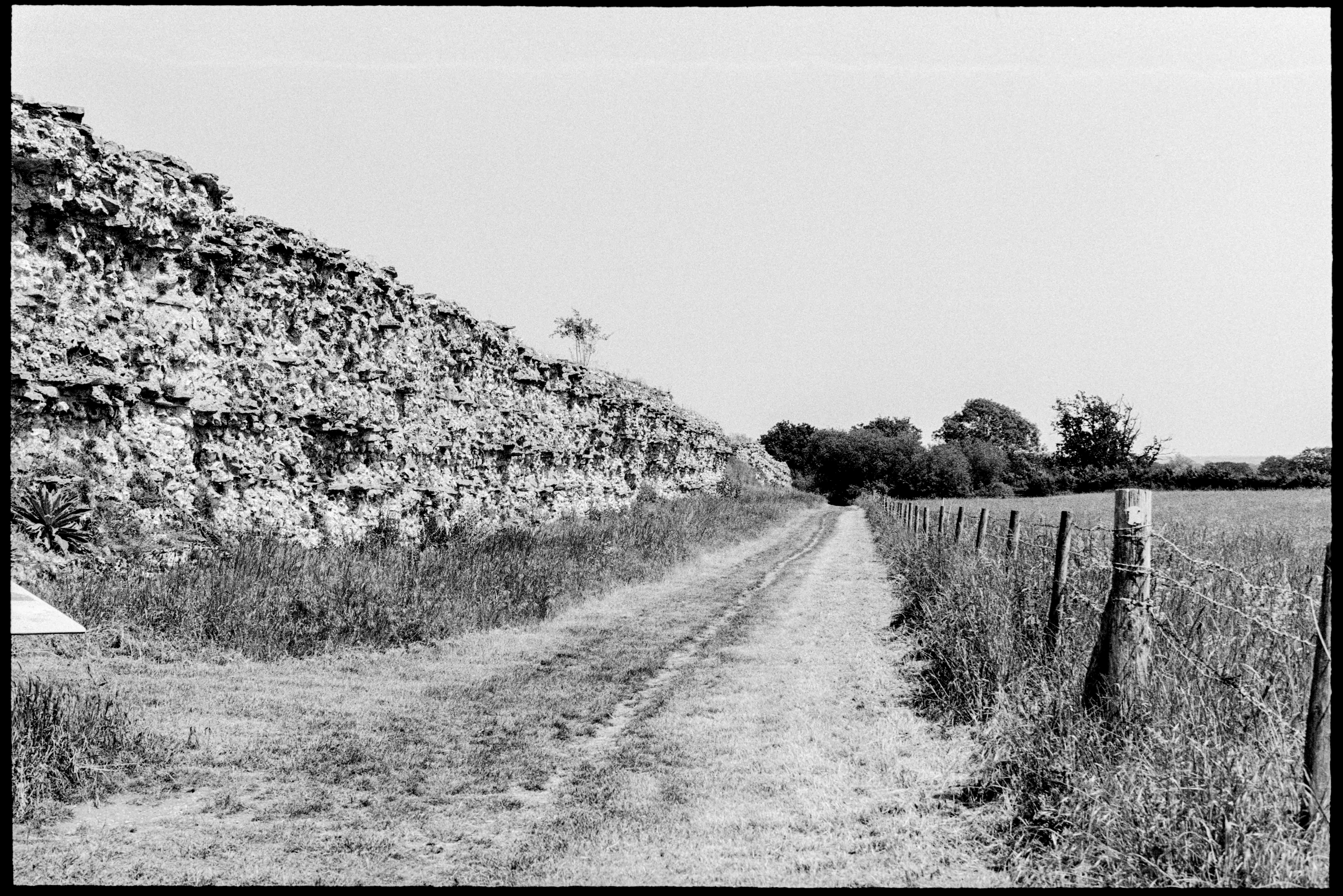
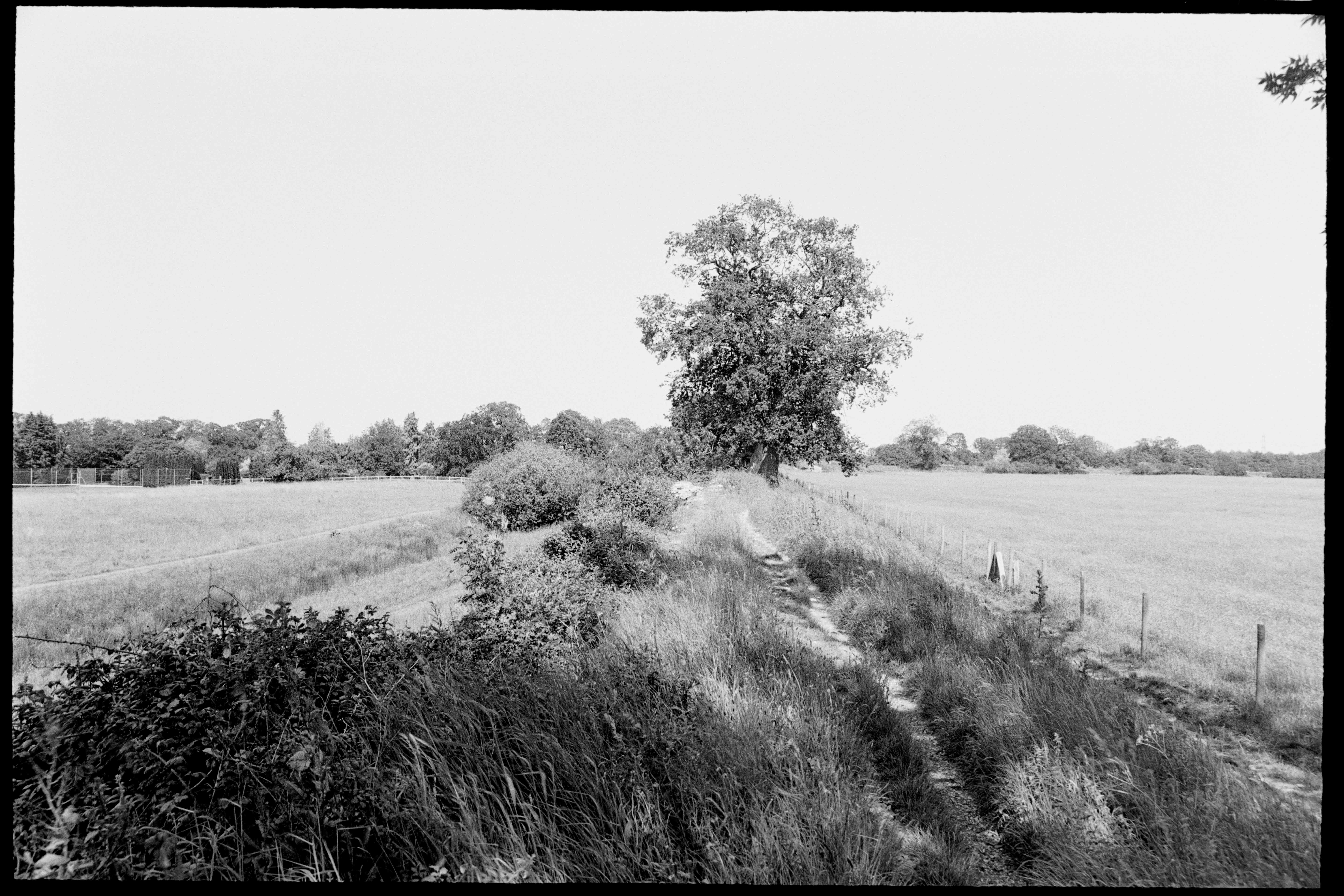
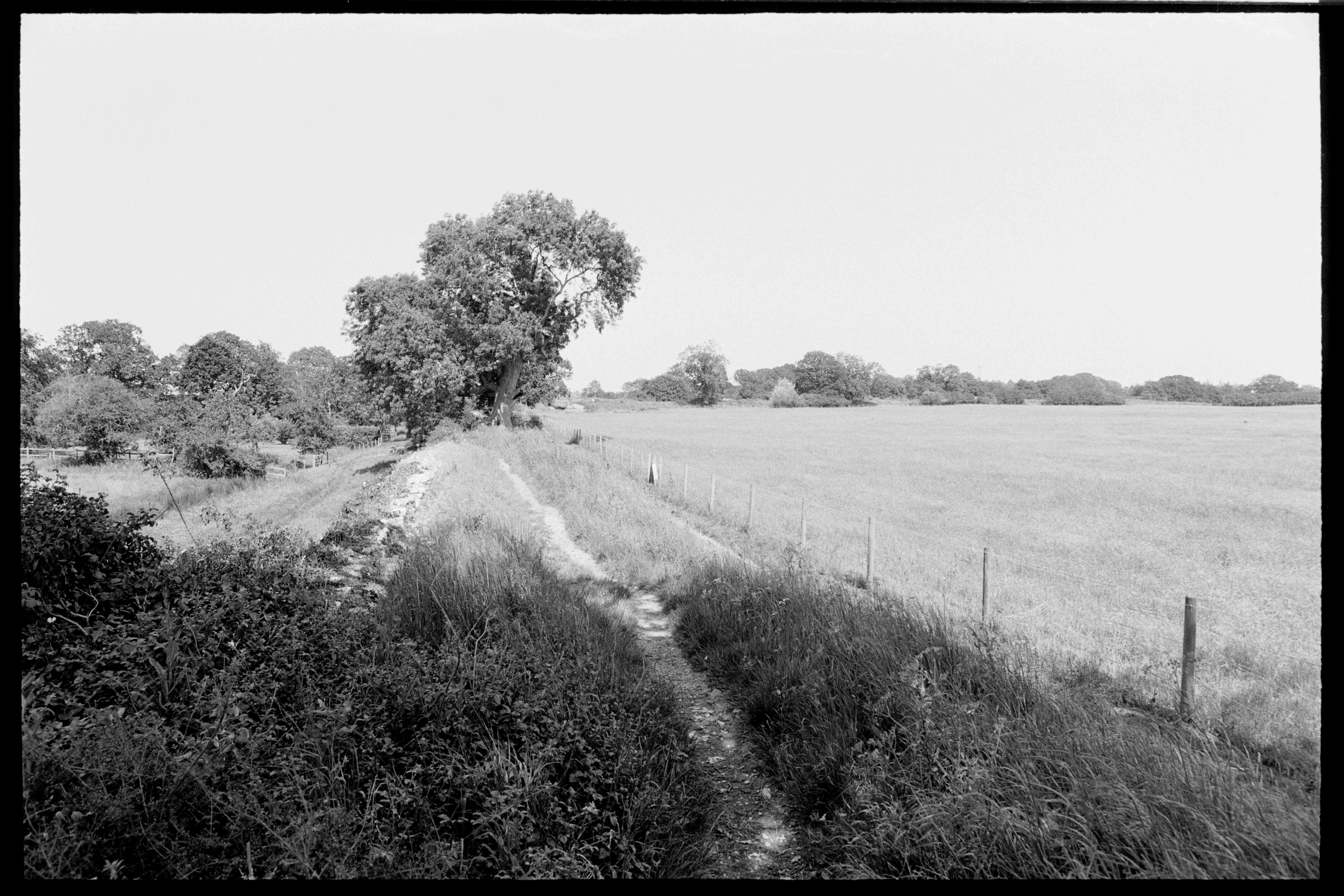
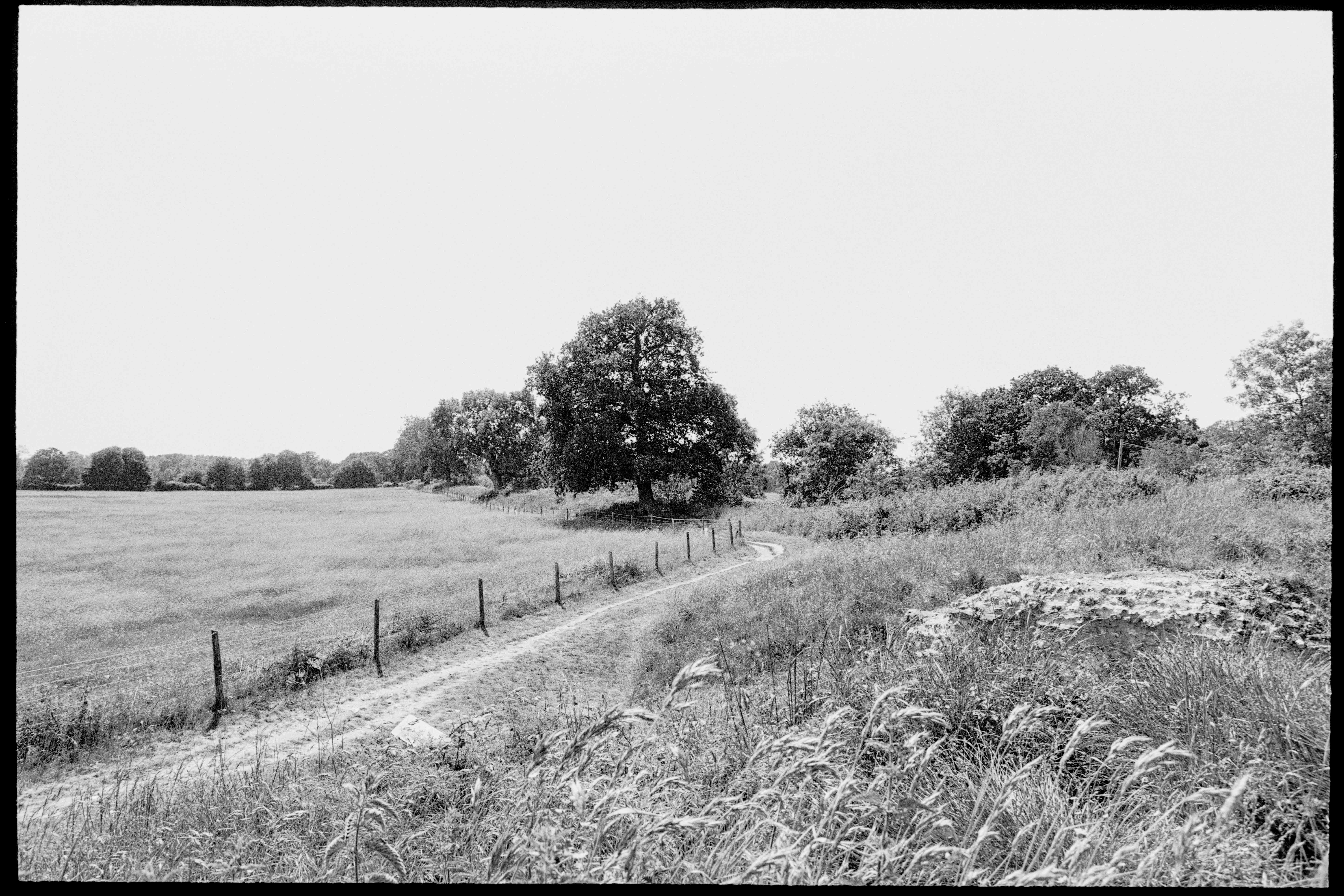
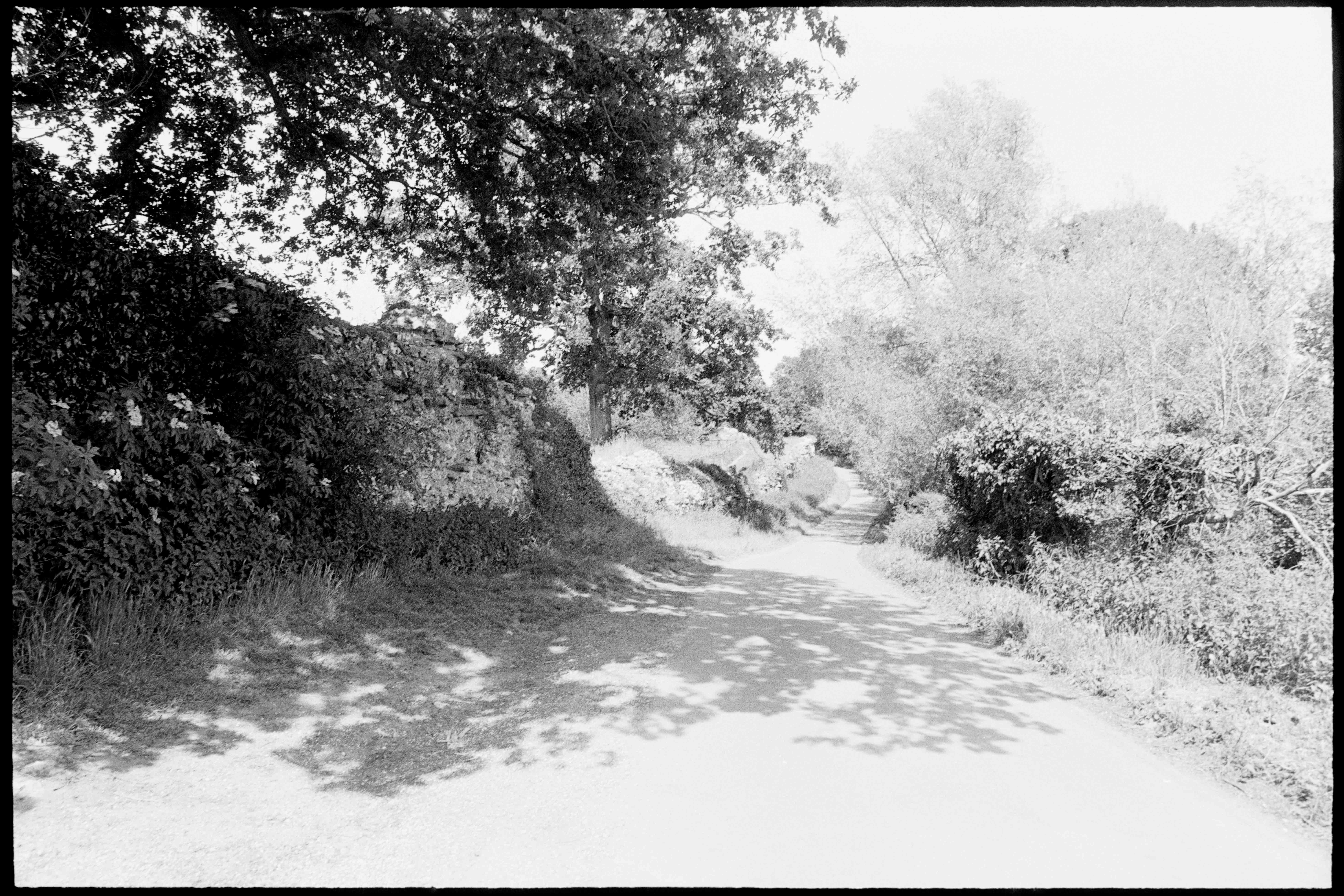
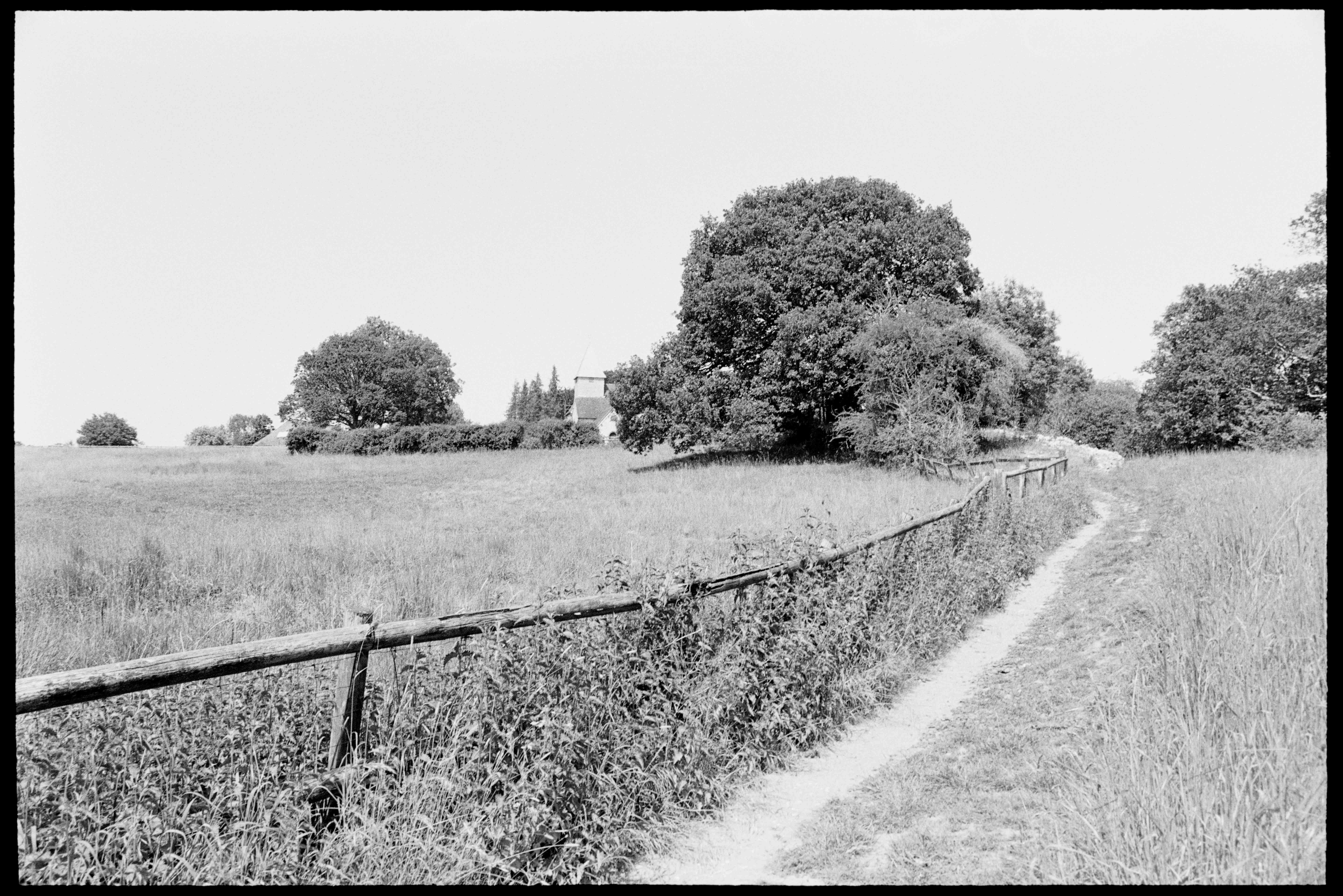
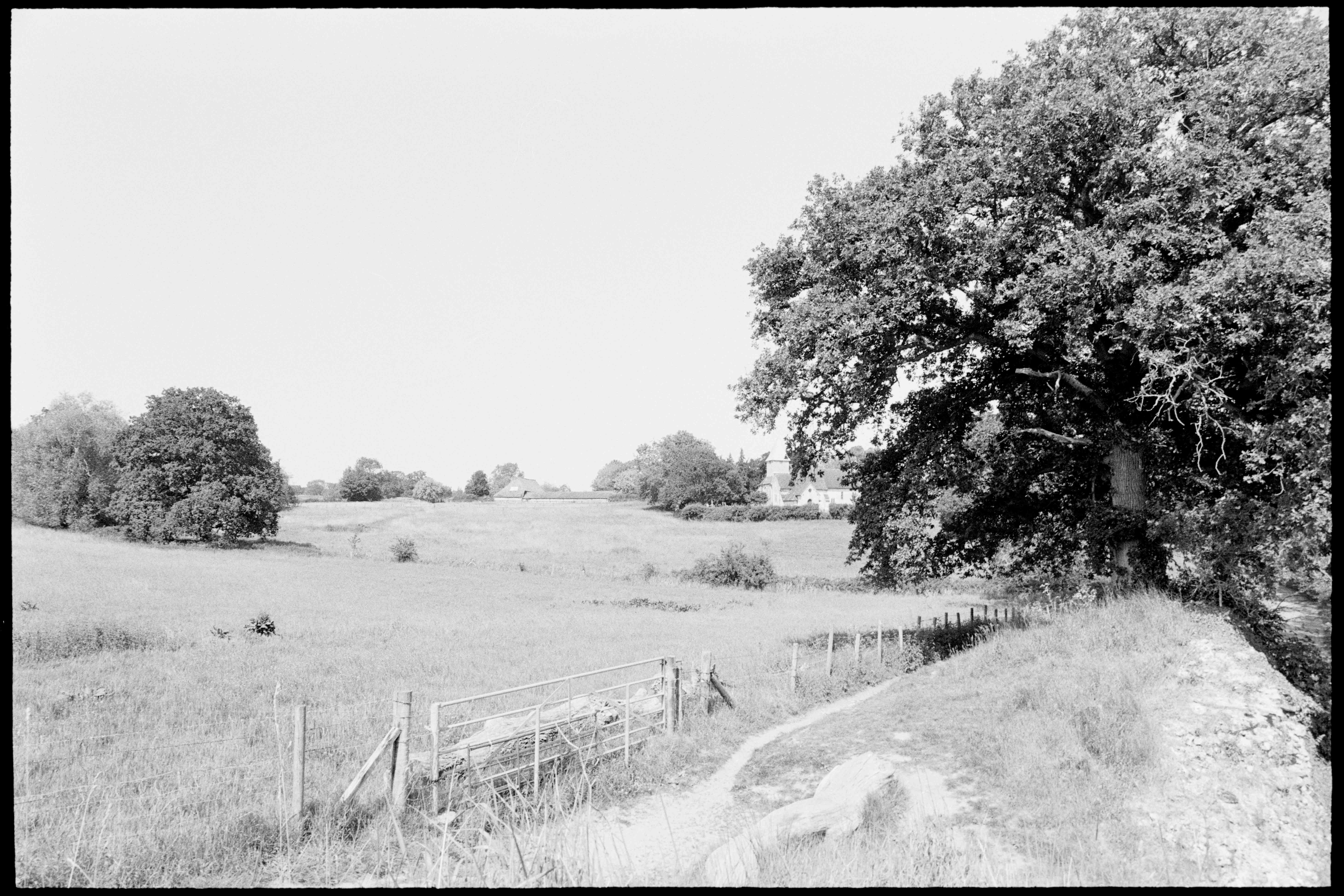
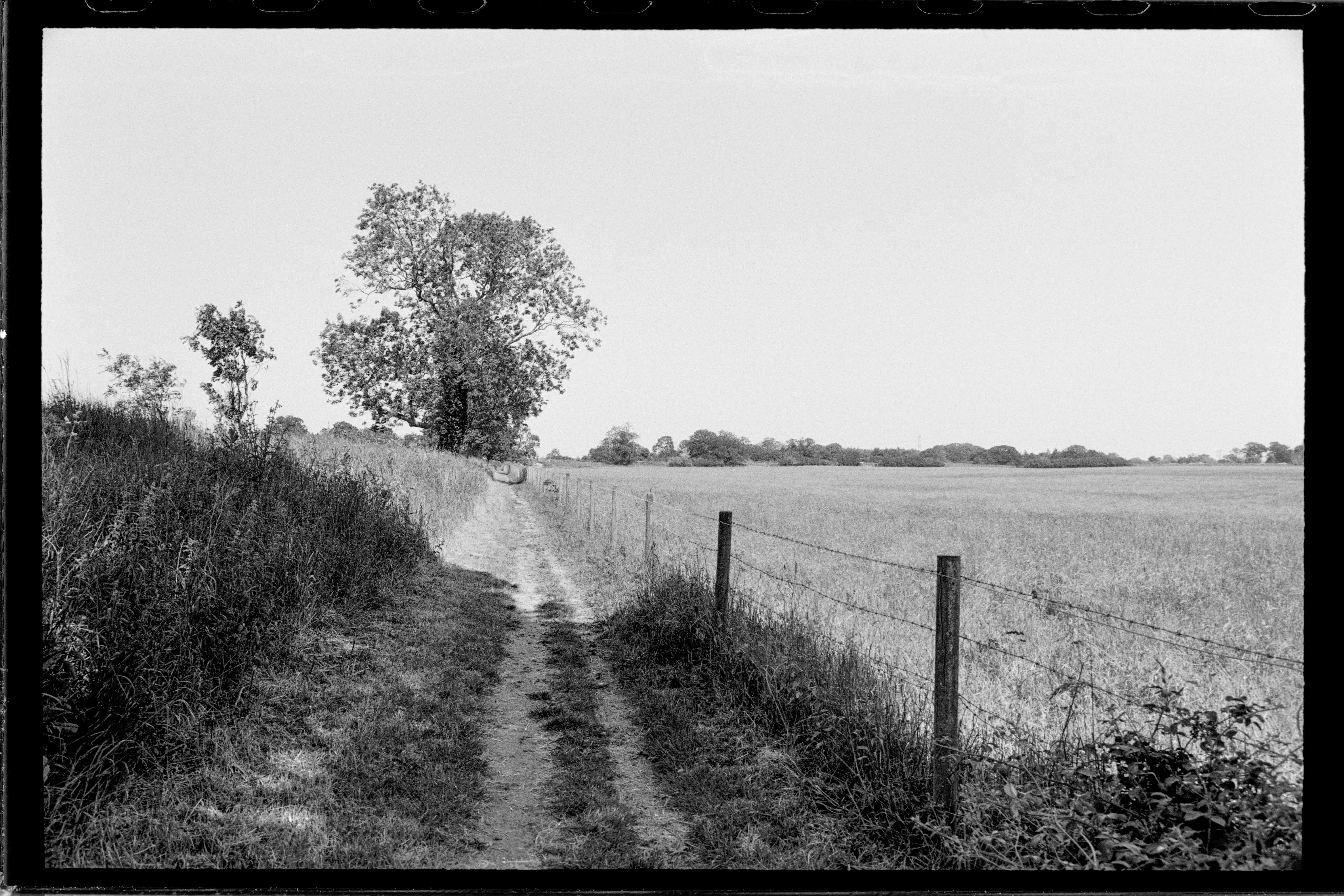
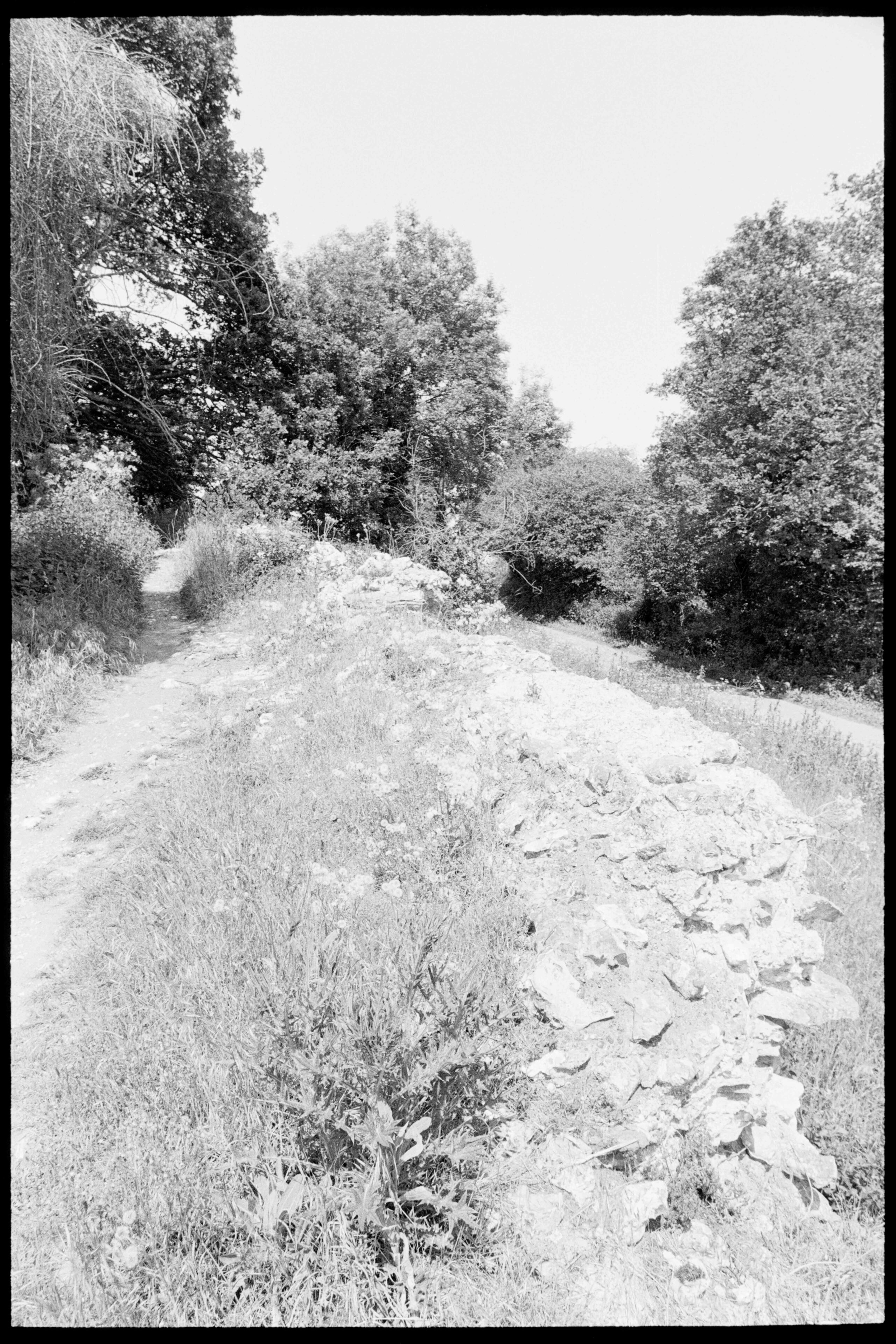
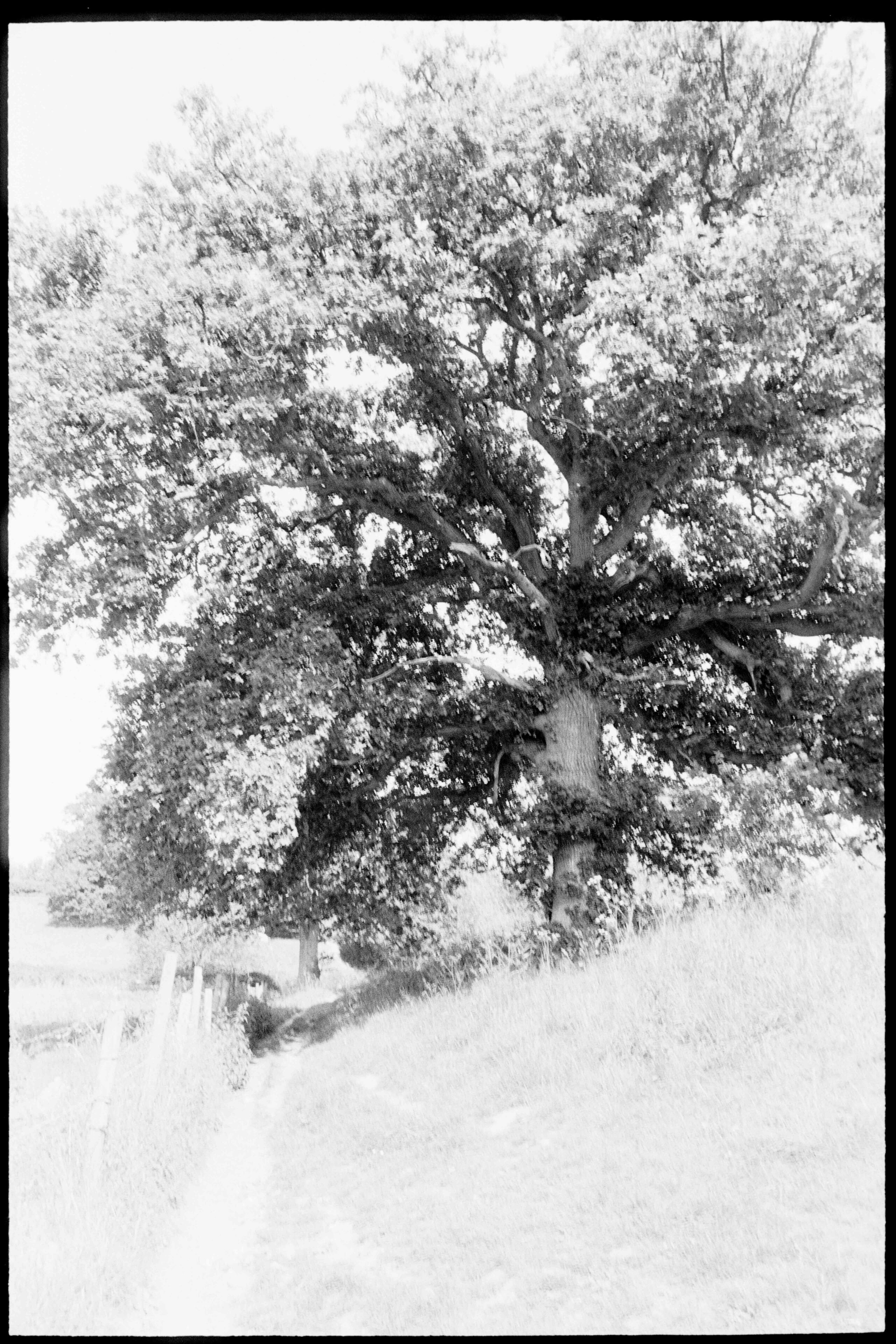
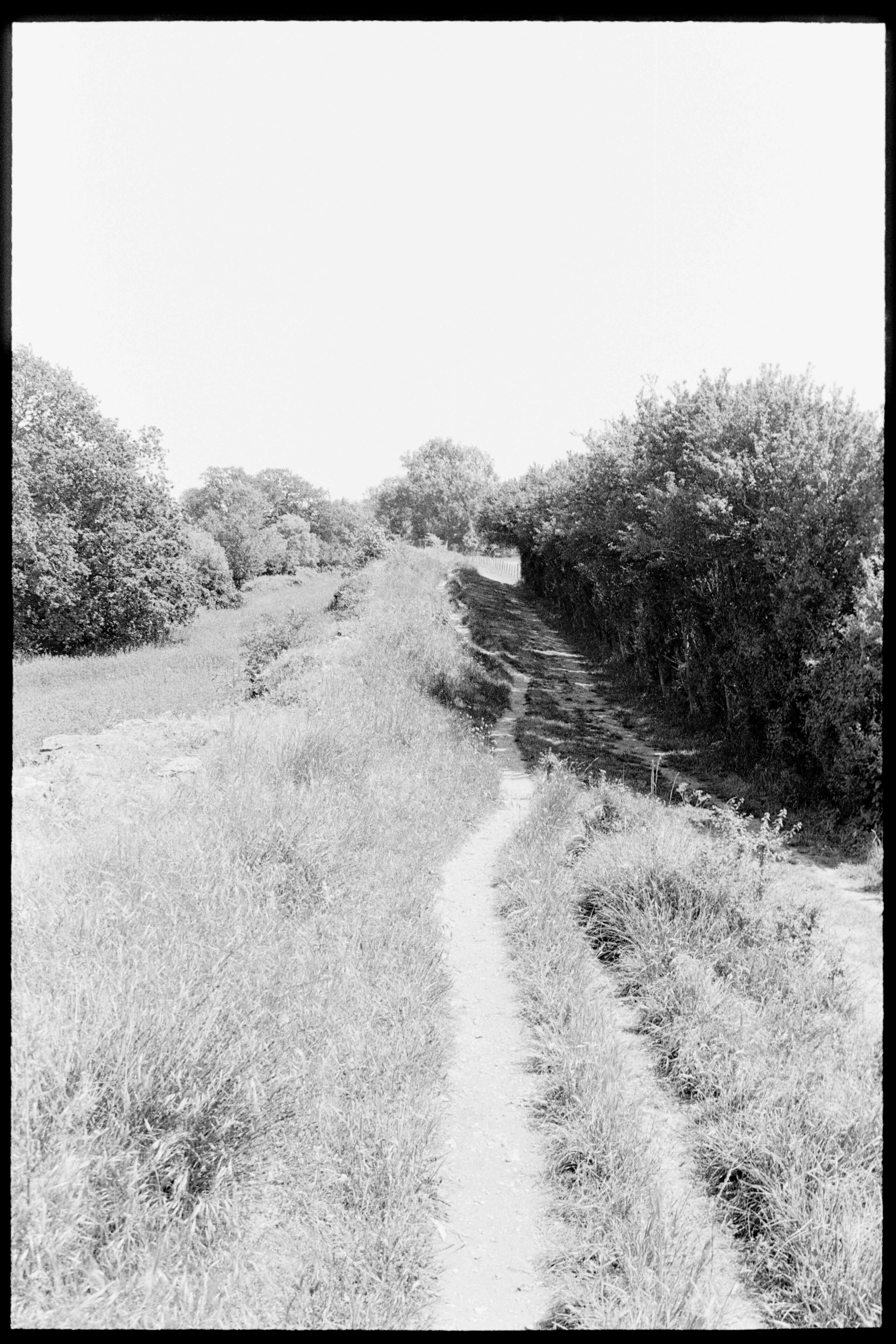
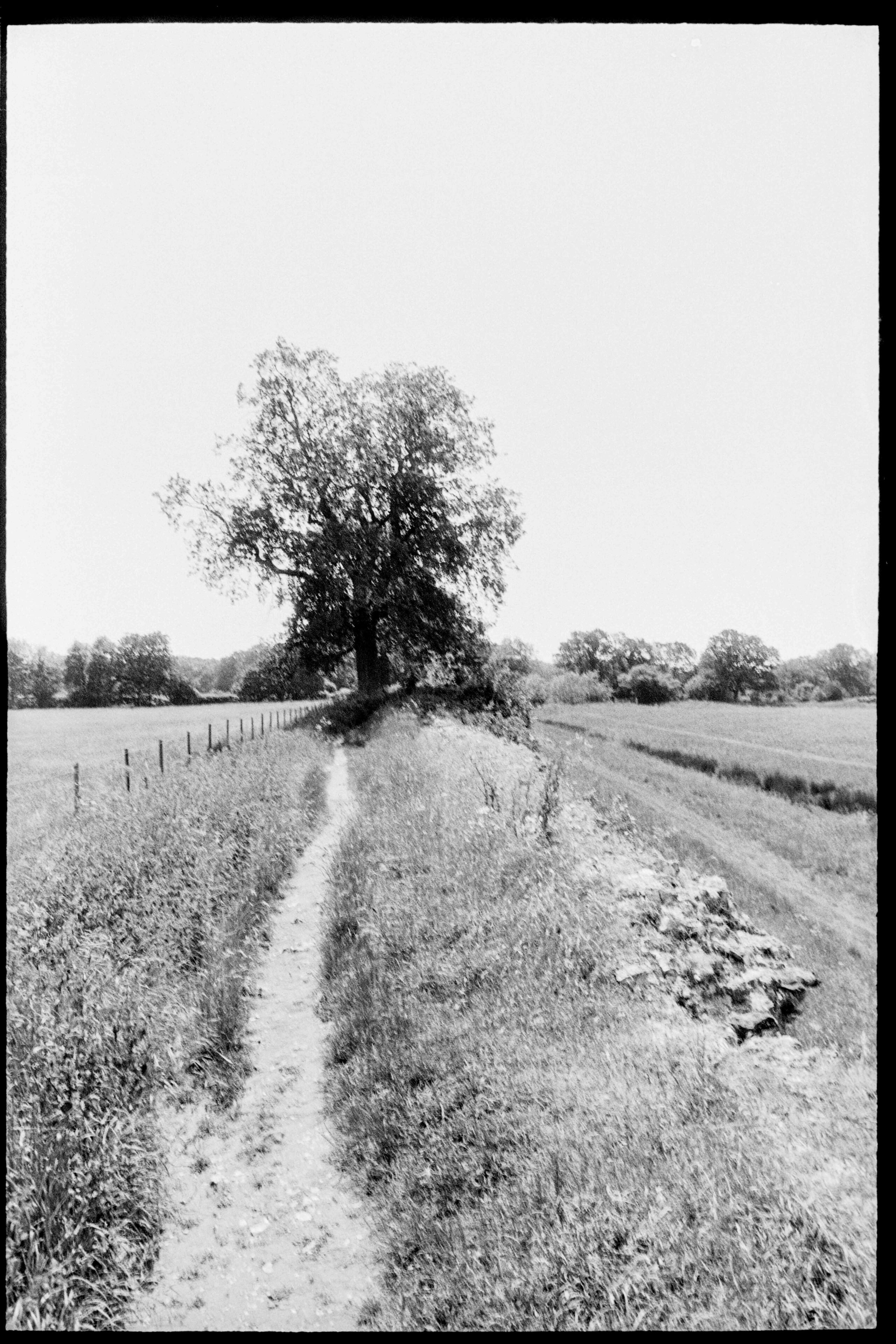
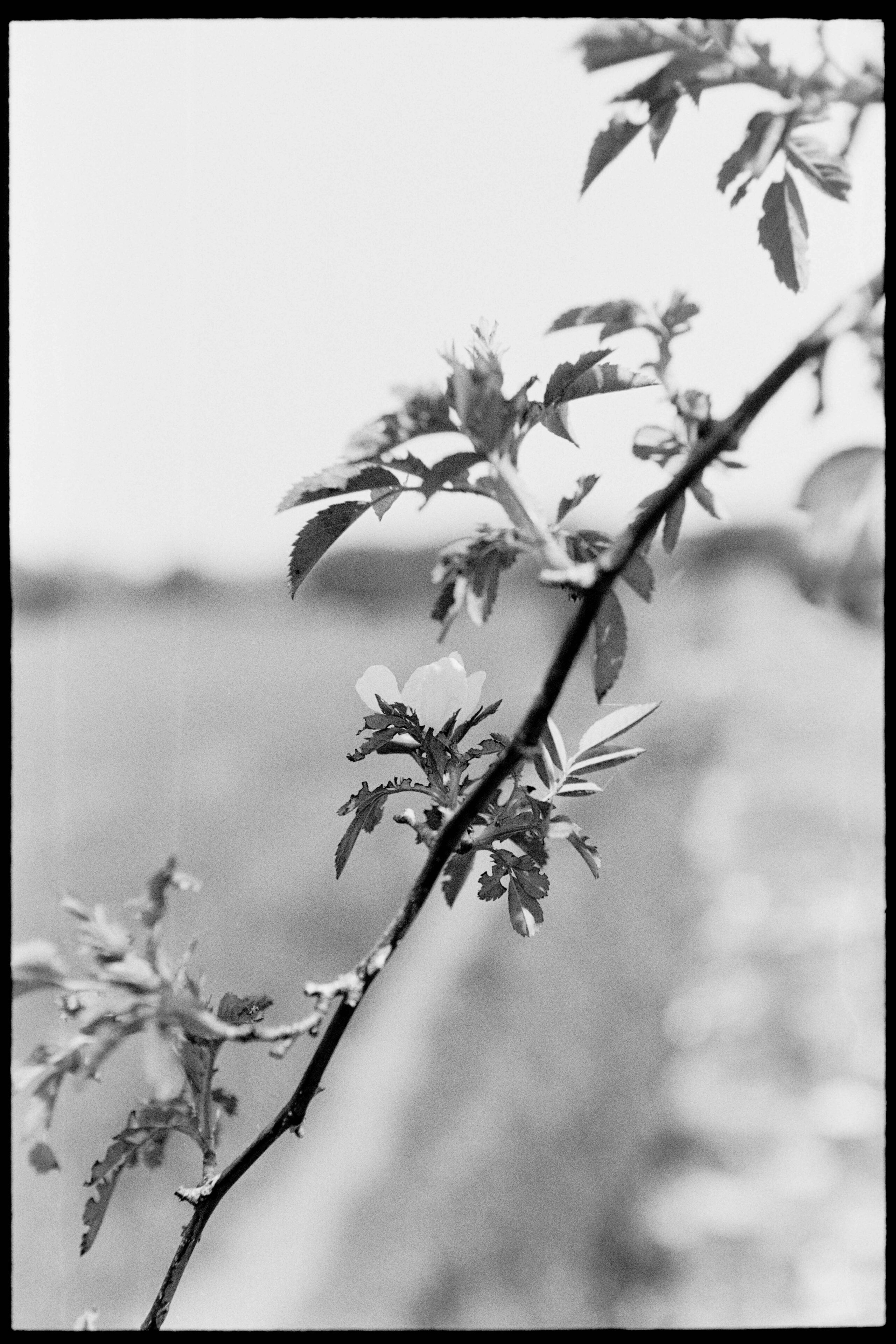
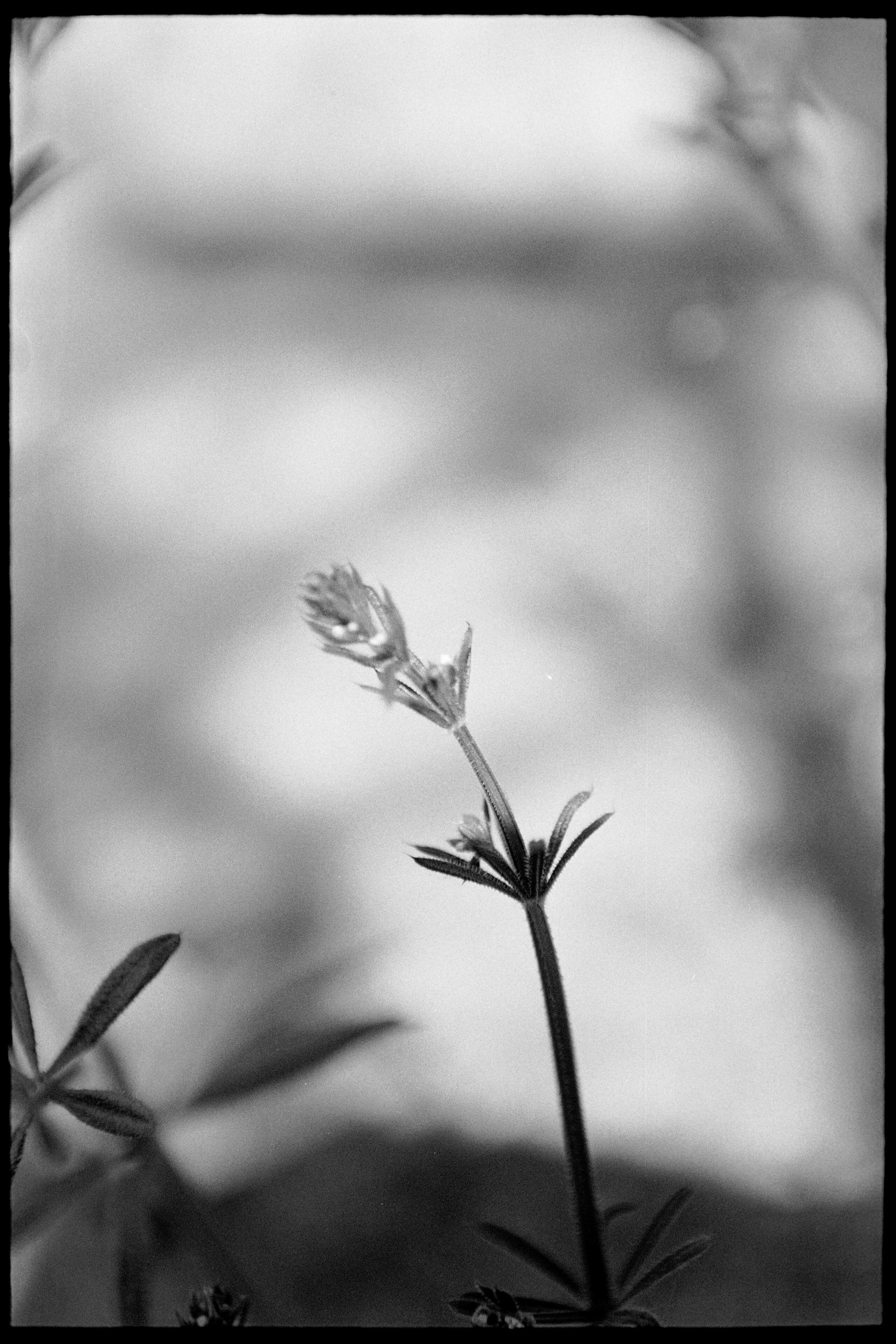
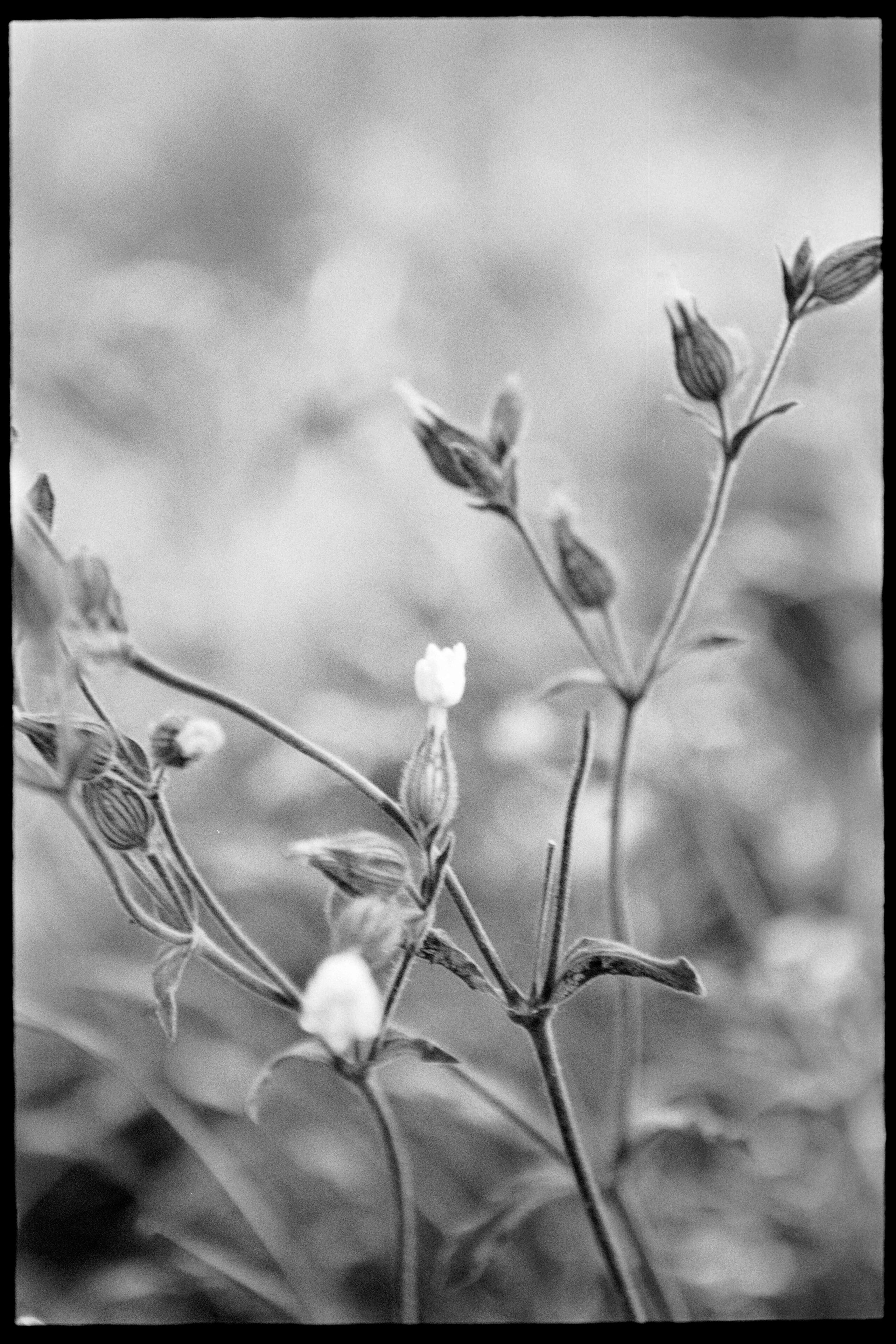
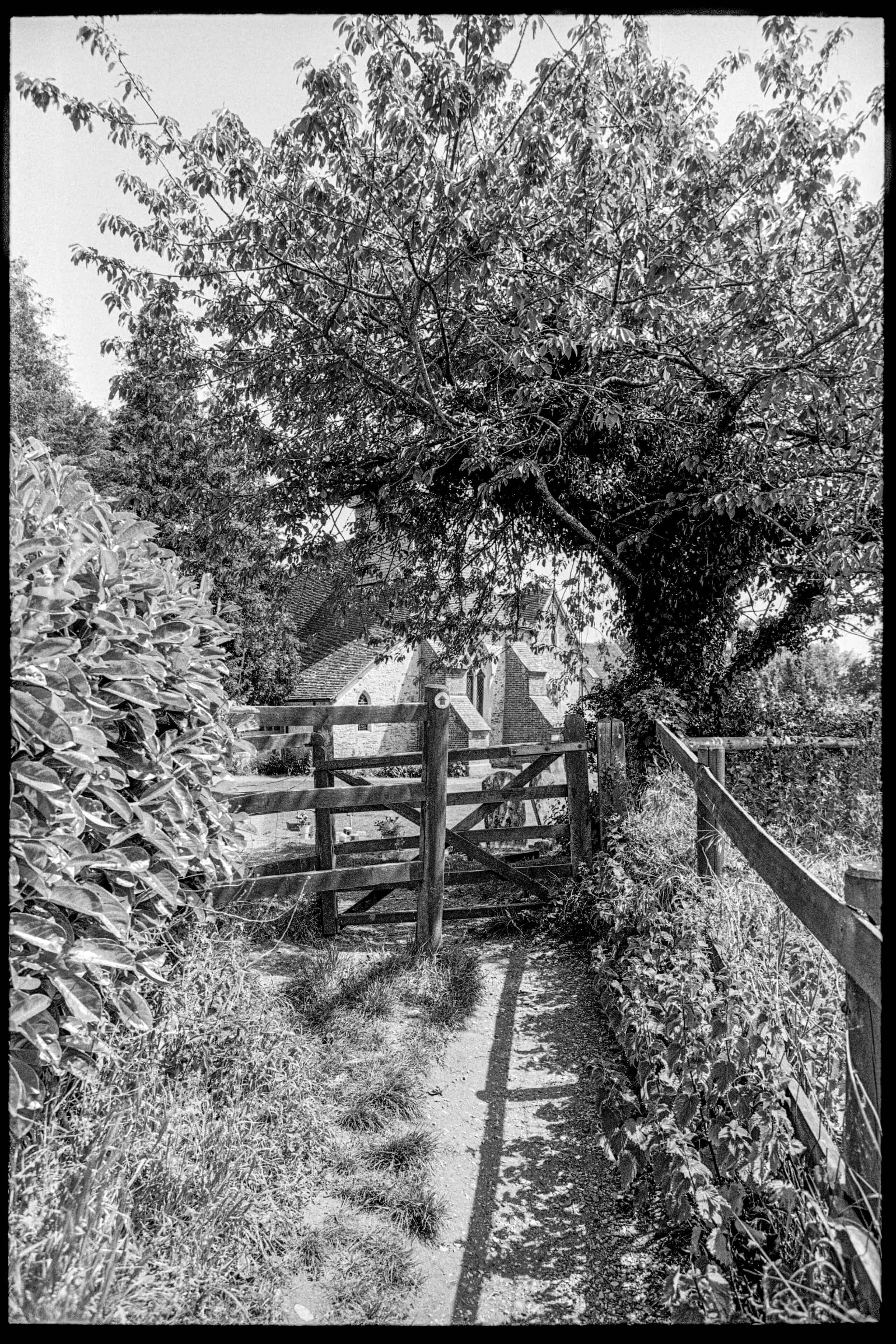
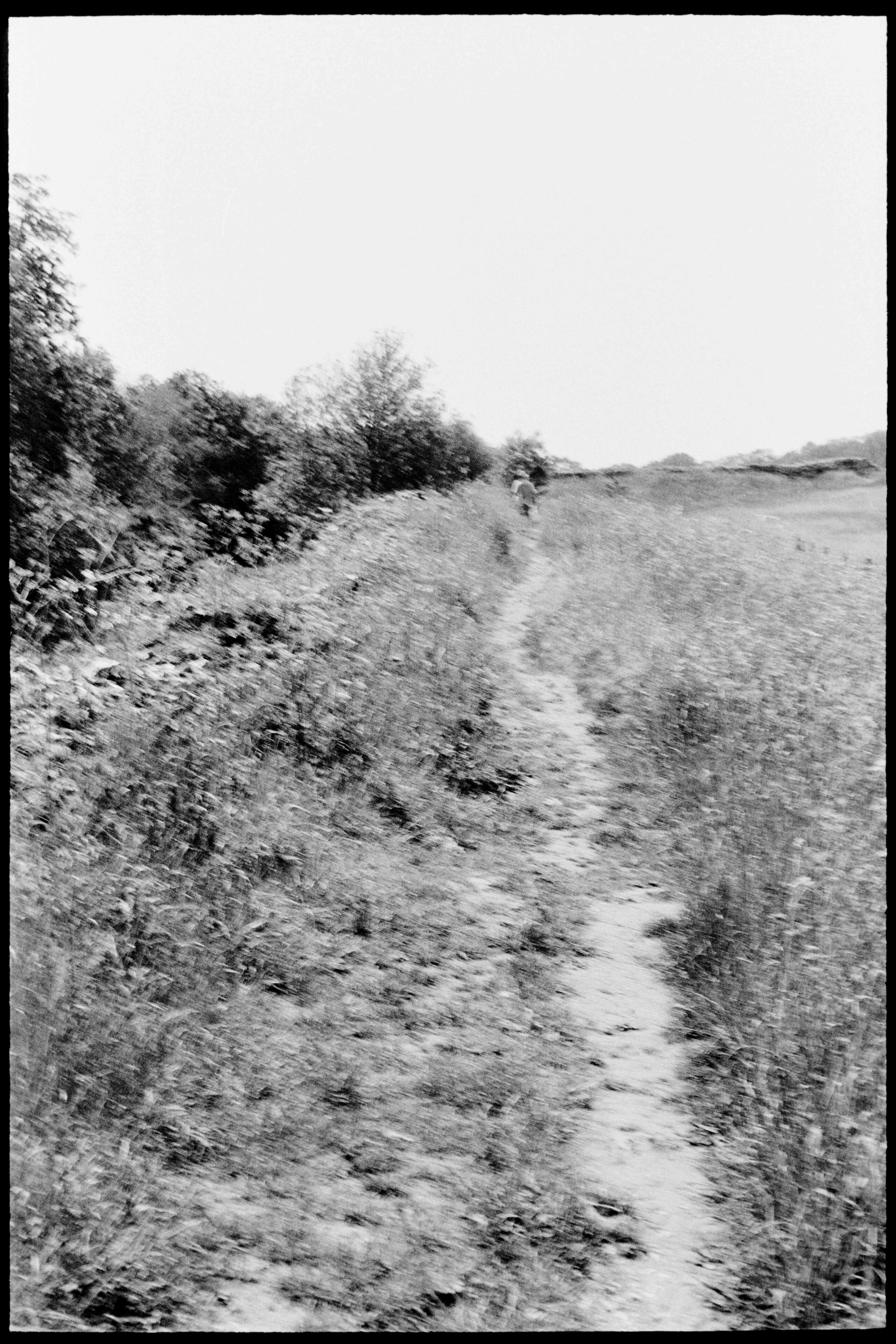
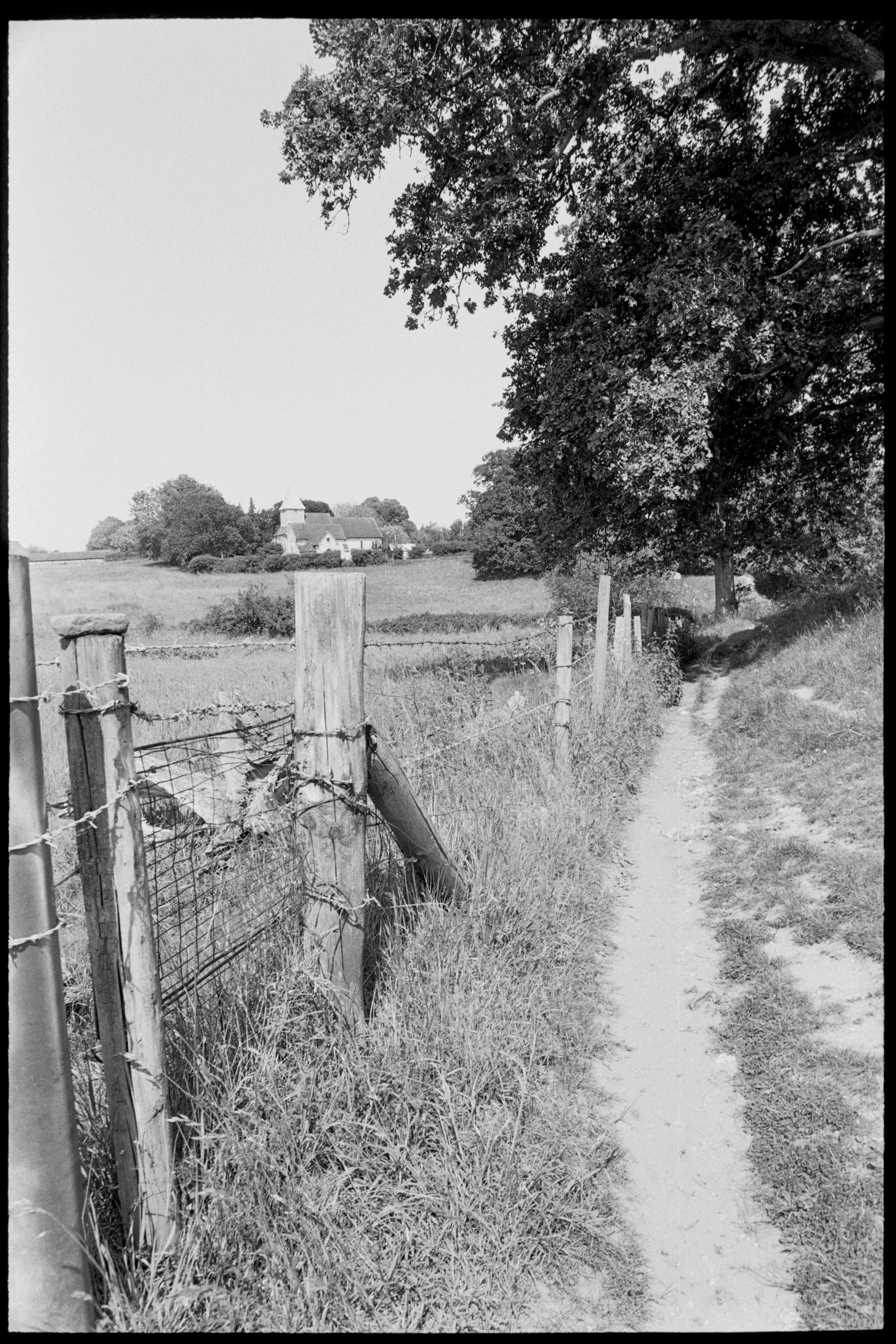
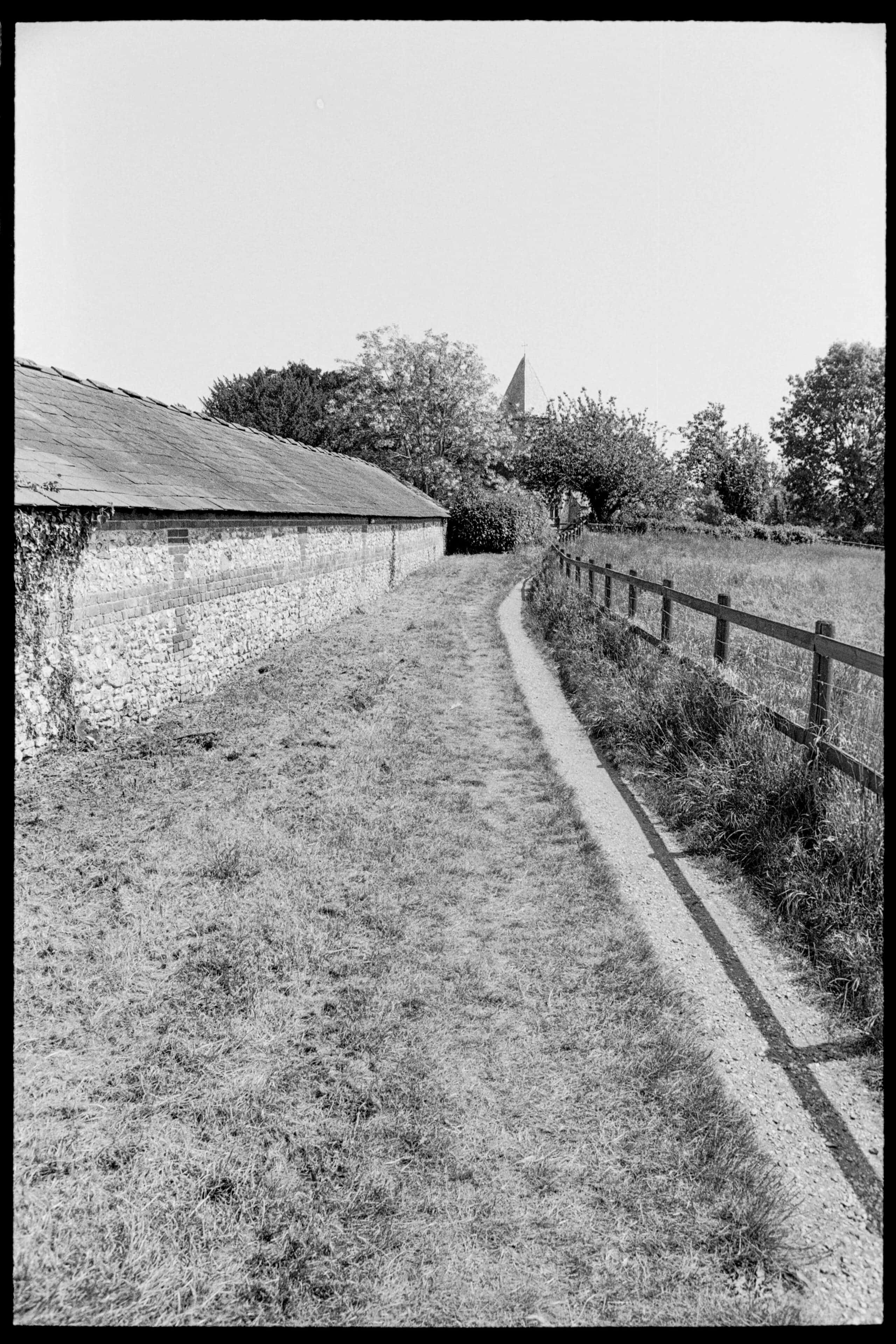
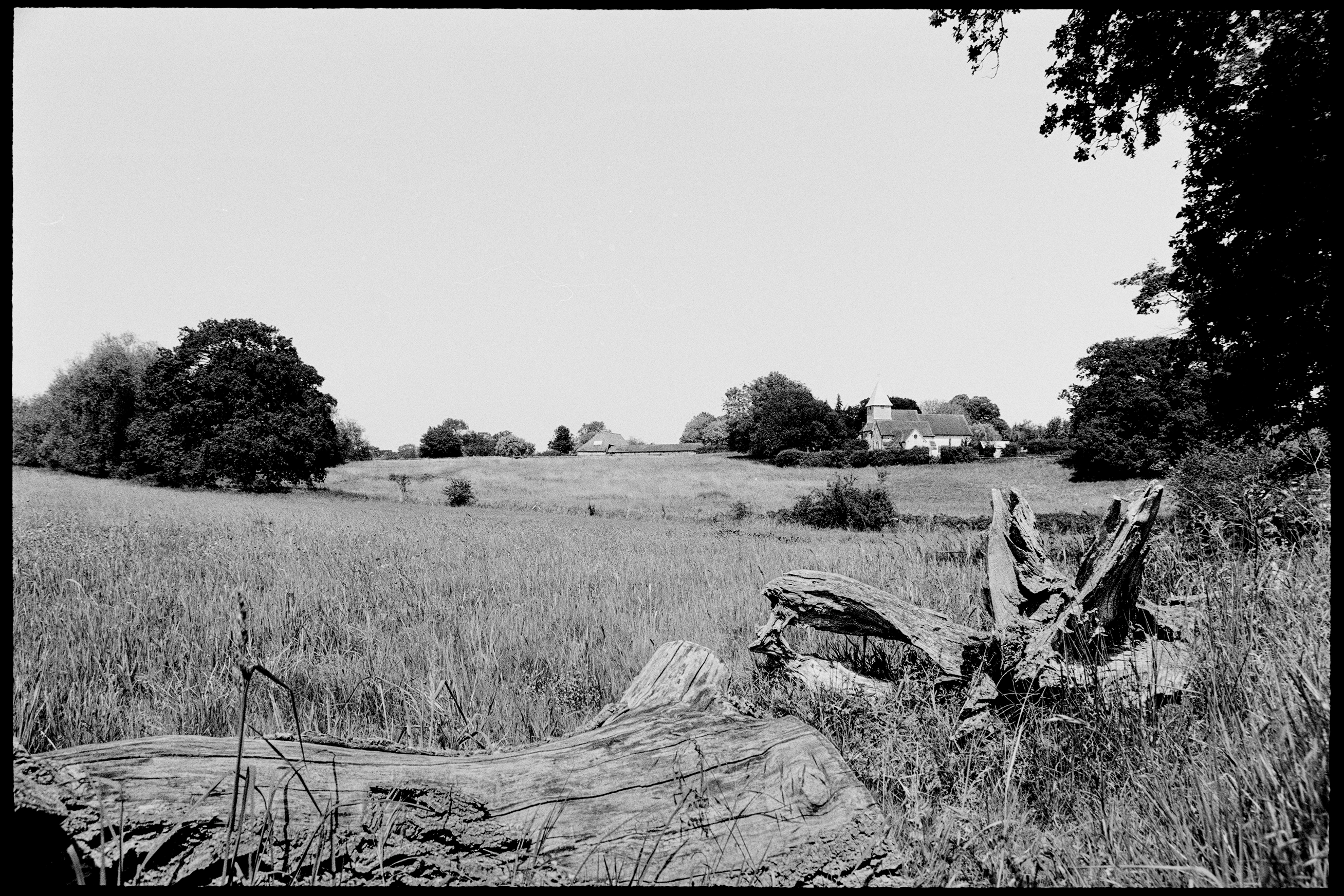
The images below show the complete selection from the day’s walk around the Roman walls and St Mary’s Church. Together they give a more complete sense of how the film renders the Silchester landscape than any single frame can manage alone.
Rollei Ortho 25 vs Other Black and White Films
| Film | How it compares to Rollei Ortho 25 |
|---|---|
| Ilford Pan F Plus 50 | Twice the speed, panchromatic, similarly fine grain but a more conventional tonal response. Easier to use in variable light. See my Pan F Plus 50 review. |
| Ilford FP4 Plus 125 | Five times faster, panchromatic, fine grain, excellent latitude. A more versatile everyday film. See my FP4 Plus review. |
| Ilford HP5 Plus 400 | Sixteen times faster, panchromatic, moderate grain, outstanding flexibility. A completely different tool for different conditions. See my HP5 Plus review. |
| Fomapan 100 | Four times faster, panchromatic, softer contrast curve, lower cost. A more forgiving entry point to slow film work. See my Fomapan review. |
| Lomography Potsdam Kino 100 | Four times faster, panchromatic, higher contrast and more pronounced grain than its ISO suggests. See my Potsdam Kino 100 review. |
What Works Well
- Extraordinary resolution — up to 330 lines/mm
- Grain virtually disappears at normal scanning resolutions
- Orthochromatic response suits ancient and natural landscapes
- Textures in stone, grass and earth rendered with outstanding clarity
- Clean, precise negatives — excellent enlargement potential
- Pairs beautifully with Rodinal for landscape acutance
- Polyester base — dimensionally stable and easy to handle
Worth Knowing
- ISO 25 demands good light — not a film for poor conditions
- Orthochromatic response needs learning — red tones shift significantly
- Not suited to fast-moving subjects or changing light
- Tripod essential in anything less than bright sun
- Not an everyday film — a deliberate choice for specific work
What is Rollei Ortho 25?
Rollei Ortho 25 is a 35mm and 120 orthochromatic black and white film rated at ISO 25. Unlike most modern black and white films, which are panchromatic, Ortho 25 is sensitive primarily to blue and green light and has very limited red sensitivity. Originally designed for technical and repro photography, it offers extraordinary resolution — up to 330 lines per millimetre — and virtually invisible grain. It is available in 35mm, 120, and large format sheet sizes.
What does orthochromatic mean in film photography?
Orthochromatic film is sensitive to blue and green light but has very limited sensitivity to red wavelengths. This changes how the world is translated into tones — blues respond strongly, greens hold well, and reds and warm tones shift or deepen. The result feels slightly removed from modern black and white photography — quieter, more archival, closer in character to the photographic tradition of the early twentieth century. For a broader guide to film types and their characteristics, see my post on types of 35mm black and white films.
What developer works best with Rollei Ortho 25?
Rodinal is my developer of choice across all my black and white work, and Ortho 25 responds to it particularly well. At 1:25 dilution I found clean negatives with strong separation and excellent acutance. At 1:50 the development time extends and the result is marginally finer. Always test times for your own workflow and temperature. For a practical introduction to home processing, see my simple film development guide.
Is Rollei Ortho 25 good for landscape photography?
In the right conditions, it is one of the finest landscape films available. The orthochromatic response deepens skies, strengthens earth and grass tones, and renders stone and flint with unusual clarity. The significant limitation is speed — ISO 25 requires good light and a steady hand or tripod. For more on landscape film photography, see my guide to photographing British landscapes and my post on walking ancient ruins with film photography.
How does Rollei Ortho 25 compare to Ilford Pan F Plus 50?
Both are extremely fine-grained slow films designed for precision work in good light. Pan F Plus 50 is panchromatic — it responds across the full visible spectrum and behaves more conventionally. Ortho 25 is orthochromatic, with its distinctive response to blues and greens and its limited red sensitivity. In terms of resolution, Ortho 25 has the edge. In terms of versatility and ease of use, Pan F Plus is the more practical everyday choice. See my full Ilford Pan F Plus 50 review for a detailed comparison.
Is Rollei Ortho 25 available in medium format?
Yes — Ortho 25 is available in 35mm, 120, and large format sheet sizes. On medium format the resolution and fine grain of the film are even more impressive. For more on medium format film photography, see my guides to medium format photography and medium format film cameras.
Where can I buy Rollei Ortho 25 in the UK?
Rollei Ortho 25 is available from specialist UK film suppliers including Analogue Wonderland. It is a niche film and less widely stocked than mainstream Ilford or Kodak emulsions, so ordering in advance is advisable. For a broader guide to sourcing film in the UK, see my guide to buying film in the UK and my guide to affordable black and white film in the UK.
This article is part of my Film Photography hub. For more black and white film reviews, see my guides to Ilford Pan F Plus 50, Ilford FP4 Plus, Ilford HP5 Plus, Fomapan 100, 200 and 400, and my guides to film grain and film texture.