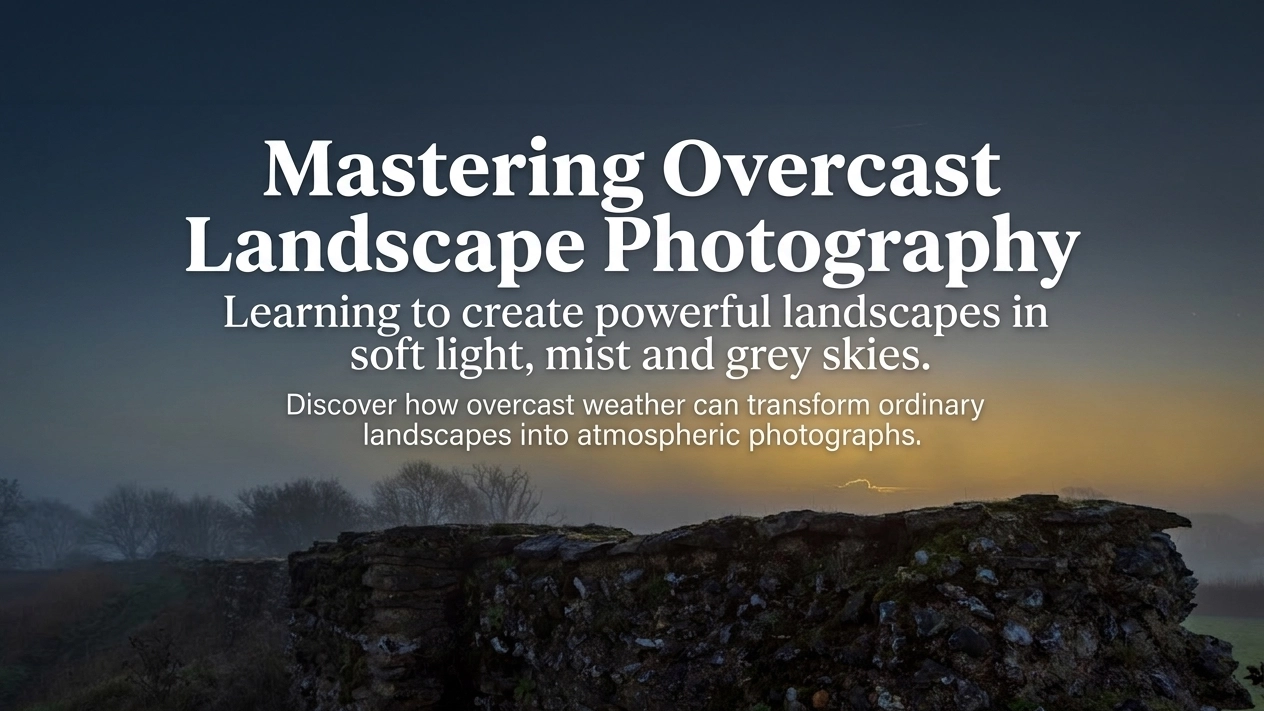
New Book: The Overcast Landscape — A Beginner’s Guide to Photographing Moody British Landscapes in Flat Light, Mist and Rain
A practical guide for photographers who want to stop waiting for perfect light and start working creatively with the grey skies, mist and rain that define so much of the British countryside.
For many photographers, grey skies are often seen as the wrong conditions for landscape photography. Cameras are packed away and plans are postponed until brighter light returns. But overcast weather can reveal a very different character in the landscape. See my previous blog post on Photography Guide for Beginners.
Soft cloud cover, mist drifting across fields, and the quiet atmosphere of a grey sky can transform familiar scenes into something far more subtle and atmospheric. These quieter conditions often reveal textures, tones and moods that harsh sunlight can easily hide.
Introducing The Overcast Landscape
I’m pleased to announce the release of my new book: The Overcast Landscape — A Beginner’s Guide to Photographing Moody British Landscapes in Flat Light, Mist and Rain, now available on Amazon.
This book explores how photographers, especially beginners, can learn to work with subdued weather rather than waiting for perfect conditions.
Why Overcast Weather Can Be Perfect for Landscape Photography
Across much of the British countryside, dramatic golden light is often the exception rather than the rule. Instead, photographers frequently encounter soft grey skies, diffused light and changing weather conditions.
While these conditions may appear uninspiring at first, they actually provide excellent opportunities for thoughtful landscape photography.
Overcast light softens shadows and reduces harsh contrast. Colours become more balanced and subtle. This allows photographers to focus more carefully on the structure of the landscape — shapes, lines, textures and atmosphere. It’s a similar principle to the one I explore in motion blur photography, where subduing one element of a scene draws more attention to another.
Mist and fog can simplify a scene, rain can introduce reflections and texture (see my guide to reflection photography for more on this), and distant hills fading into cloud can create a strong sense of depth and mood. Learning to recognise these elements is often the first step towards creating more atmospheric landscape photographs.
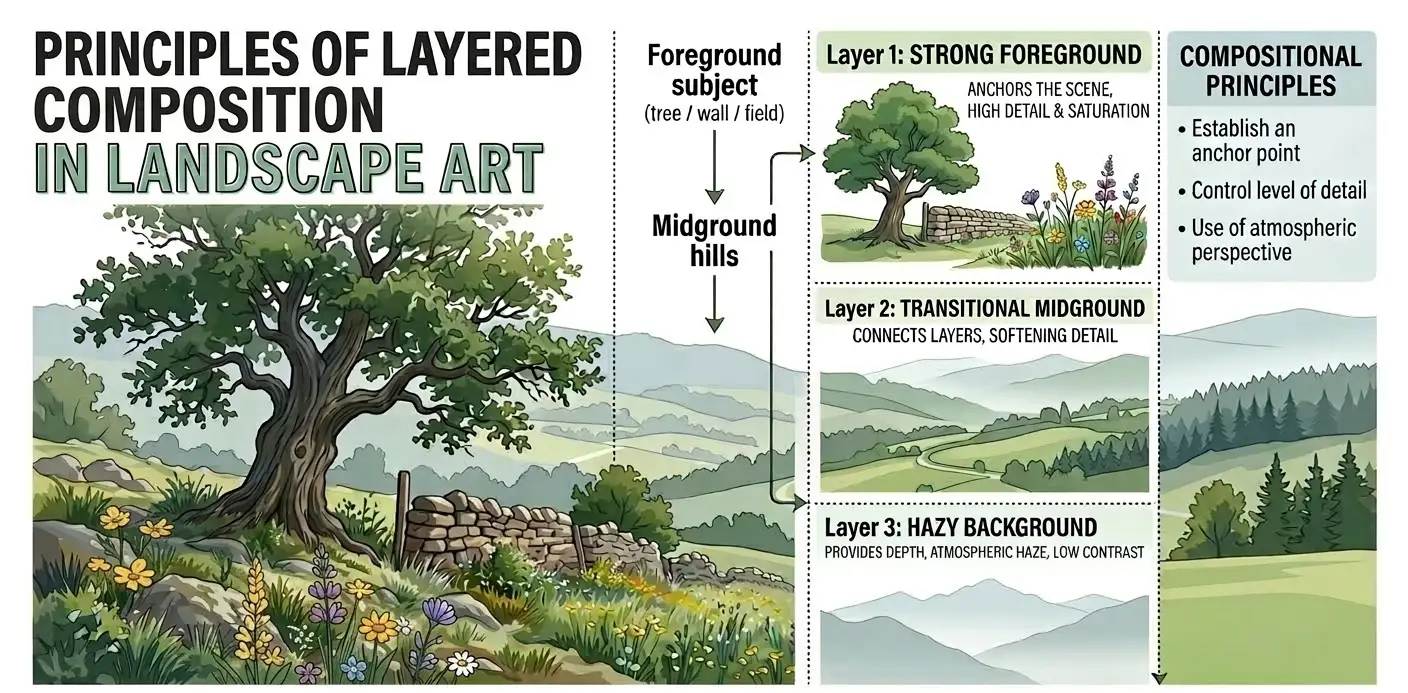
Principles of layered composition, from a sample page in the book.
What the Book Covers
The Overcast Landscape is written as a practical guide for photographers who want to understand how to work creatively in subdued weather conditions. The book explores:
- How overcast light affects landscape photography
- Photographing landscapes in mist and fog
- Working with rain and wet conditions
- Composition techniques that work well in flat light
- Camera settings suited to low contrast environments
- When colour or black and white photography works best
- The value of patience and observation in the landscape
Rather than focusing heavily on equipment or technical complexity, the emphasis is on learning how to observe the landscape and respond to the conditions that are present. If you shoot film rather than digital, my guide to choosing the right film covers how different stocks handle flat, low-contrast light.
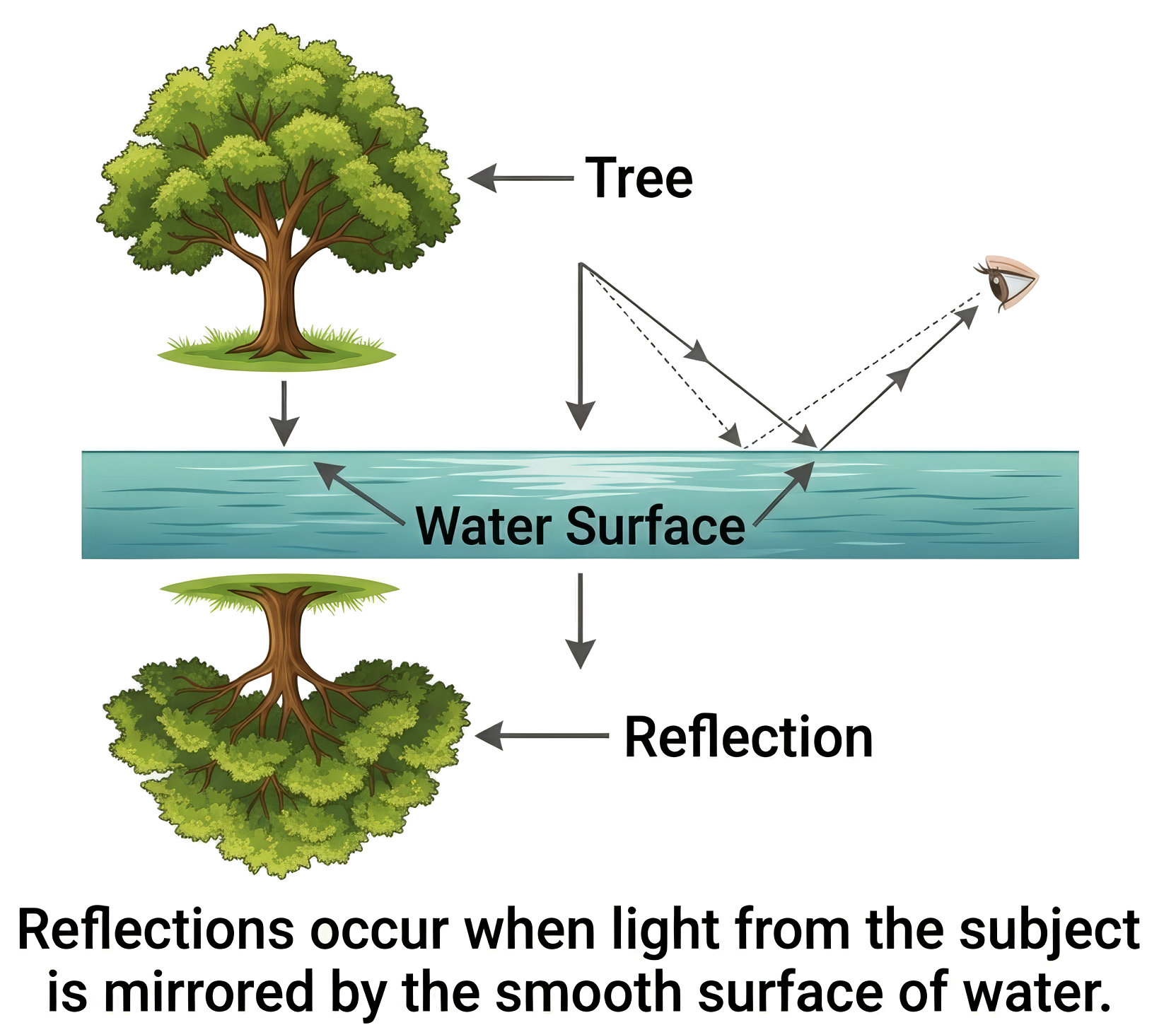
Reflections on water — one of the topics explored in the book.
Finding Atmosphere in the British Landscape
Much of my photography takes place in the countryside of southern England, where weather conditions change frequently and soft light is a common part of the landscape.
Over time I’ve found that some of the most interesting photographs often appear during quieter moments — when mist moves slowly across fields, when distant hills fade beneath a soft sky, or when a passing rain shower leaves the landscape calm and reflective.
These conditions encourage a slower and more considered approach to photography, where atmosphere and composition become just as important as dramatic light.
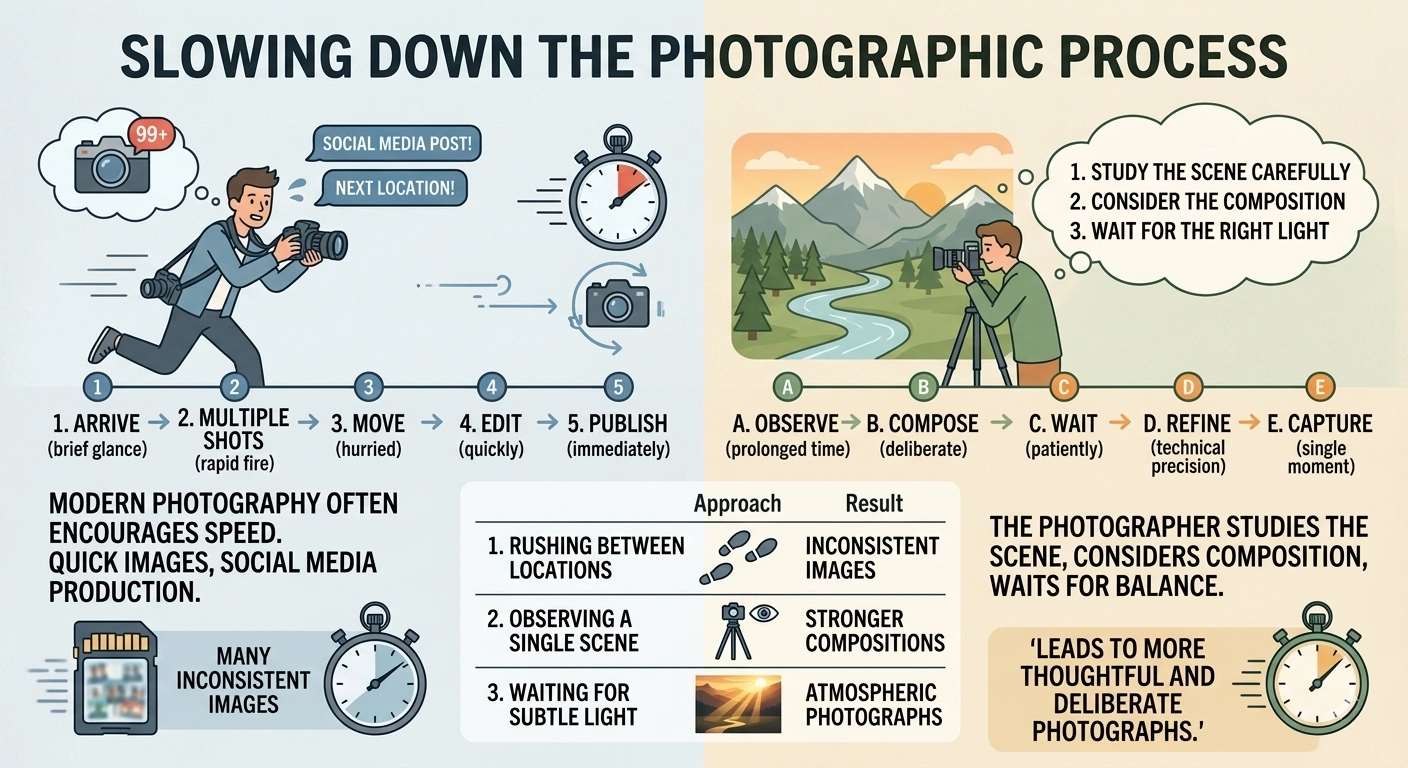
Slowing down the photographic process — a recurring theme throughout the book.
A Book for Beginner Landscape Photographers
This book is aimed particularly at photographers who are starting to explore landscape photography.
By learning how to work with overcast light, mist and subtle weather conditions, photographers can discover opportunities that exist on many ordinary days throughout the year. Instead of waiting for rare moments of dramatic light, the landscape can be photographed more frequently, often revealing a quieter and more contemplative side of the countryside.
If you enjoy photographing landscapes in subtle weather conditions or want to explore a slower and more atmospheric approach to landscape photography, see my Landscape Photography Tips page. I hope the book provides both inspiration and practical guidance. For more inspirational photography, see my Where the Wall Whispers book, based in and around the ancient Roman town of Calleva Atrebatum and photographed on black and white film, available on my books page.
Why is overcast weather good for landscape photography?
Overcast light softens shadows and reduces harsh contrast, allowing photographers to focus on the structure of the landscape — shapes, lines, textures and atmosphere — rather than fighting difficult light.
Is The Overcast Landscape suitable for complete beginners?
Yes, it’s written specifically for beginners, with an emphasis on observation and composition rather than heavy technical or equipment detail.
Where can I buy The Overcast Landscape?
The book is available now on Amazon.
Does the book cover black and white photography?
Yes, it includes guidance on when colour or black and white photography works best in flat, low-contrast light.
What weather conditions does the book focus on?
The book focuses on overcast light, mist, fog, and rain — conditions common throughout the British countryside for much of the year.
Do I need specialist equipment to photograph in overcast conditions?
No. The book deliberately avoids heavy focus on equipment, concentrating instead on observation, composition and patience.
How does mist affect landscape composition?
Mist can simplify a scene by removing distracting detail and creating a strong sense of depth as distant elements fade into the cloud.
This article is part of my Landscape Photography hub series.