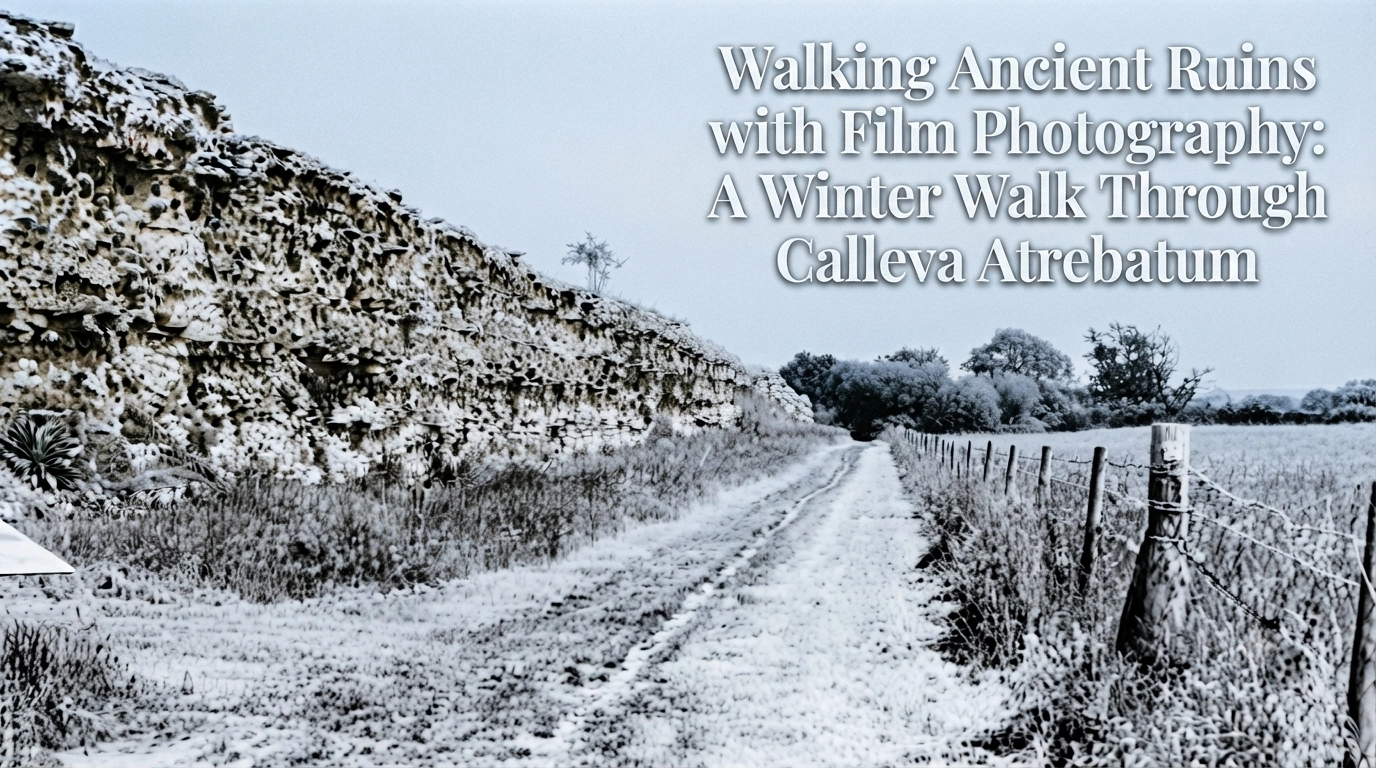
Location: Calleva Atrebatum, Silchester · Season: Winter · Camera: Bronica ETRSi · Film: Lucky SHD 400
A quiet winter walk through the walls of a Roman town, made with a medium format camera, a roll of characterful film, and a dog who set the pace better than any light meter could.
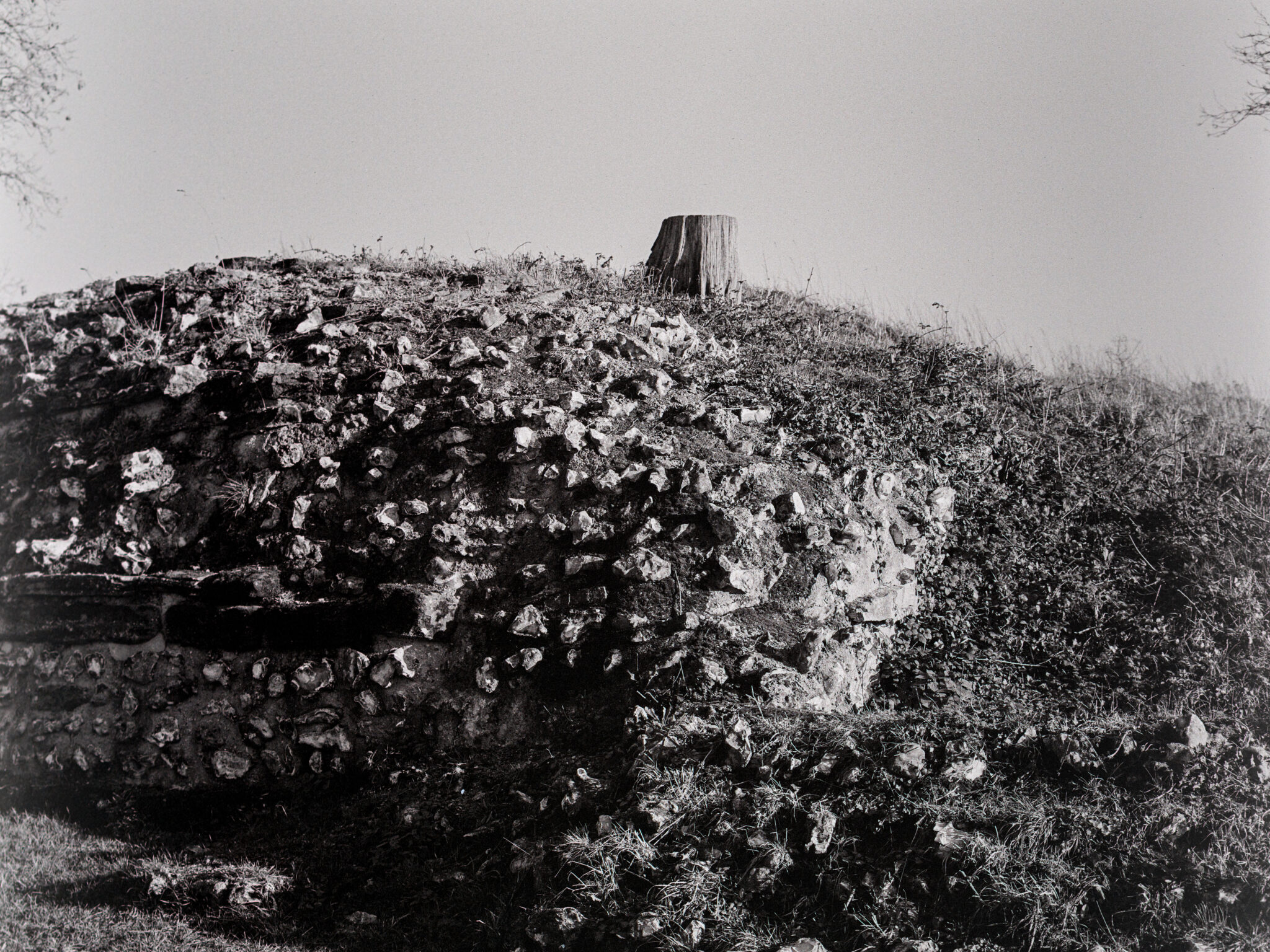
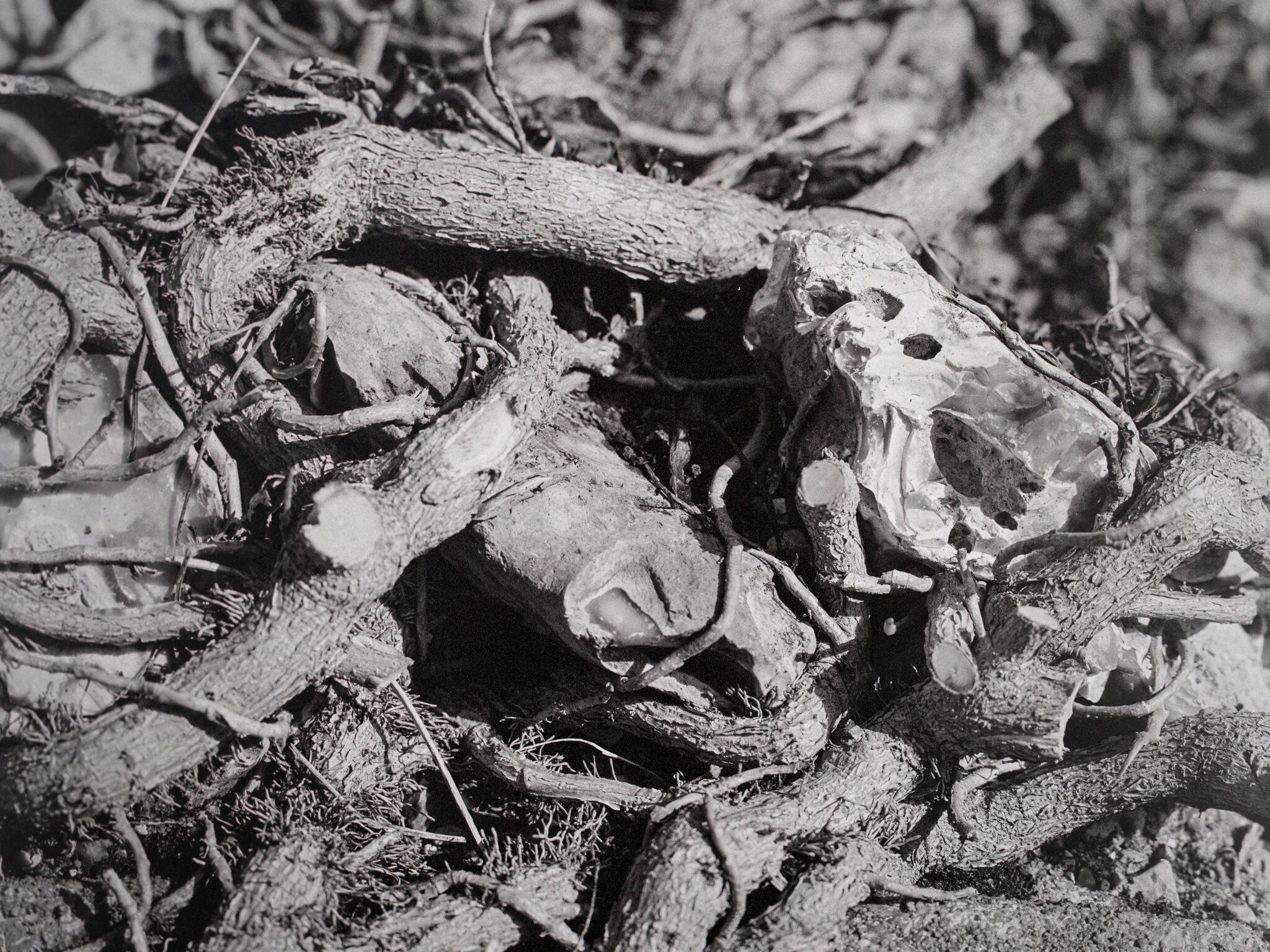
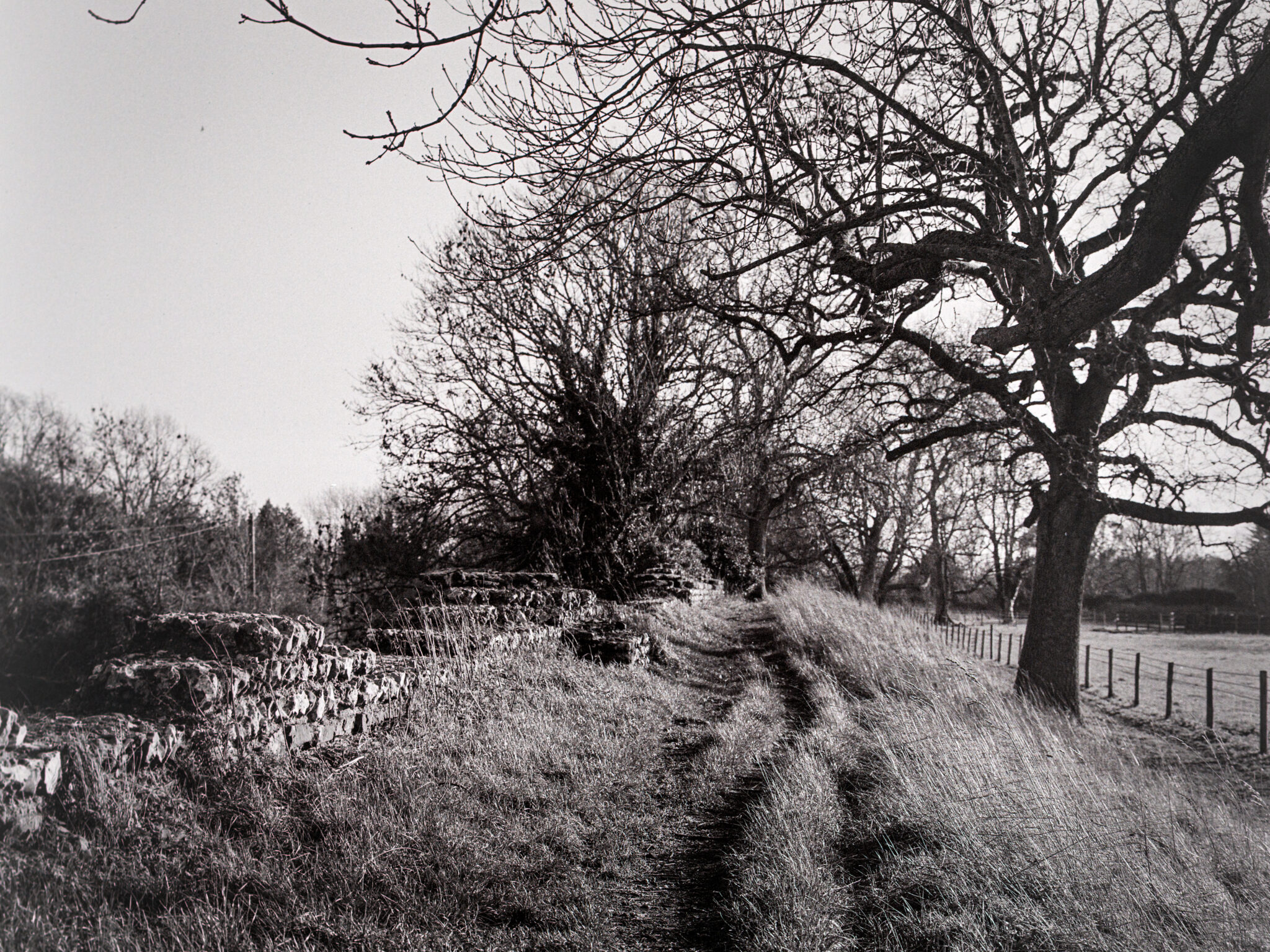
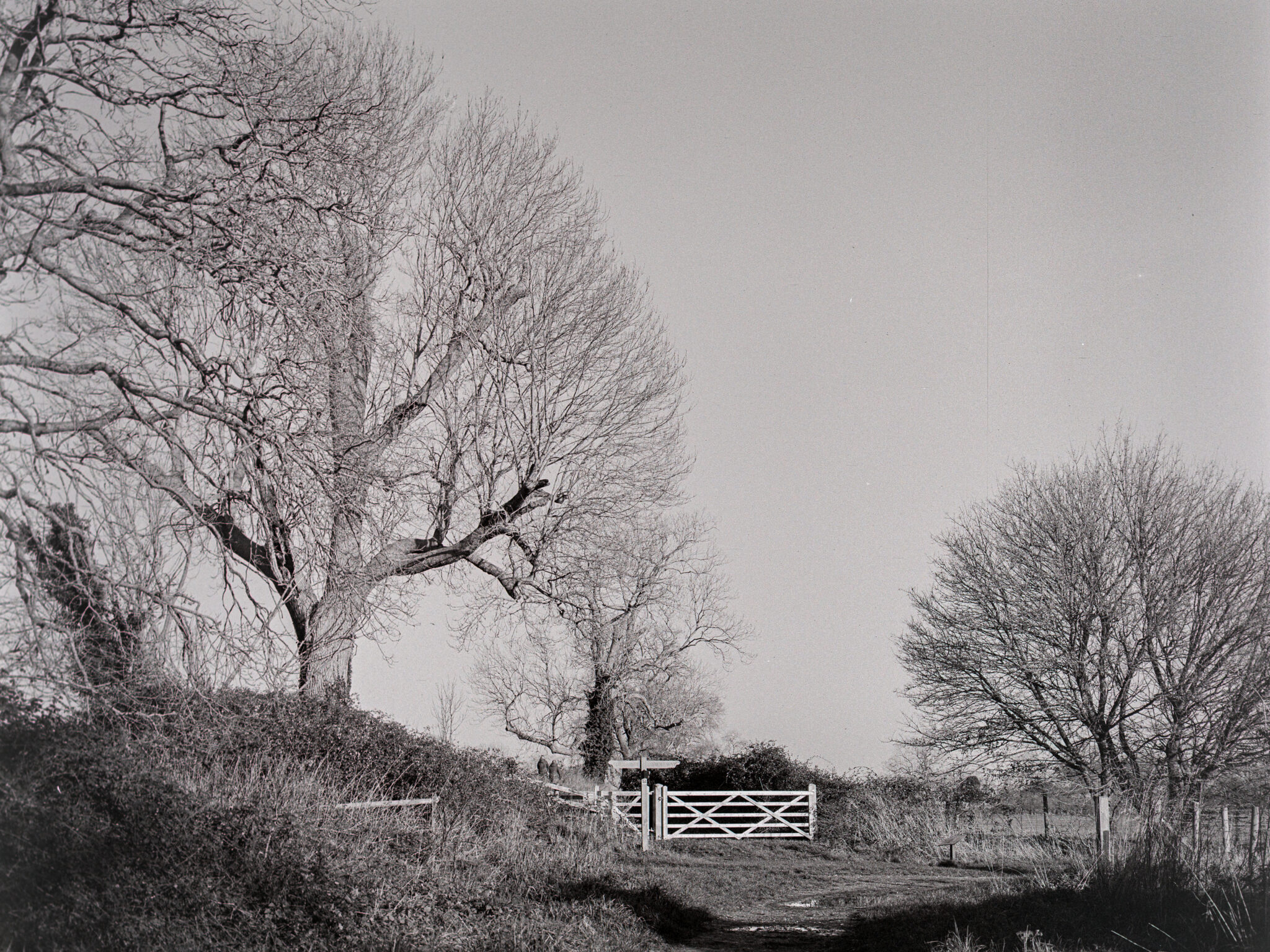
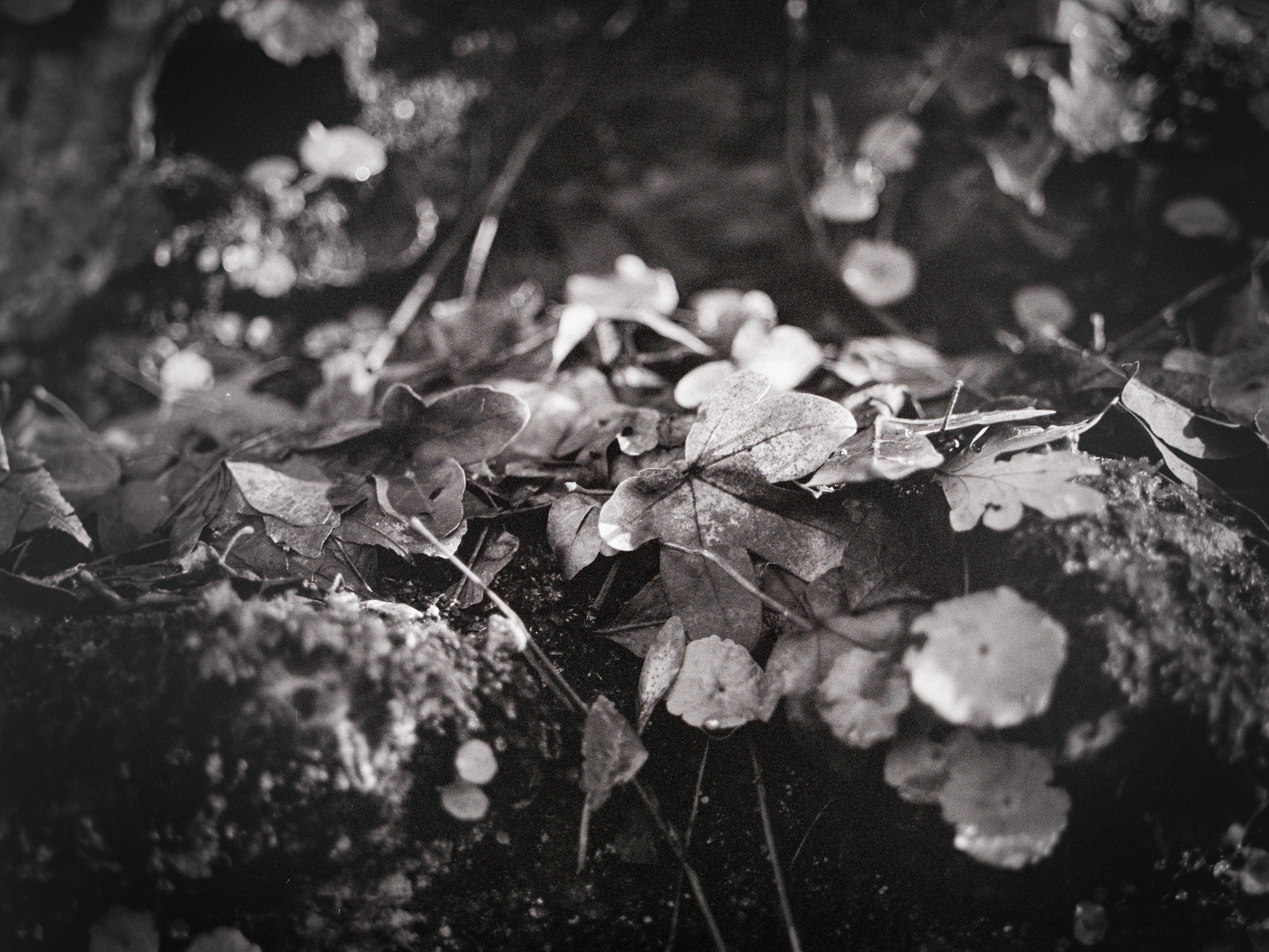
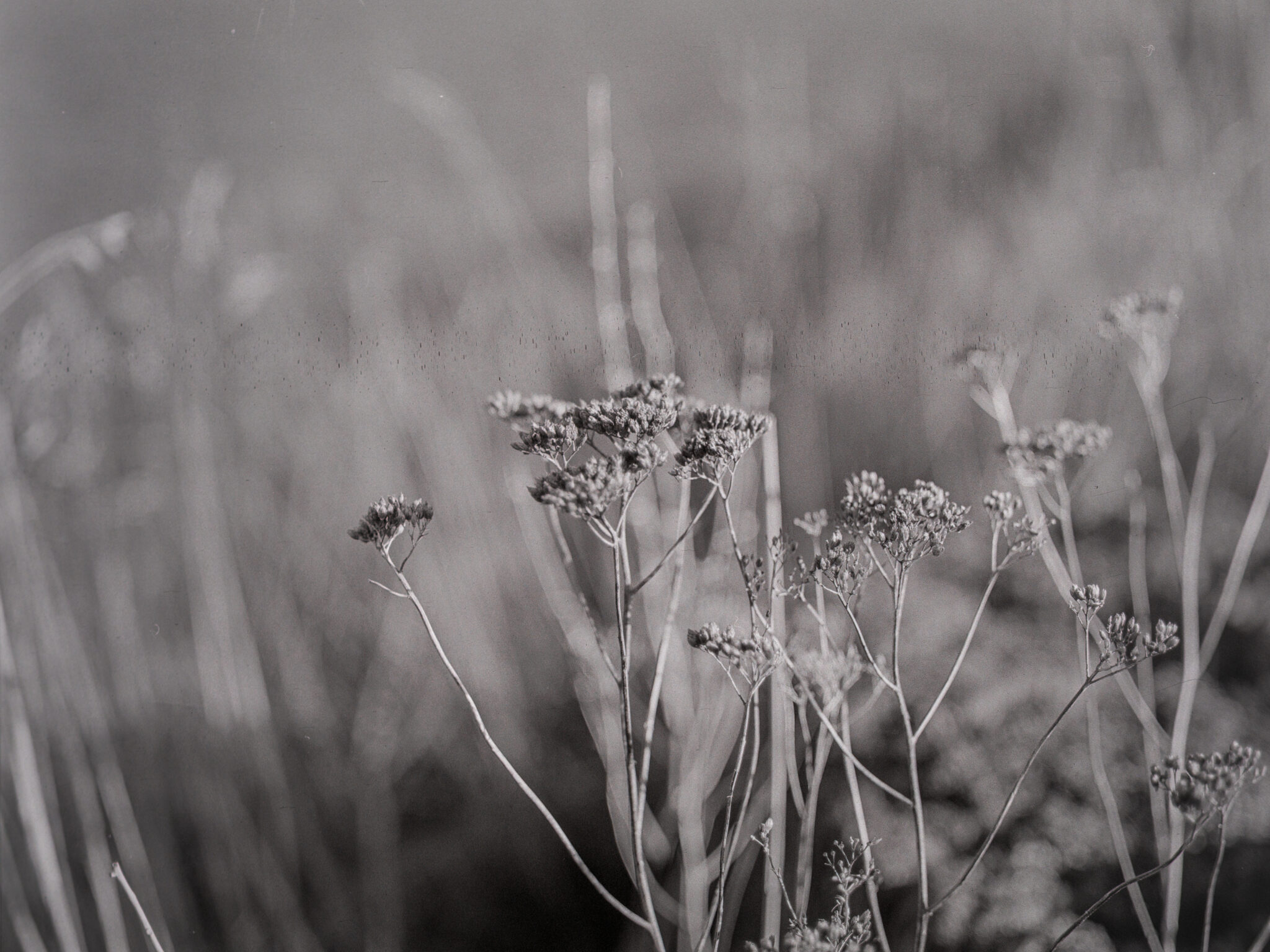
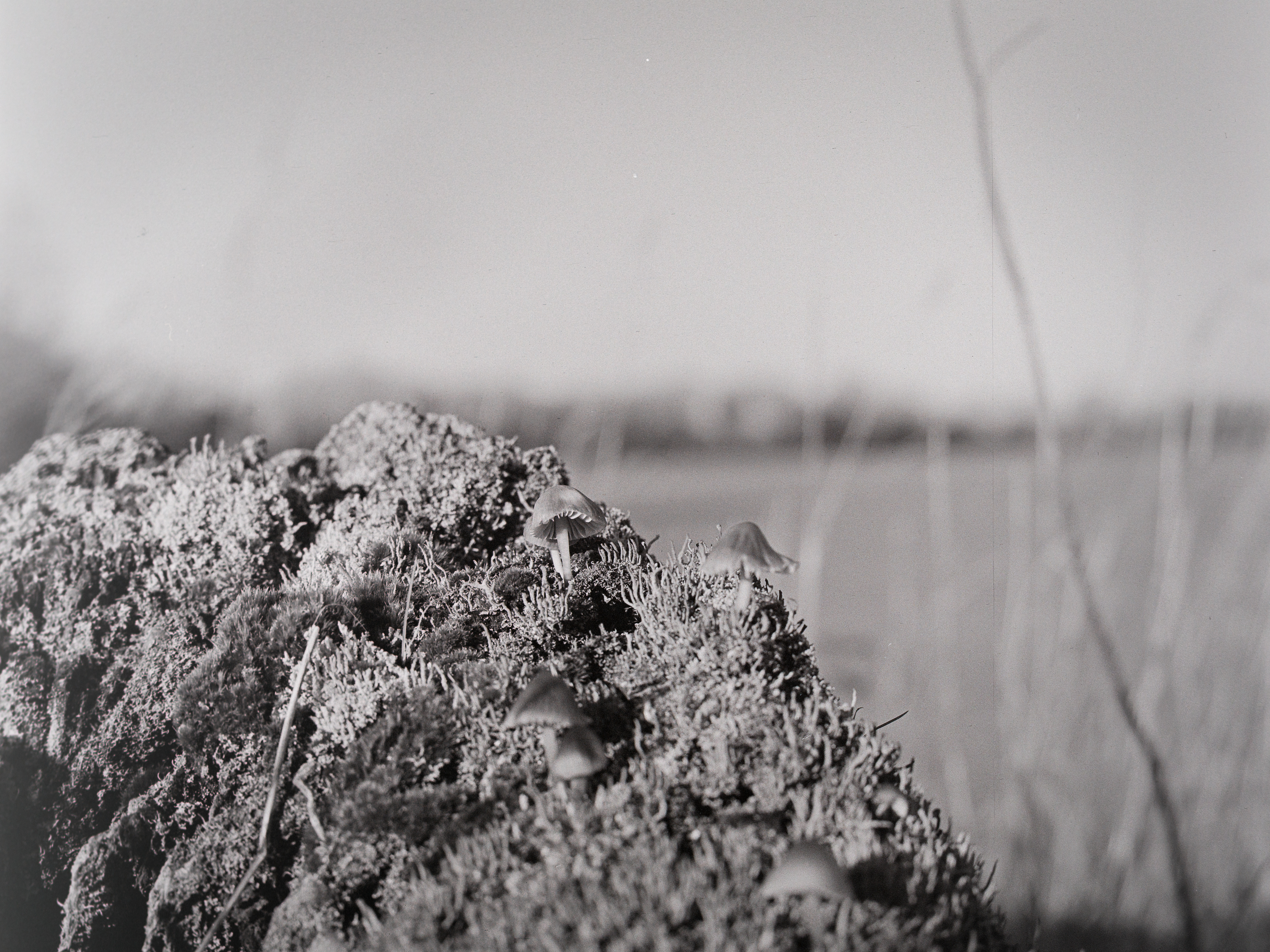
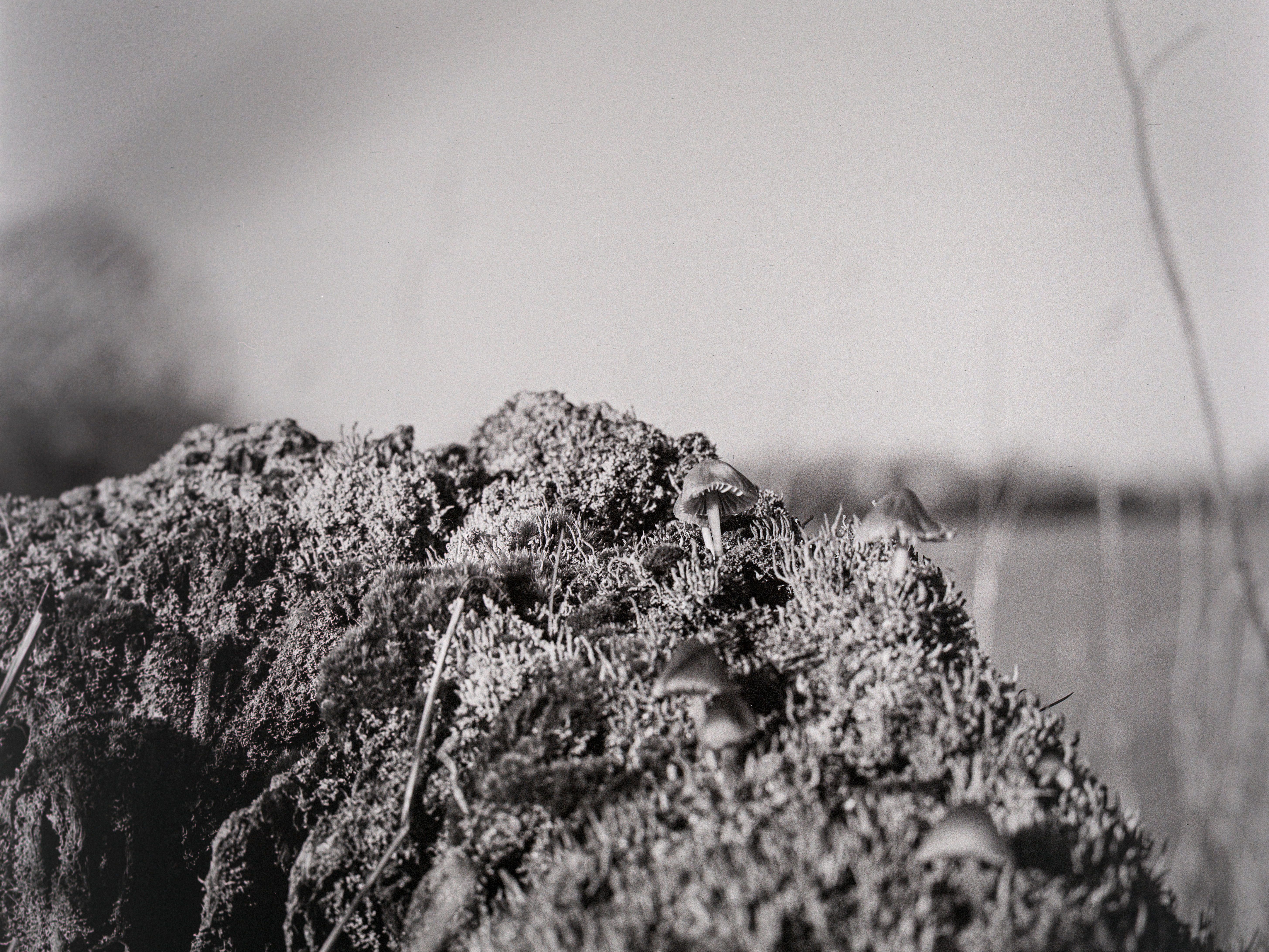
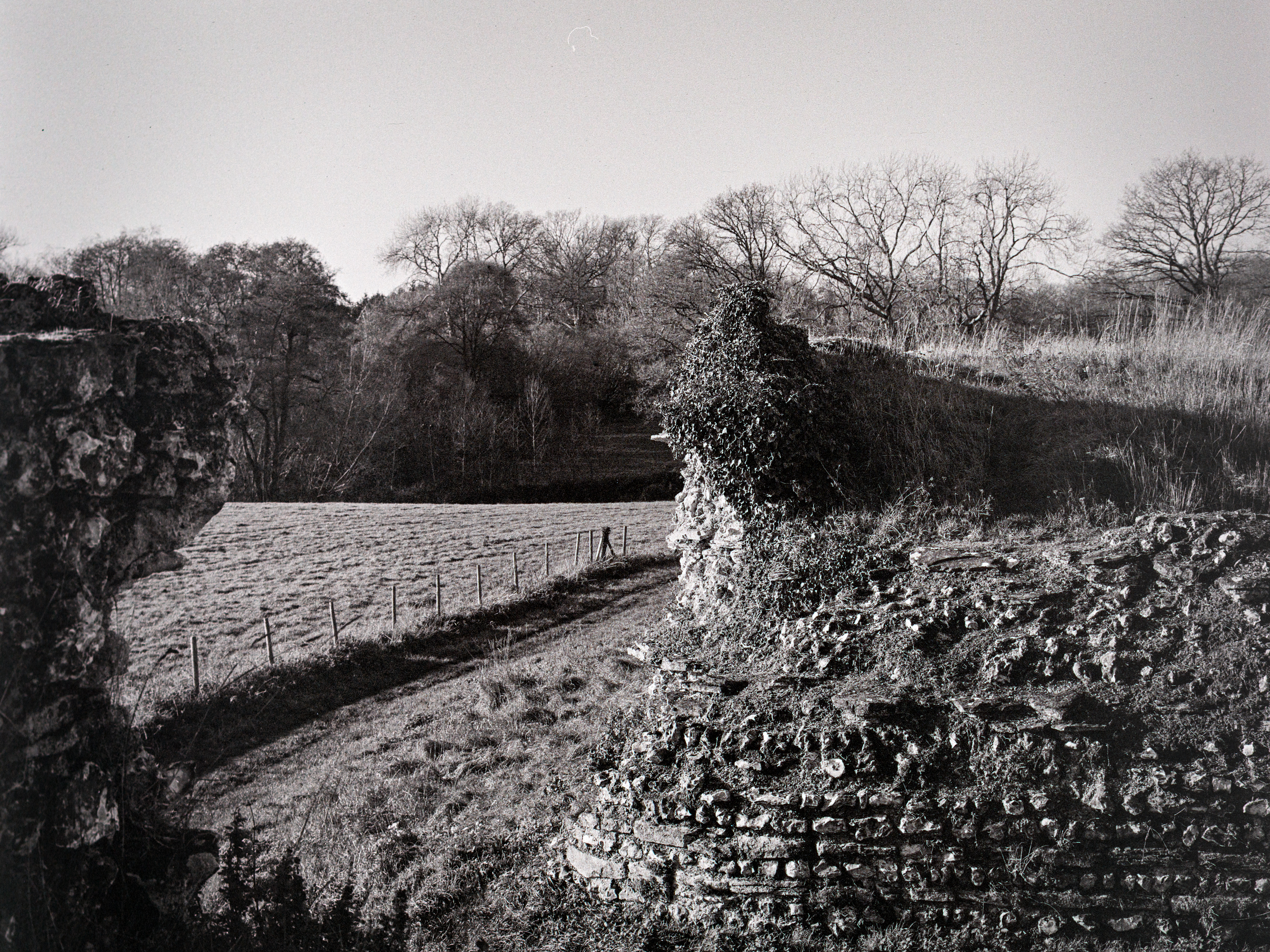
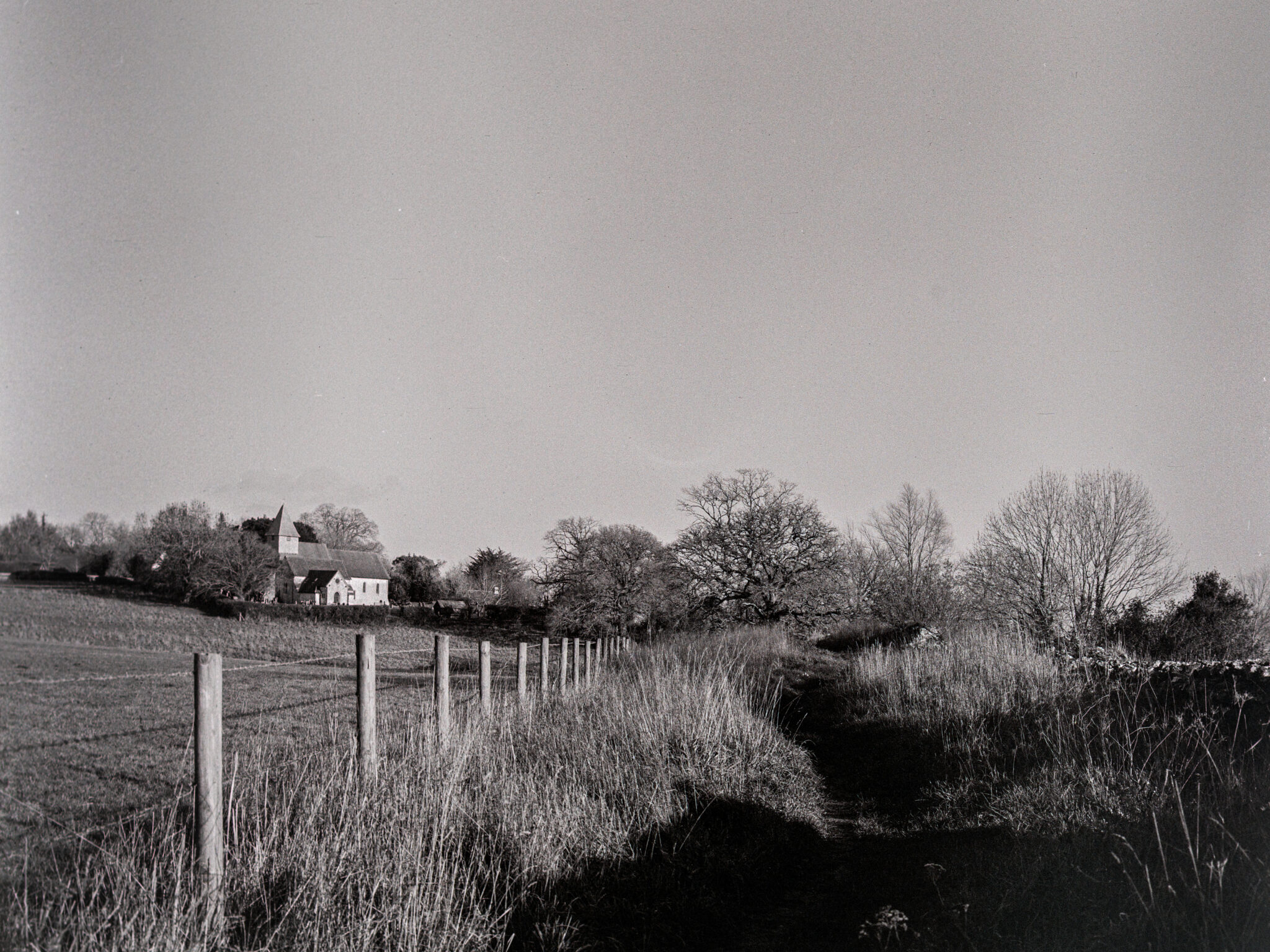
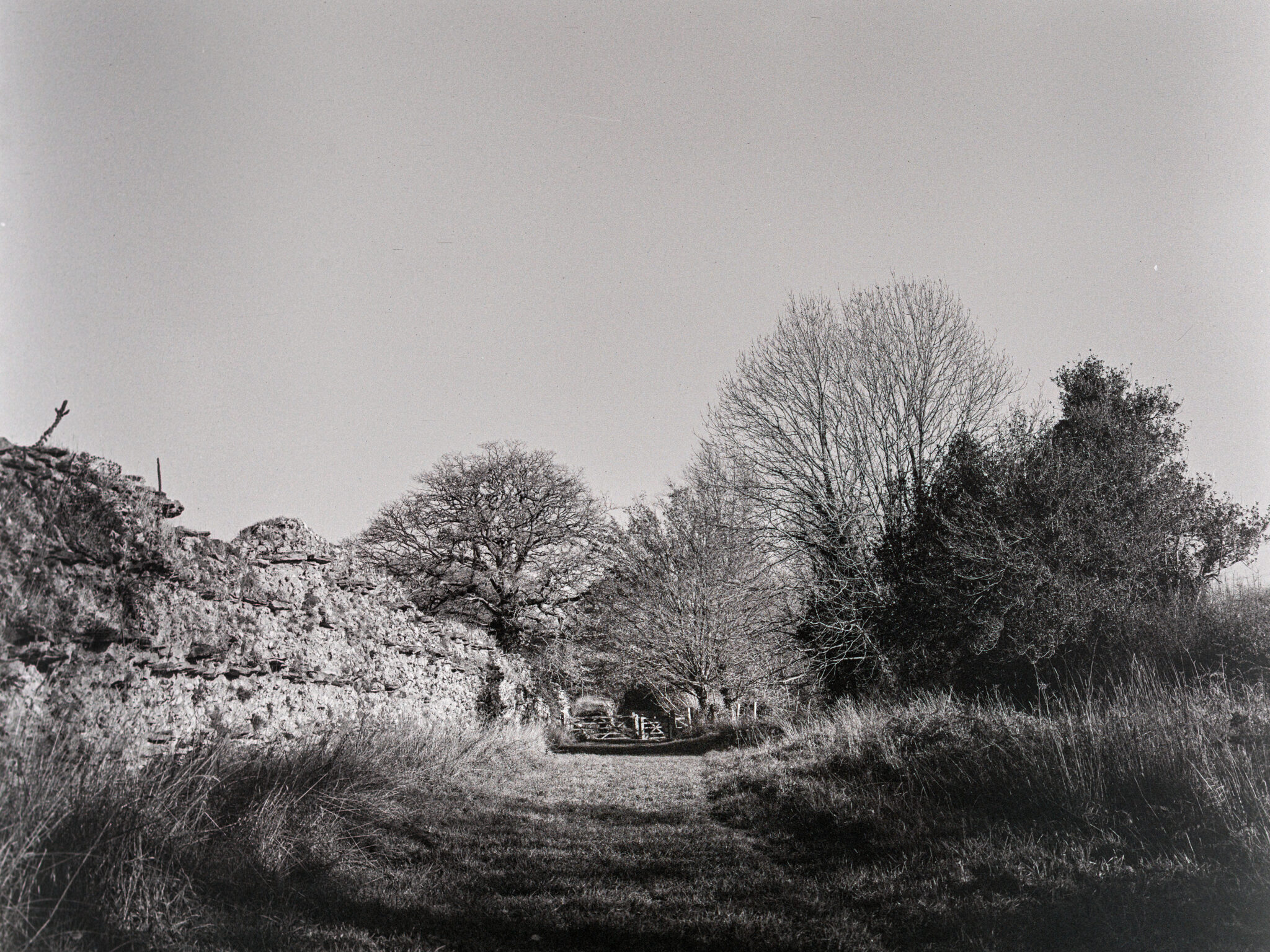
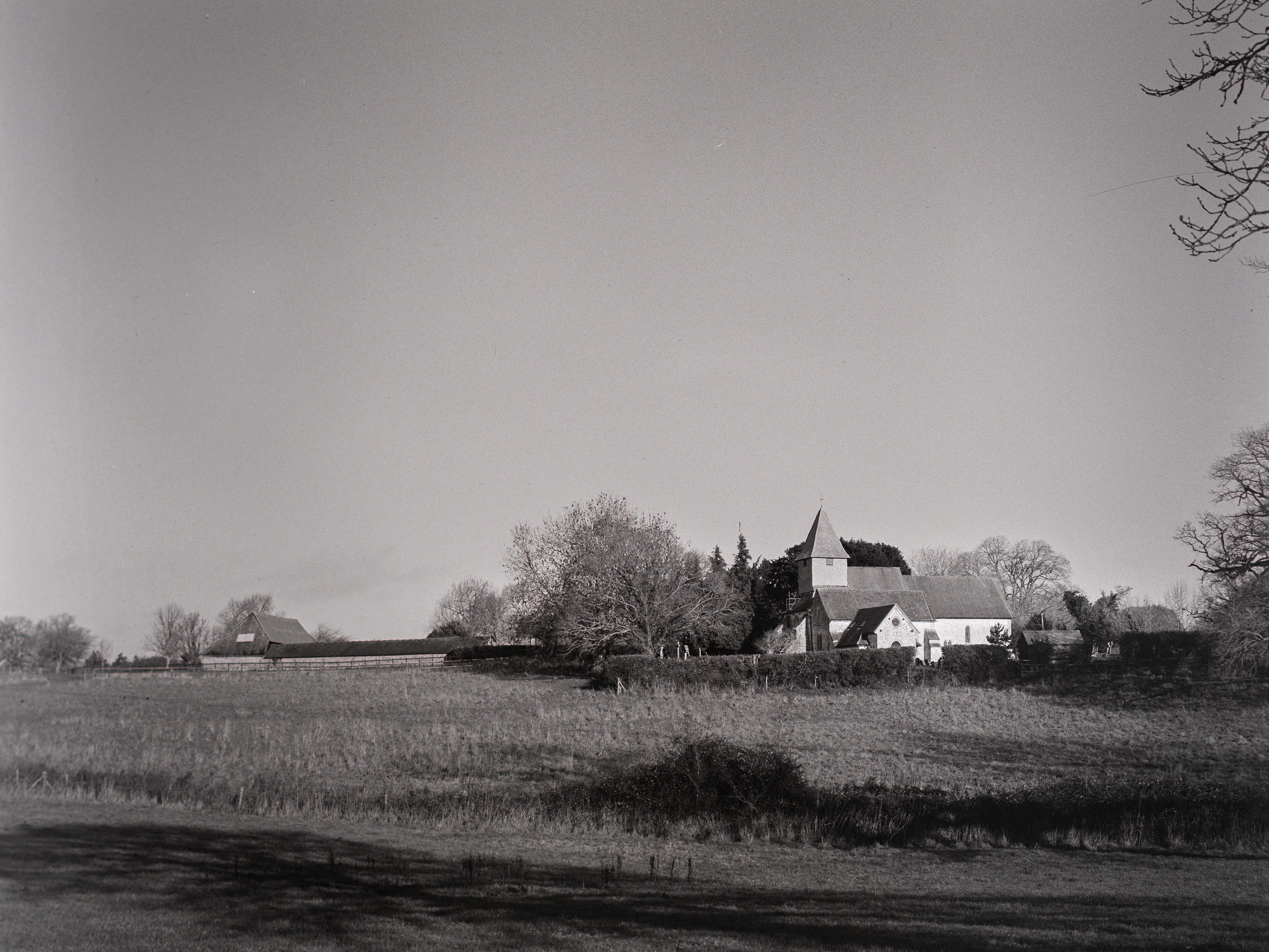
The morning was bright and cold, the kind of cold that clears the head and clarifies the air. I walked Calleva’s perimeter and inner paths with a medium format camera and a dog for company, letting film photography set the pace rather than the other way round.
This walk later became something more — a sustained study of the site through black and white film, where the simple act of walking and observing deepened into a longer exploration of landscape and history. But it began here, with fifteen frames, a cold morning, and no particular hurry.
Walking ancient ruins with film photography is less about making images and more about entering into a conversation with place. Film does not reward speed. It asks for pauses, for consideration, for standing still long enough to notice how light slides across stone or gathers in the hollows of earthworks. Winter, with its stripped-back clarity, sharpens this exchange. There is nothing to hide behind. Texture becomes everything.
This particular walk was made with a Bronica ETRSi loaded with Lucky SHD 400, a film that carries grain honestly and handles contrast with restraint, developed in Rodinal to keep that grain structure intact rather than smoothed away. The day was bright but cold, the kind of winter light that feels earned rather than dramatic. Juno walked ahead and waited, occasionally turning back as if to check I was still listening.
Why Walking Matters in Film Photography
Walking has always been part of photography, but film restores its importance. Without screens to consult or histograms to reassure, you move more deliberately. Each step becomes part of the decision-making process. Where you stand matters. When you stop matters even more.
Walking ancient ruins with film photography turns the act of photographing into a form of quiet surveying. Roman towns were designed to be walked. Their proportions make sense at human speed. Calleva reveals itself slowly — a curve of wall here, a change in ground level there, subtle rather than spectacular. Film complements this perfectly. It is not impatient. This slower approach is something I explore more deeply when returning to the same landscape repeatedly, allowing subtle changes in light and atmosphere to shape the final images. It does not demand novelty every few seconds.
With a dog alongside you, walking becomes even slower still. Juno stops for scents I cannot read, stands still where I might otherwise pass through. These enforced pauses often coincide with photographs waiting to be noticed — a low winter sun catching rough stone, frost-softened grass along an old boundary line, the spaces between things.
Winter Light and Ancient Stone
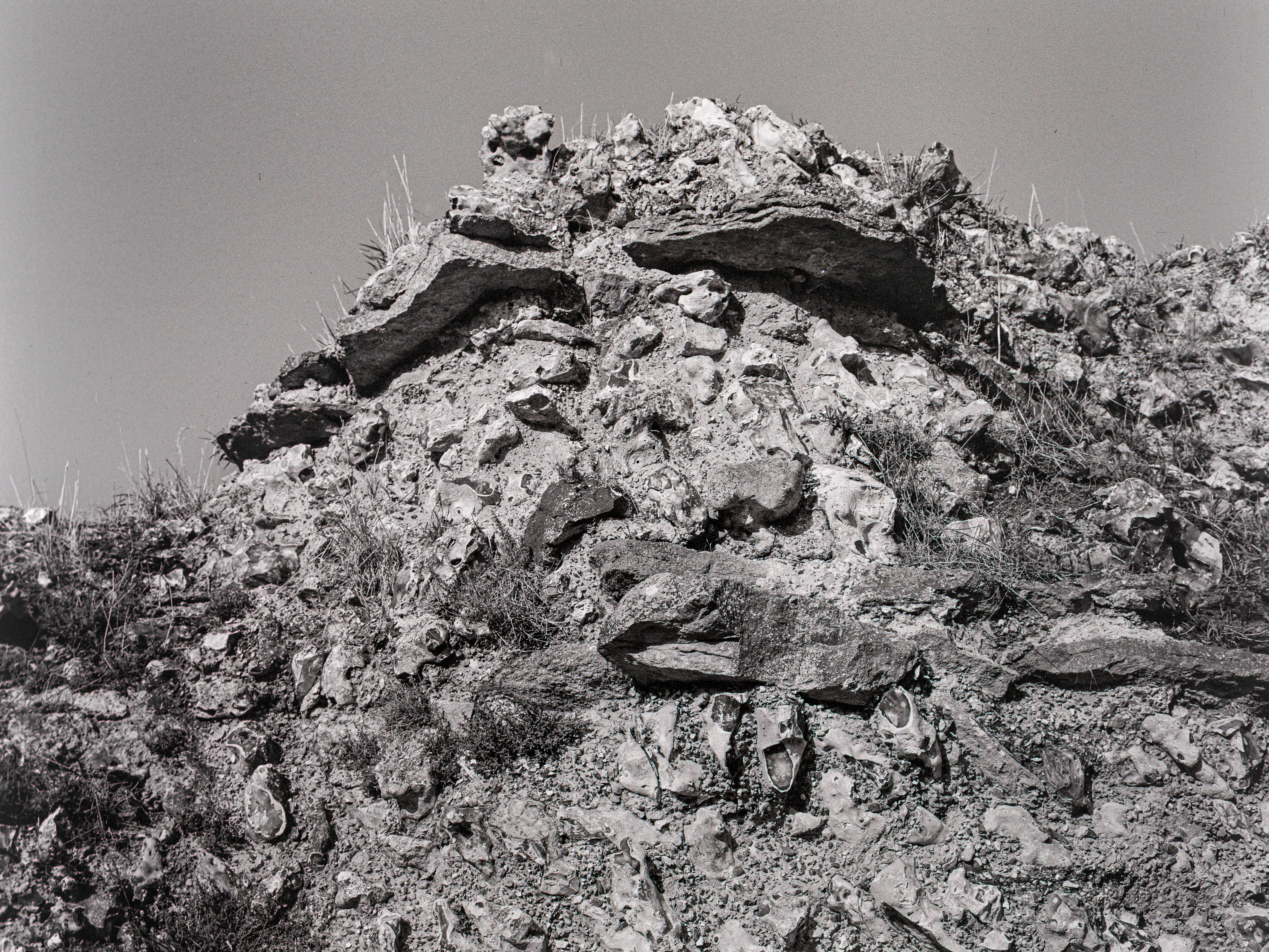
Winter light is honest light. It arrives without ceremony, sits low in the sky, and refuses to flatter. In ancient places, this honesty feels appropriate. Calleva’s walls do not ask to be romanticised. They ask to be seen.
Lucky SHD 400 responds well to this kind of illumination. The film holds highlight detail without becoming brittle and allows shadows to remain open rather than collapsing into black. Grain is present but not intrusive — it feels proportional to the subject matter, echoing erosion, weathering, and age. If you’re weighing up film stocks for a similar approach, my notes on film grain and film texture go into this in more depth.
Photographing ancient ruins on film in winter strips the scene back to essentials. Bare branches remove distractions. Long shadows emphasise form. Stone becomes sculptural. In these conditions, composition becomes quieter, more considered. There is less to include, but what remains carries weight.
| Time of Day | Light Quality | Best For |
|---|---|---|
| Early morning | Low, raking, cold-toned | Long shadows across earthworks and wall lines |
| Midday | Flat, still low in winter | Even detail across broad stretches of wall |
| Late afternoon | Warm, angled, fading fast | Texture on stone and frost-softened ground |
Medium Format as a Way of Seeing
Medium format film changes not just the image, but the photographer. The Bronica is not a camera you flick up to the eye impulsively. It has mass, both physical and psychological. Each frame costs something — time, money, attention — and that cost sharpens awareness. This becomes especially apparent when working in historically rich environments, where restraint and repetition reveal more than a single visit ever could. I’ve written more generally about this approach in my guide to medium format photography and in my review of the Bronica ETRSi itself.
Walking ancient ruins with film photography using medium format encourages restraint. Fifteen frames are enough for an entire walk. More than enough, in fact. The limitation becomes a form of editing before the shutter is ever pressed.
Rather than chasing variety, you begin to look for resonance. Repeated motifs. Subtle differences. The same wall under slightly different light. The same path approached from another angle. This kind of repetition feels appropriate in places shaped by centuries rather than moments.
Lucky SHD 400 in Cold, Clear Conditions
Lucky SHD 400 is often described as characterful, sometimes unpredictably so, but in winter conditions it finds its footing. Cold temperatures slow everything down, including the photographer, and the film responds with a steadiness that suits quiet landscapes. My full Lucky SHD 400 review covers how it behaves across a wider range of conditions.
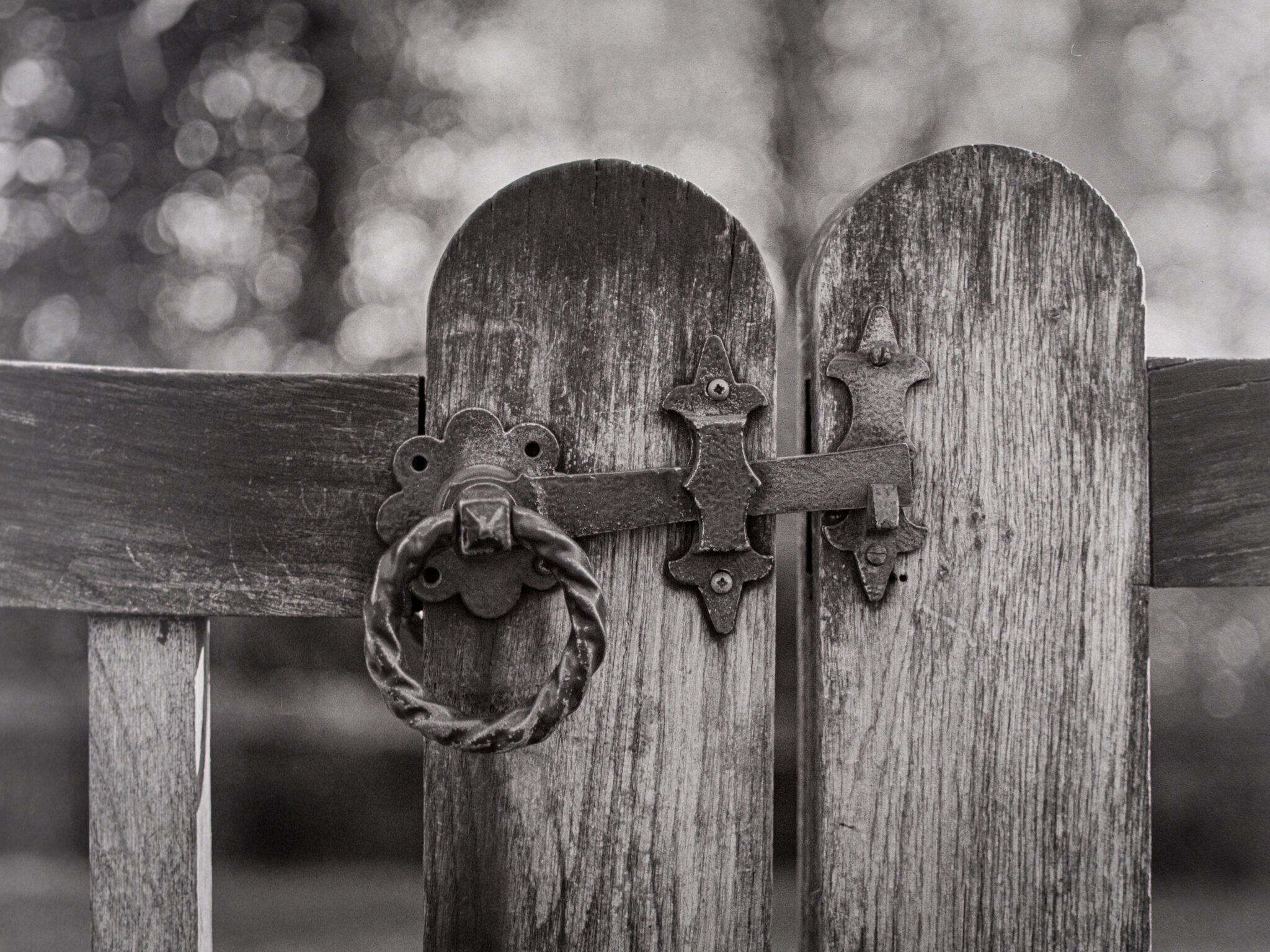
Contrast is present but manageable. Grain shows itself clearly without overwhelming fine detail. In medium format, this grain becomes part of the surface rather than a distraction. It adds texture without shouting.
Walking ancient ruins with film photography is not about technical perfection. It is about coherence — matching material to subject, process to place. Lucky SHD 400 does not pretend to be invisible. It allows itself to be seen, much like the ruins themselves.
Companionship on Quiet Ground
There is something grounding about walking with a dog in ancient places. Juno does not care about history in the way humans do, but she responds instinctively to atmosphere. She slows where the ground changes, pauses near walls, listens where nothing obvious is happening.
This companionship alters the rhythm of photography. It removes the temptation to rush or overproduce. You are not alone with your thoughts, but you are not distracted either. The walk becomes shared, the photographs a byproduct rather than the sole purpose.
In this way, walking ancient ruins with film photography becomes an act of presence rather than productivity. The camera records what happens when you allow yourself to be fully there.
A Slow Practice in a Fast World
Modern photography often rewards speed — more images, quicker turnaround, instant sharing. Film photography, especially in ancient places, offers an alternative. It invites you to linger. To accept uncertainty. To trust the process.
Calleva does not change quickly. Its walls erode at a geological pace. Photographing it on film feels like meeting the place on its own terms rather than imposing modern expectations upon it.
Walking ancient ruins with film photography is, ultimately, a refusal to hurry. It is a way of aligning your pace with the landscape, your materials with the subject, and your attention with the present moment.
| Element | Details |
|---|---|
| Location | Calleva Atrebatum, Silchester |
| Season | Winter |
| Camera | Bronica ETRSi |
| Film Stock | Lucky SHD 400 |
| Developer | Rodinal |
| Approach | Slow walking, limited frames |
| Companion | Juno the dog |
| Focus | Texture, light, patience |
A Continued Exploration of Calleva
This walk was only the beginning of a deeper engagement with Calleva Atrebatum. Through repeated visits and a more focused approach to black and white film photography, the landscape revealed something quieter, more reflective — less about the act of walking, and more about presence within the space itself.
That ongoing work eventually became a book, Where the Wall Whispers, and continues in my most recent title, Calleva: A Year Inside the Walls. Both are available, along with my other titles, on my books page.
Why is film photography suited to ancient ruins?
Film photography encourages a slower, more deliberate approach that aligns well with historic sites. Ancient ruins reward observation rather than speed, and film reinforces this mindset.
Is winter a good season for photographing ruins on film?
Yes. Winter light is lower and more directional, revealing texture and form. Fewer visual distractions allow composition to become simpler and more intentional.
Why use medium format film for landscape walks?
Medium format slows the process and offers a tonal depth that suits quiet landscapes. The limitation of fewer frames encourages thoughtful composition. See my guide to medium format film cameras for more.
What makes Lucky SHD 400 suitable for winter photography?
Lucky SHD 400 handles contrast well in bright winter light and offers a grain structure that complements textured subjects like stone and earthworks. My full Lucky SHD 400 review covers this in more detail.
How does walking influence photographic outcomes?
Walking shapes how you see. It introduces rhythm, pause, and perspective. Walking ancient ruins with film photography allows images to emerge naturally rather than being forced.
What developer works well with Lucky SHD 400?
Rodinal suits this film well, preserving its natural grain structure rather than smoothing it away — a quality that echoes the texture and age of a site like Calleva.
Where is Calleva Atrebatum?
Calleva Atrebatum is a Roman town site near Silchester in Hampshire, its earthwork walls still walkable in a wide circuit around the original settlement.
Does walking with a dog change how you photograph?
It does. A dog’s unpredictable pauses — for scent, sound, or simple curiosity — often coincide with moments worth photographing, and remove the temptation to rush.
This article is part of my Film Photography hub series.