
There is a particular kind of silence that comes after you develop a roll of film and realise something is not quite right. It is not dramatic, and it does not announce itself immediately as a disaster. Instead, it begins as a slight hesitation, a sense that the negatives in front of you are not behaving in the way they should, and that something subtle has shifted without your awareness.

That was the feeling I had when I looked through a recent roll of Earl Grey film shot on my Canon 300V during a walk at Hengistbury Head. The day itself had been unremarkable in the best possible way. The camera came with me as it often does, loaded without ceremony, paired with a familiar lens, and used in that quiet, instinctive way where I am not thinking about the equipment at all. It is the kind of photography I enjoy most, where the camera simply disappears and the act of seeing takes over.
The Canon 300V has never been a camera that demands attention, but over time it became part of a much wider way of working with film, something I explore more fully in my Film Photography Guide.
When I developed the film, I expected the usual mixture of success and failure that comes with black and white film. Instead, I found something I could not immediately explain. The negatives showed marks that did not resemble dust or scratches, nor did they look like typical artefacts. There was a structure to them, a consistency that suggested something had happened during exposure rather than after it.
At first, like most photographers would, I avoided blaming the camera. It is always easier to suspect chemistry, processing, or handling before admitting that a trusted piece of equipment might be responsible. I have had enough rolls go through different labs and scanners to know that strange things can happen at every stage after exposure, and so I went through the usual list of possibilities in my mind before allowing myself to consider anything mechanical.
But the more I studied the negatives, the more that explanation began to feel insufficient. The marks were too consistent, too repeatable across frames, and too embedded within the image area itself. They were not drifting across the film in a way that suggested development issues, nor were they random enough to be scanning noise. Instead, they felt like something that had occurred at the exact moment of exposure, as though light had been interrupted or shaped in a way it should not have been.
A camera that never asked for attention
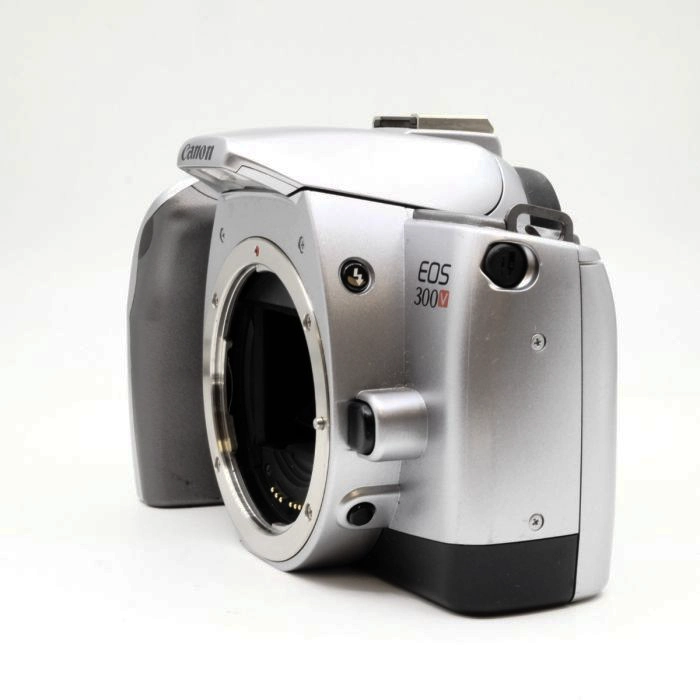
The Canon 300V has never been a camera that demands affection. It is not built like the mechanical tanks of earlier decades, nor does it carry the nostalgia that so often inflates the reputation of older film bodies. It is light, almost insubstantial in the hand compared to more traditional SLRs, and yet that is partly why I grew to appreciate it. It never interferes with the process of taking photographs.
Over time it became one of those cameras that simply lives in the background of your practice. I would take it on walks without thinking too much about it, load film without ritual, and trust it to behave exactly as expected. It handled everything from woodland scenes to coastal light without complaint, and it became the kind of tool you rely on precisely because you never have to think about it.
That is what makes the possibility of failure feel slightly unsettling. Not because the camera is expensive or rare, but because it has been so dependable in a way that does not draw attention to itself. You only really notice reliability when it starts to disappear.
The negatives that changed the story
When I first laid the negatives from the Earl Grey roll on the light table, I assumed I would quickly find a simple explanation. Film has a way of revealing mistakes that are easy to misinterpret, and I expected this to be another case of development unevenness or scanning inconsistency. But instead I found marks that appeared embedded within the exposure itself, as though something had interfered with the light reaching the film at the precise moment each frame was captured.
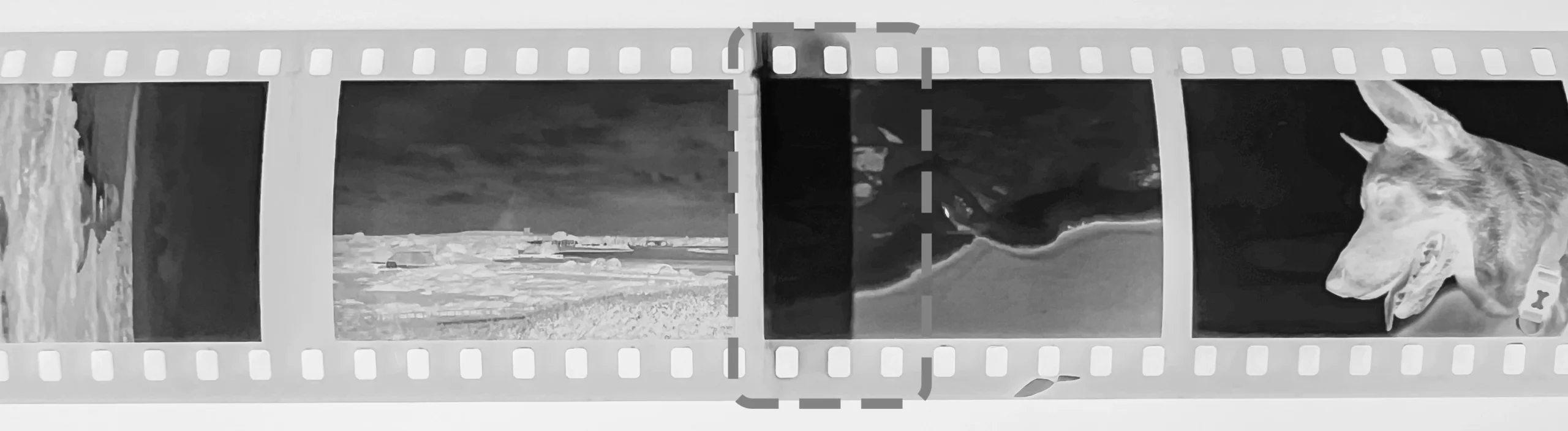
What made it more difficult to dismiss was the pattern. It was not isolated to a single frame or section of the roll, but appeared in a way that suggested repetition. That repetition is what slowly begins to shift your thinking from external causes to internal ones. At some point you stop asking whether the lab made a mistake and start asking whether the camera itself is still behaving as it should.
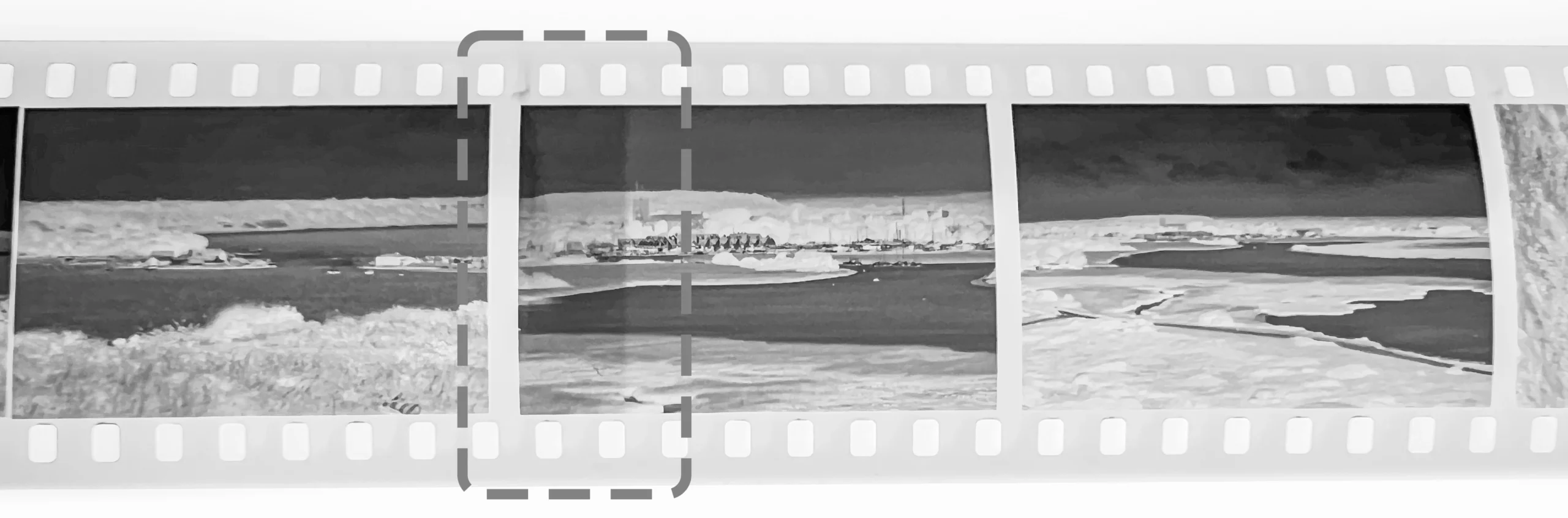
I found myself inspecting the negatives more closely, holding them at different angles, comparing frames, and trying to convince myself that I was seeing something accidental. But the more I looked, the more the idea of a mechanical issue inside the camera became harder to ignore.
Before I started blaming the camera, I went back through the entire process, including development and scanning, something I’ve broken down in more detail in my Simple Film Development Guide.
Canon 300V shutter problem and What it actually looks like
Film cameras hide their complexity very well, and the shutter mechanism in particular is something most photographers rarely think about until it goes wrong. In a camera like the Canon 300V, the shutter operates with precise timing, controlling the exposure by allowing light to pass across the film plane for a fraction of a second. When that timing begins to drift or fail, the results can appear in a variety of ways depending on how and when the fault occurs.
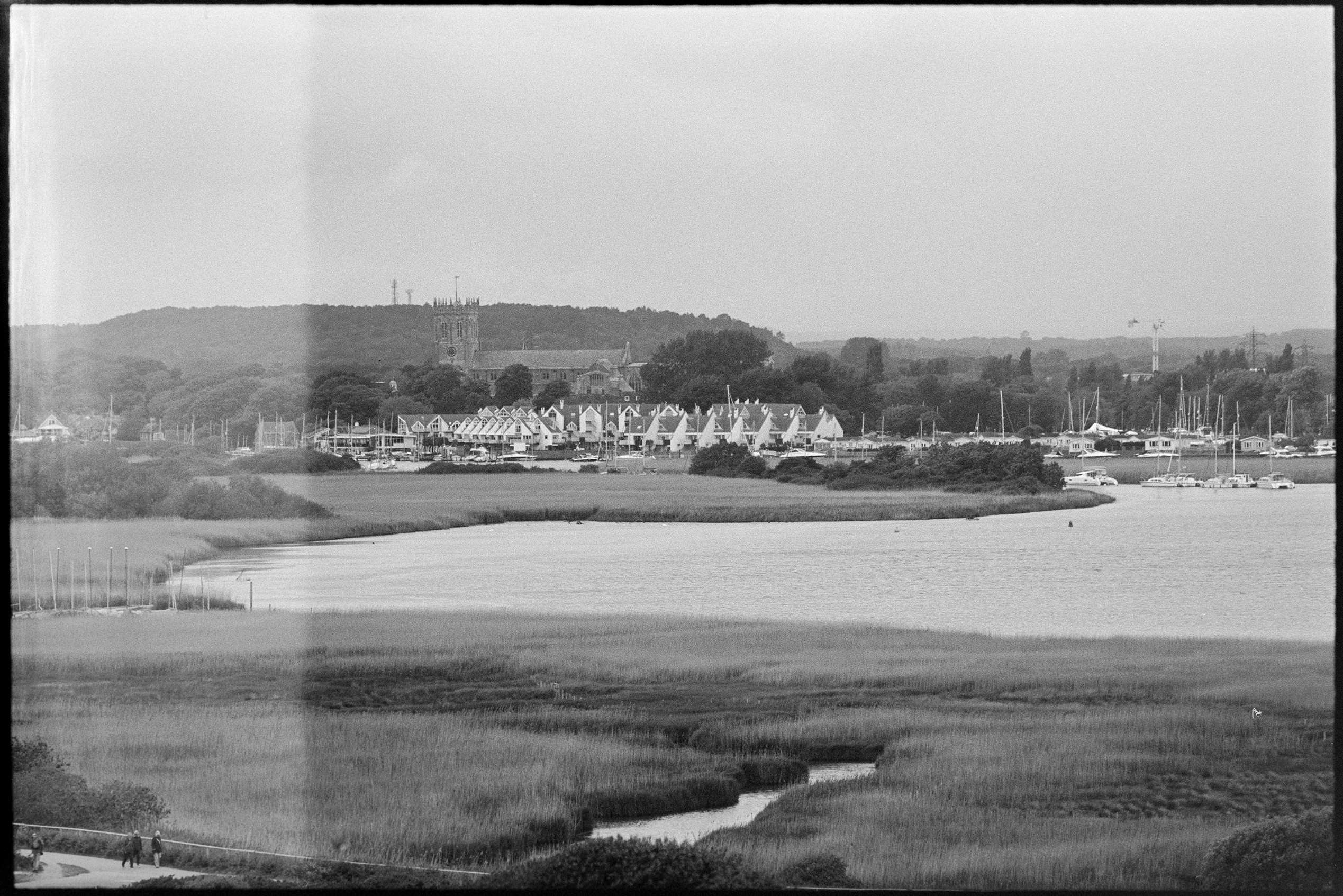
Sometimes shutter issues show up as banding across part of the frame, where exposure is uneven because the curtain does not travel cleanly. In other cases, there may be partial exposures where only a section of the frame receives the correct amount of light. More subtle faults can appear as inconsistent density between frames, particularly at certain shutter speeds, which makes diagnosis even more difficult because the problem is not always visible in every shot.
The frustrating part is that none of these symptoms necessarily present themselves in a way that is obvious during shooting. The camera can sound perfectly normal, advance film correctly, and meter without issue, while still producing flawed negatives. It is only afterwards, when the film is developed, that the problem reveals itself.
Eliminating everything else
Before arriving at any conclusion, I went through the usual process of elimination. I considered whether the marks could have been introduced during development, perhaps through uneven agitation or chemistry flow. I checked for physical damage, pressure marks, and light leaks that might explain what I was seeing.
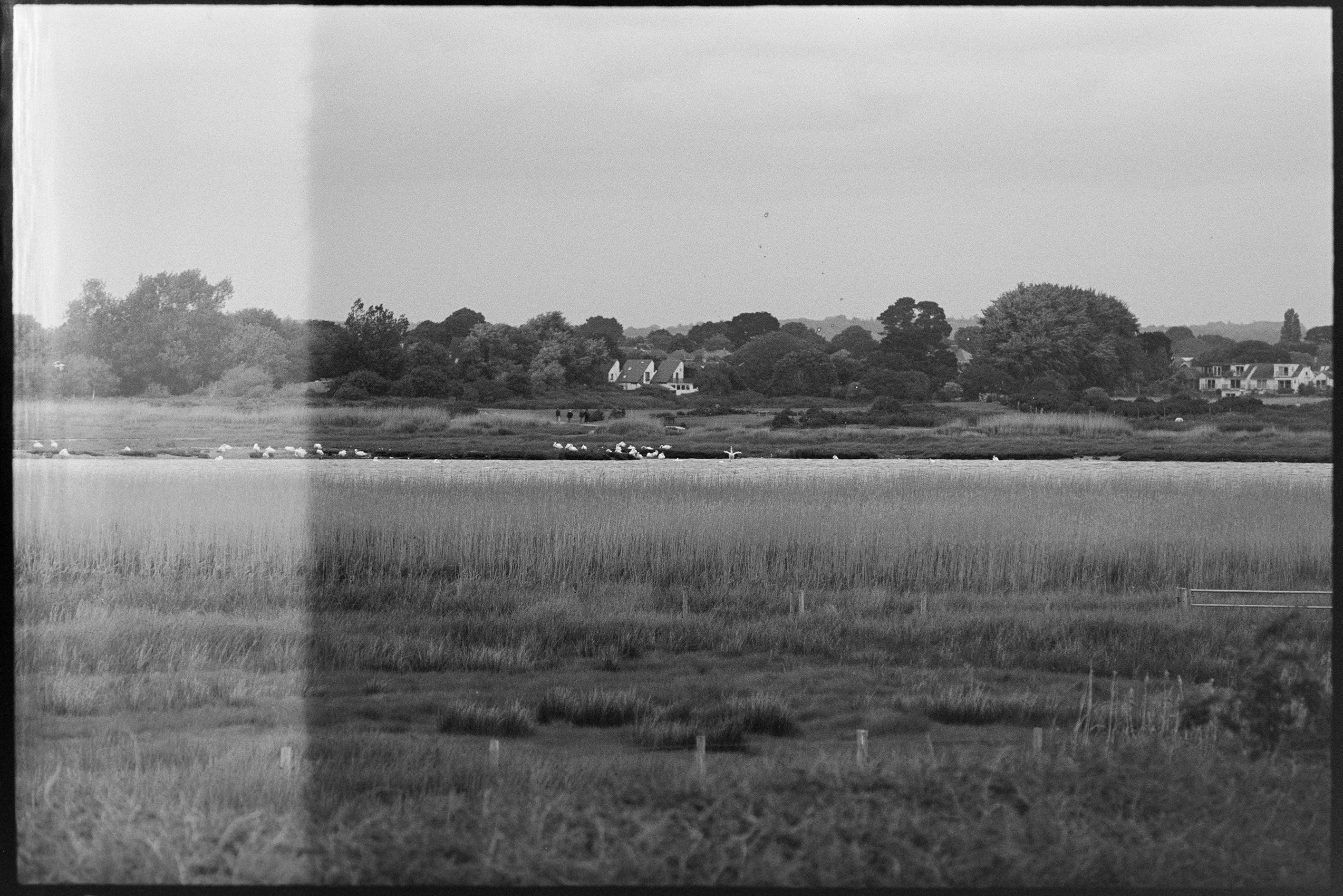
But none of those explanations fully matched what was present on the film. The defects were too consistent across frames, too structured, and too clearly part of the exposure itself. At that point, the list of possible causes narrowed significantly, and the shutter mechanism became the most likely source.
The uncomfortable conclusion
The Canon 300V is not a camera that justifies expensive repair work. It is part of a generation of film cameras that are now so affordable on the second-hand market that replacing them is often cheaper than fixing them. From a practical standpoint, the solution is simple. You buy another body, move your lenses across, and continue shooting.
But photography is rarely only practical. The emotional weight of equipment is not tied to its market value, and that is where this situation becomes more complicated. This particular camera has been with me through a body of work that I associate with a specific way of seeing. It has been present during quiet walks, early mornings, and long stretches of time where photography becomes less about output and more about attention.

So even if the fault turns out to be confirmed shutter failure, the decision about what to do with the camera does not feel entirely straightforward. It may become a donor body, or it may simply remain on a shelf, not as a functional tool but as a record of a period of work that it helped shape.
One more roll before certainty
At the moment I am not fully ready to declare the camera finished. Film has taught me to be cautious with assumptions, and there is always a chance that what I am seeing is the result of something external rather than internal. The only way to know for certain is to shoot another roll under controlled conditions and see whether the same pattern appears again.
After all; my film choice was Earl Grey and for those that know this film choice, it comes in a recycled plastic container. Perhaps it was a ‘tight’ film? or am I overthinking?
That is what I intend to do next. A fresh roll of my favourite Kentmere film, a familiar setting, and a deliberate attempt to reproduce the conditions. If the problem repeats, then the answer becomes much clearer. If it does not, then I will need to rethink everything I think I have observed so far.
Even with something like a potential camera fault in the background, the act of photographing at places like Hengistbury Head is still rooted in a slower, more intentional way of working that I often write about in Mindful Photography.
Either way, the process itself feels appropriate. Film photography has always been as much about investigation as it is about creation. Every roll is a record, but sometimes it is also a clue.
Final thoughts
If this does turn out to be the beginning of the end for my Canon 300V, then it will not be a dramatic ending. There will be no final shutter click that announces retirement, no obvious moment where everything stops working at once. Instead, it will simply be a gradual realisation that something has changed, and that the camera can no longer be fully trusted in the way it once was.
But even if that is the case, it feels like a fair ending. It did its job without complaint for longer than I ever expected. It came with me to places I would not have photographed otherwise, and it quietly supported a way of working that depends more on presence than precision.
And in the end, perhaps that is enough for any camera.
You can explore more of my film photography work, guides, and stories on my Film Photography Hub here: https://fineartpics.co.uk/film-photography-hub”