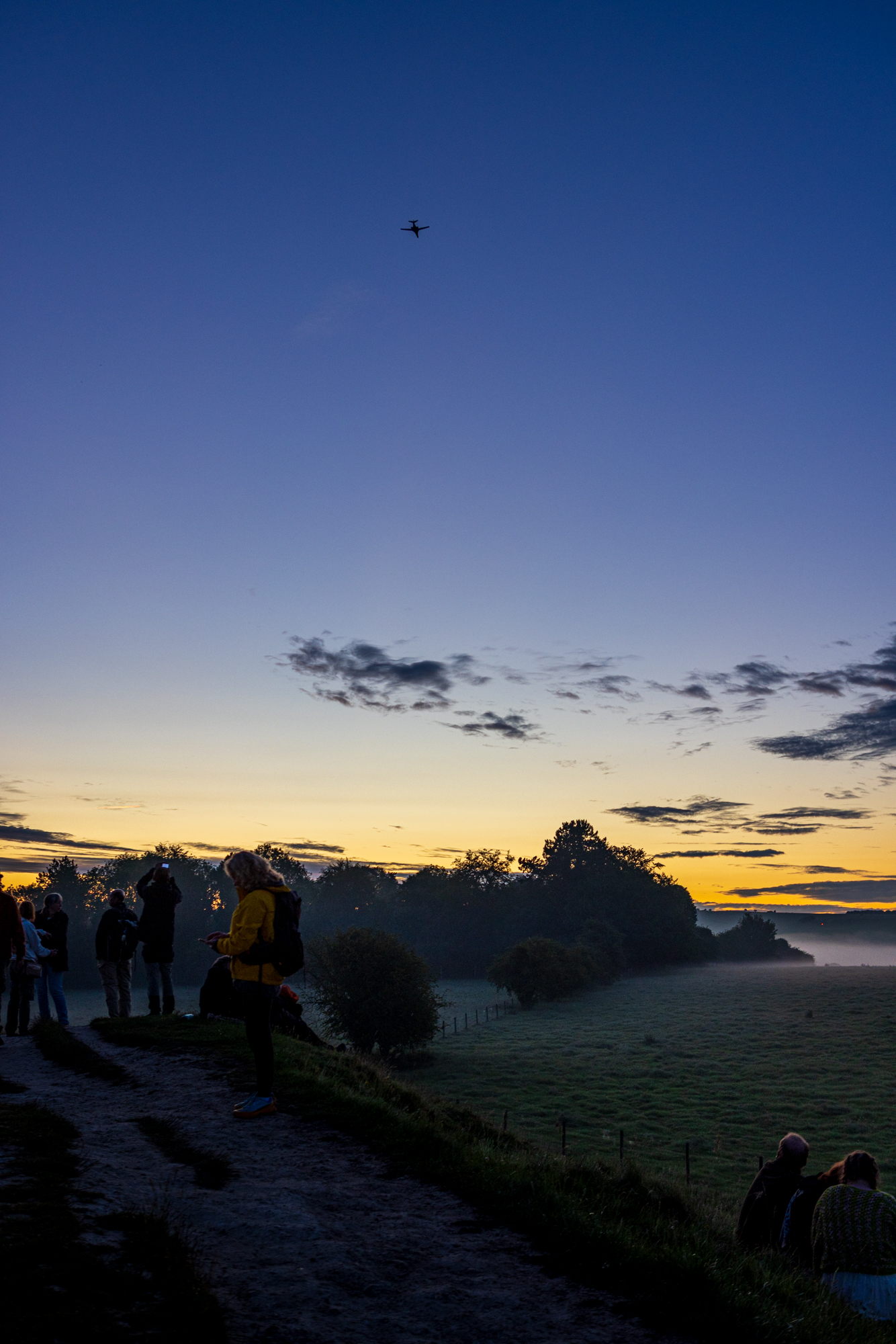
The alarm went off at 2.15am. Outside, it was already the soft grey of a midsummer pre-dawn — the kind of light that doesn’t get properly dark at this time of year in England. By 3.30am I was pulling into the National Trust car park at Avebury, Wiltshire, with my Canon R5, a 24-70mm EF L series lens, and the quiet anticipation that only very early mornings produce.
I had photographed Avebury before — the stones in winter, in overcast light, in the particular kind of stillness that the site produces when it’s empty. But the summer solstice is something different entirely.
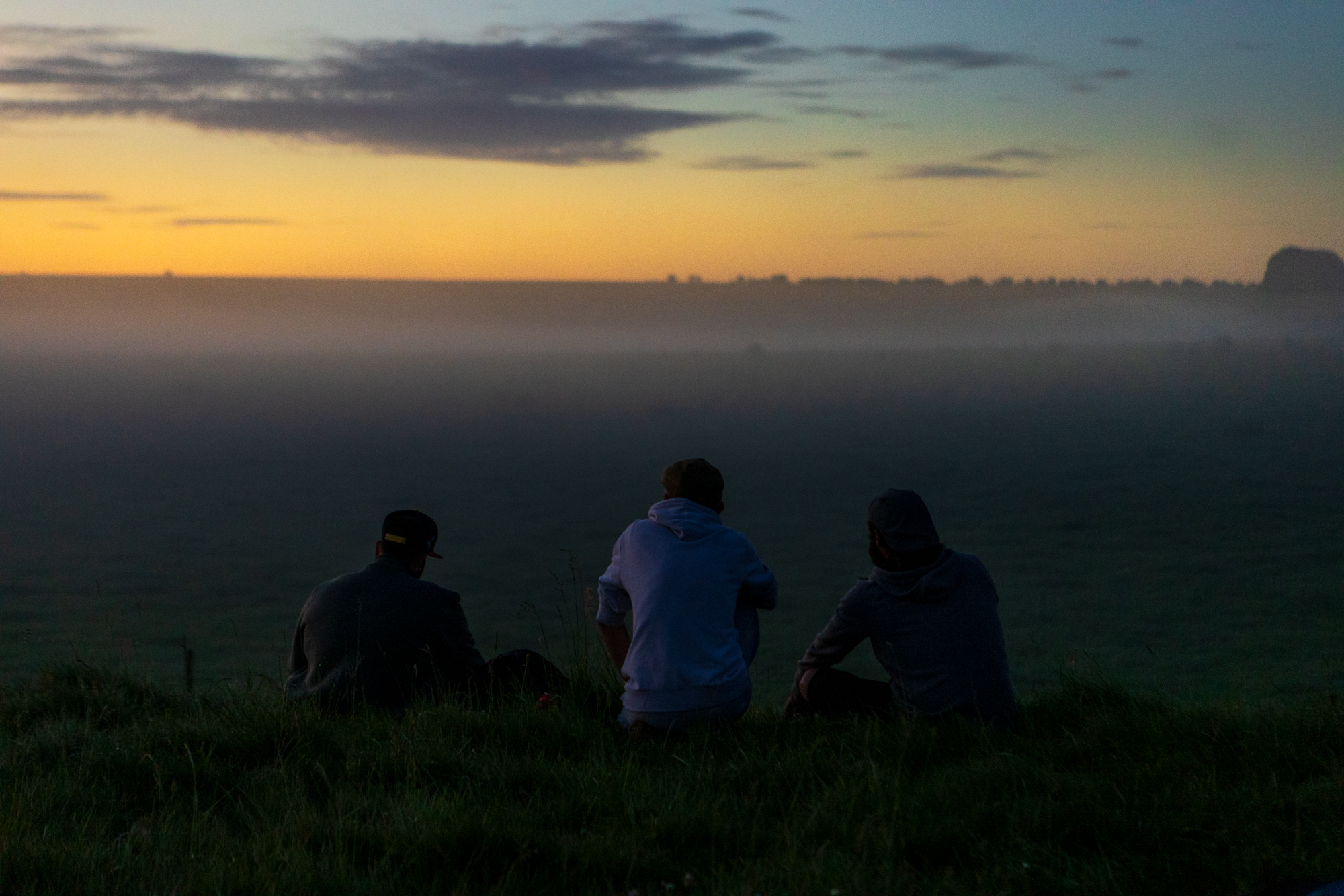
Before Sunrise — The Gathering
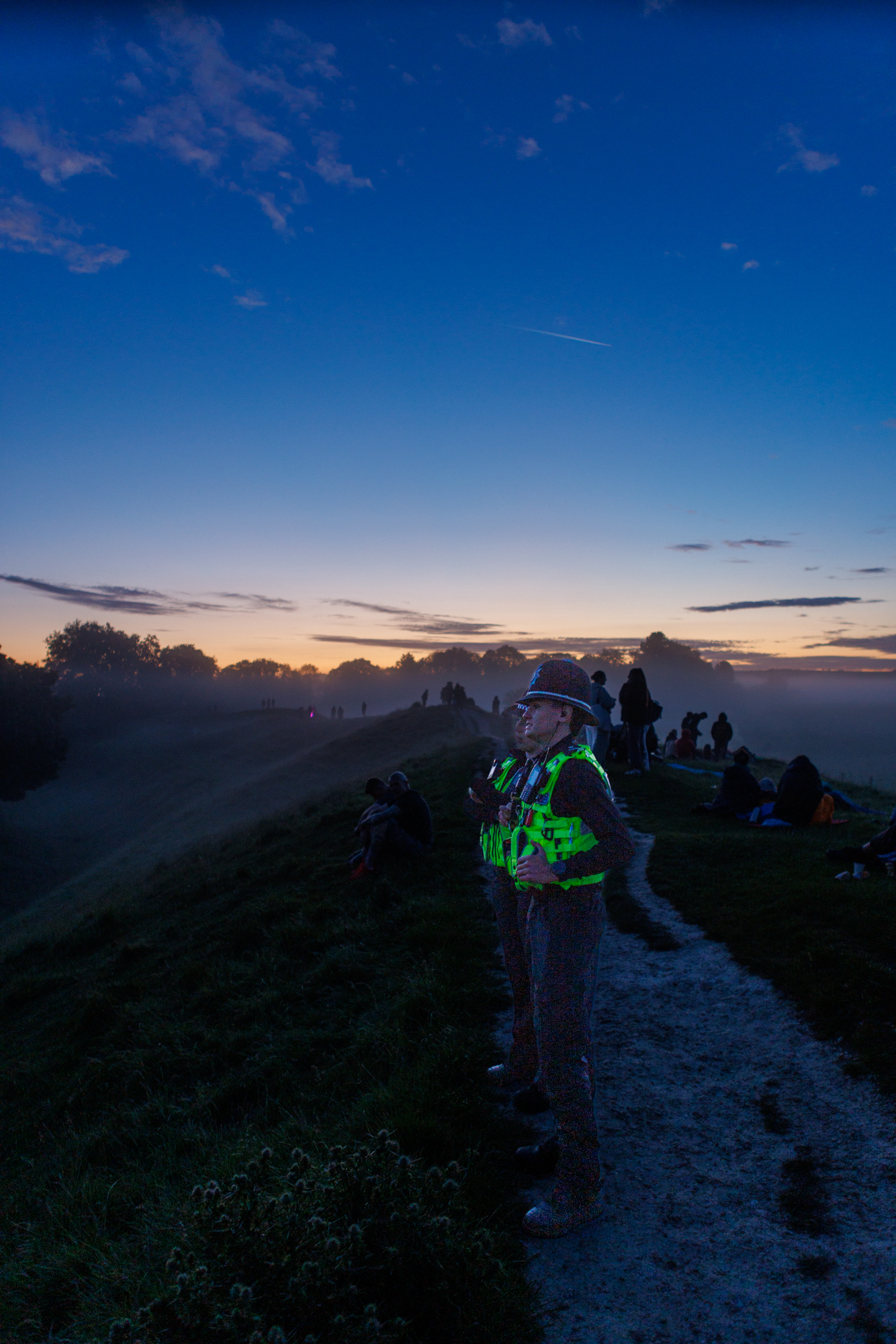
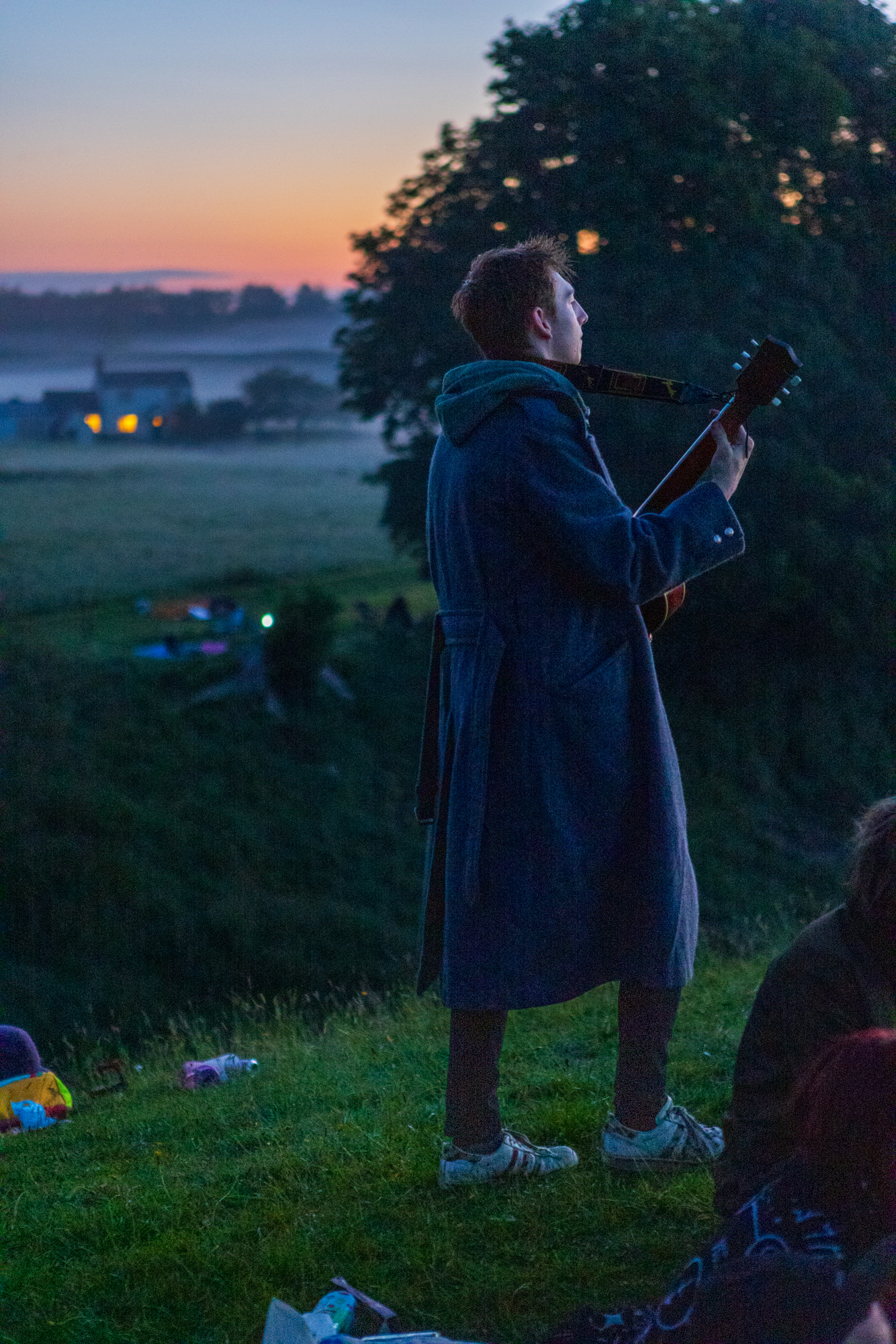
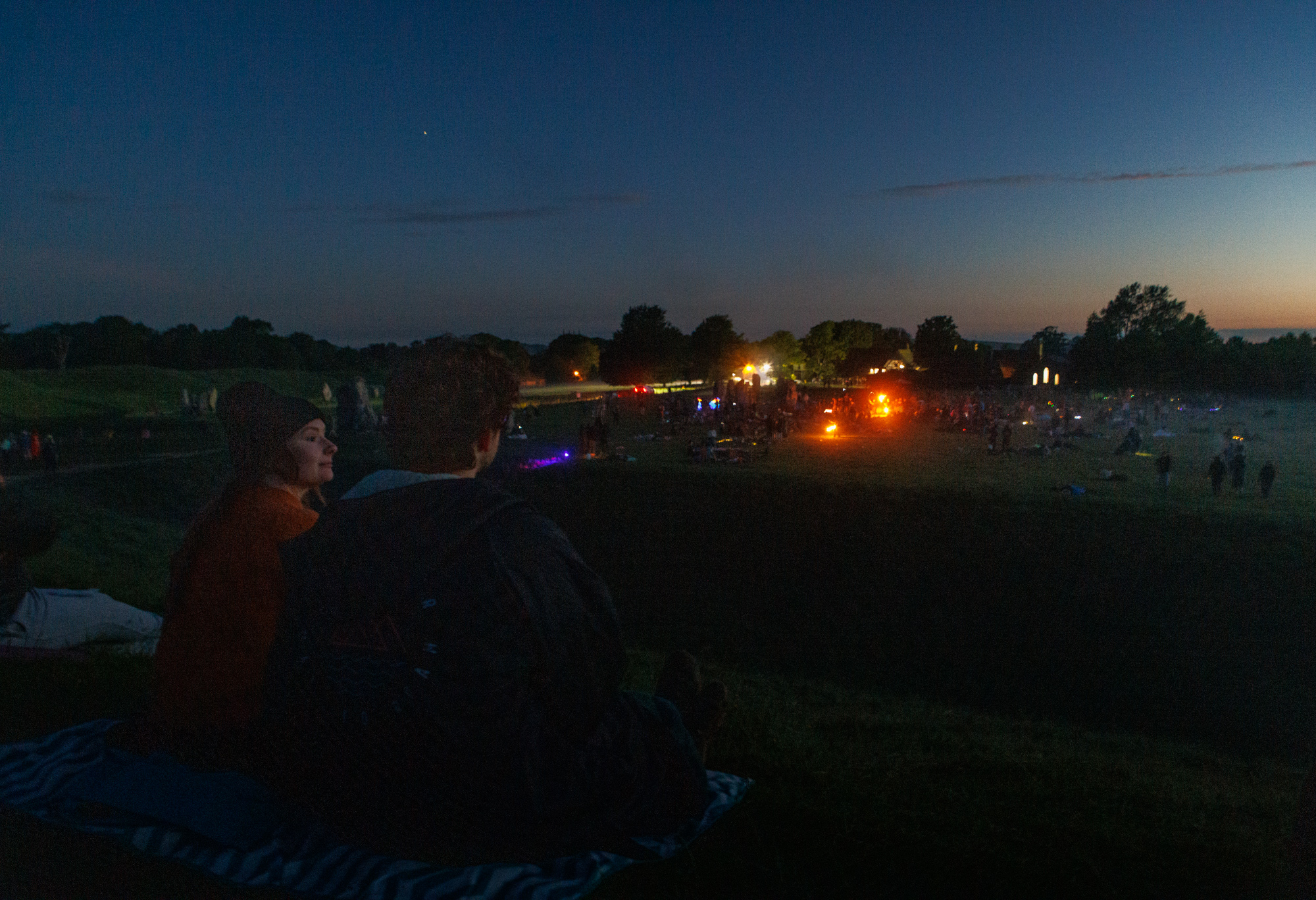
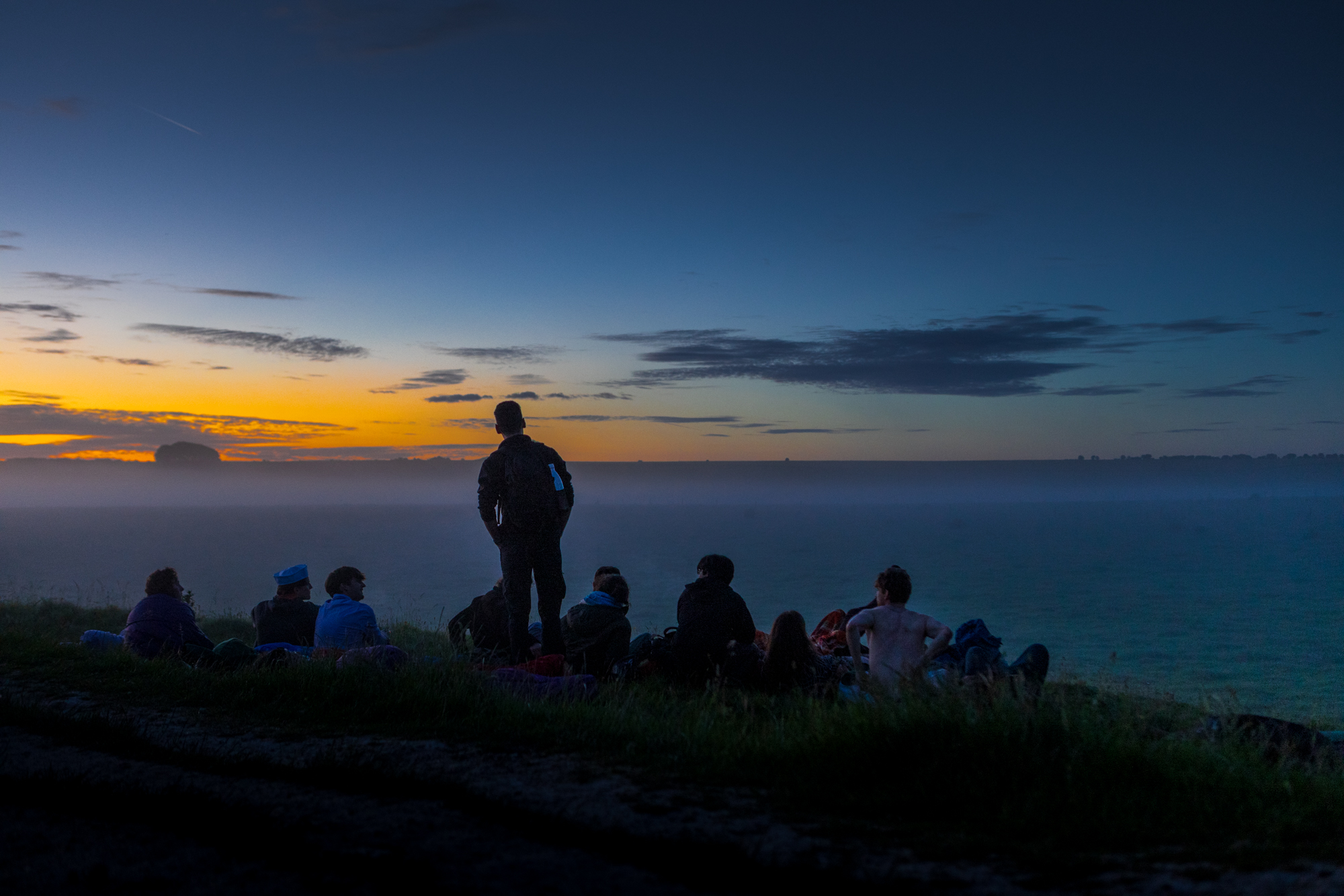
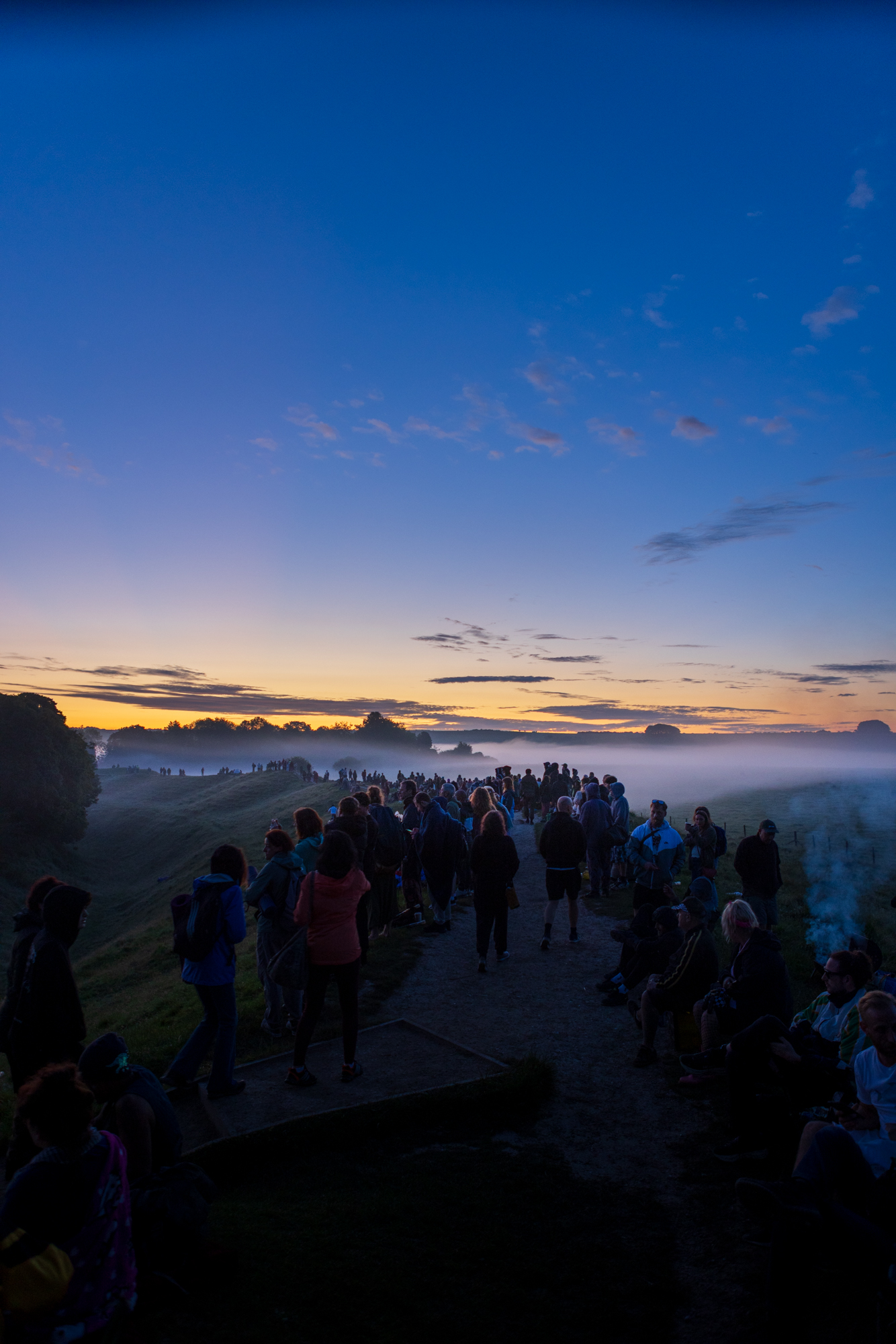
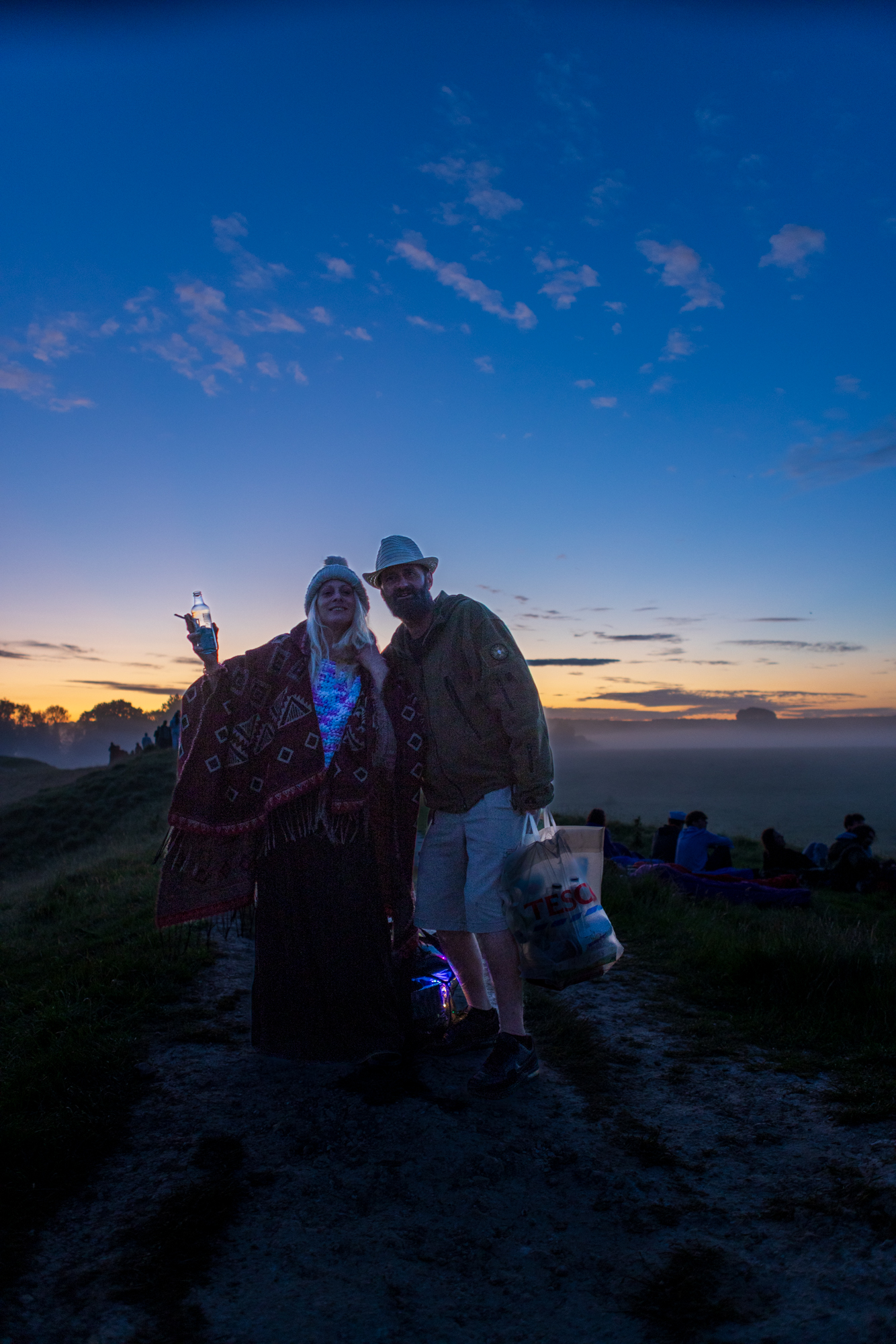
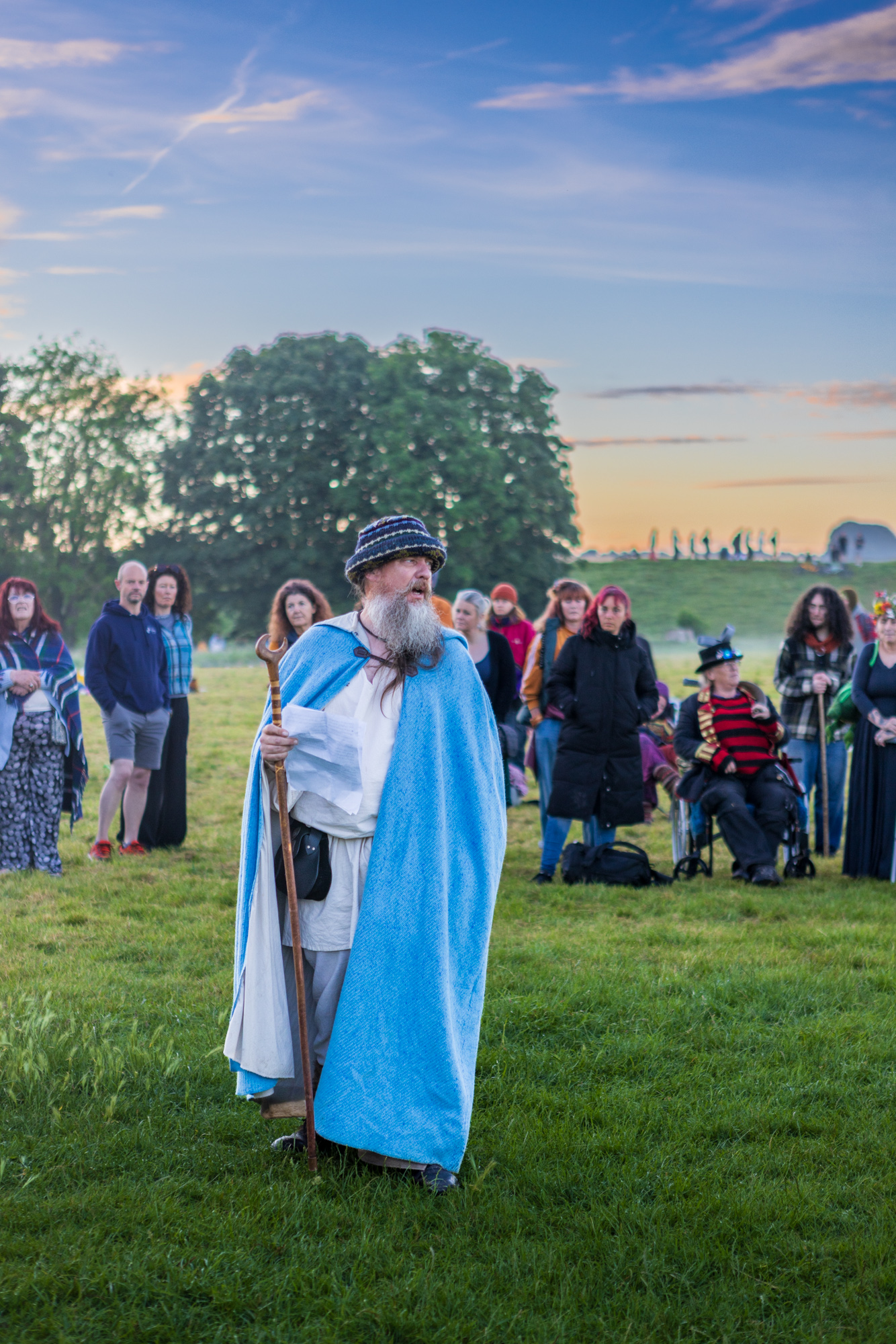
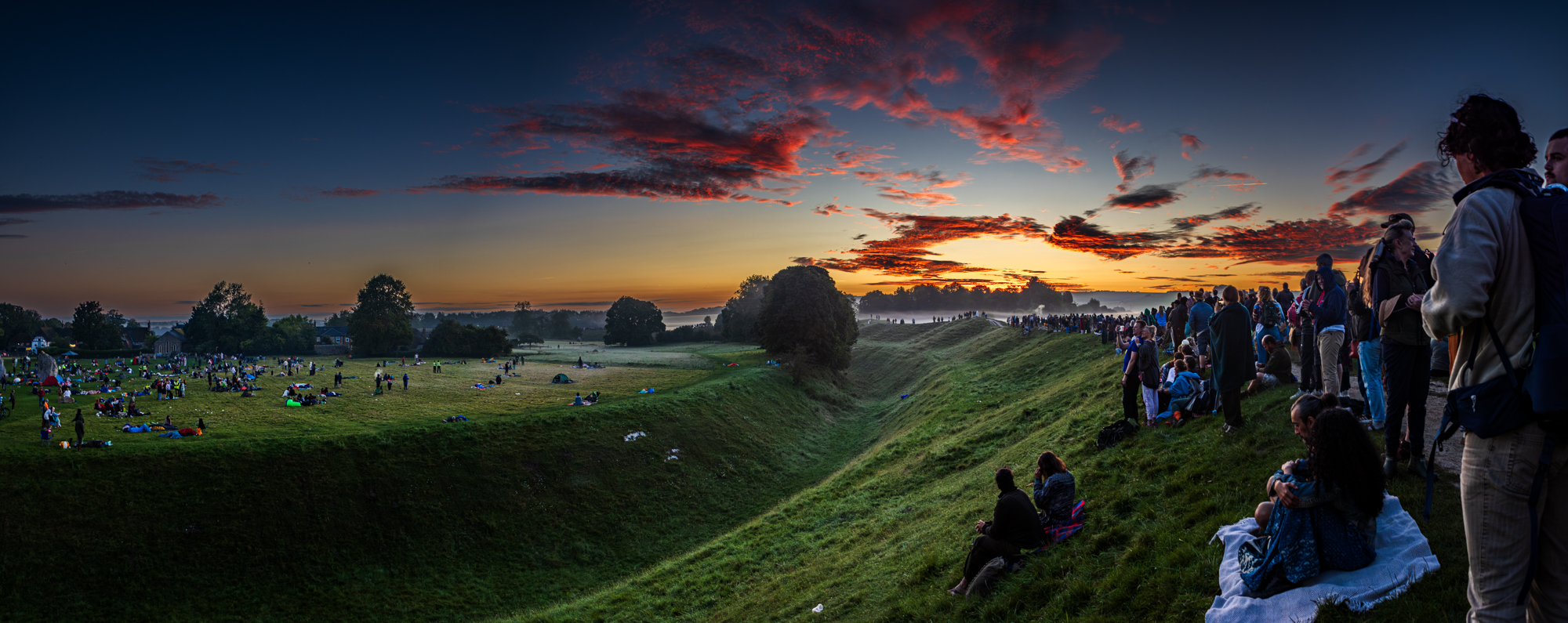
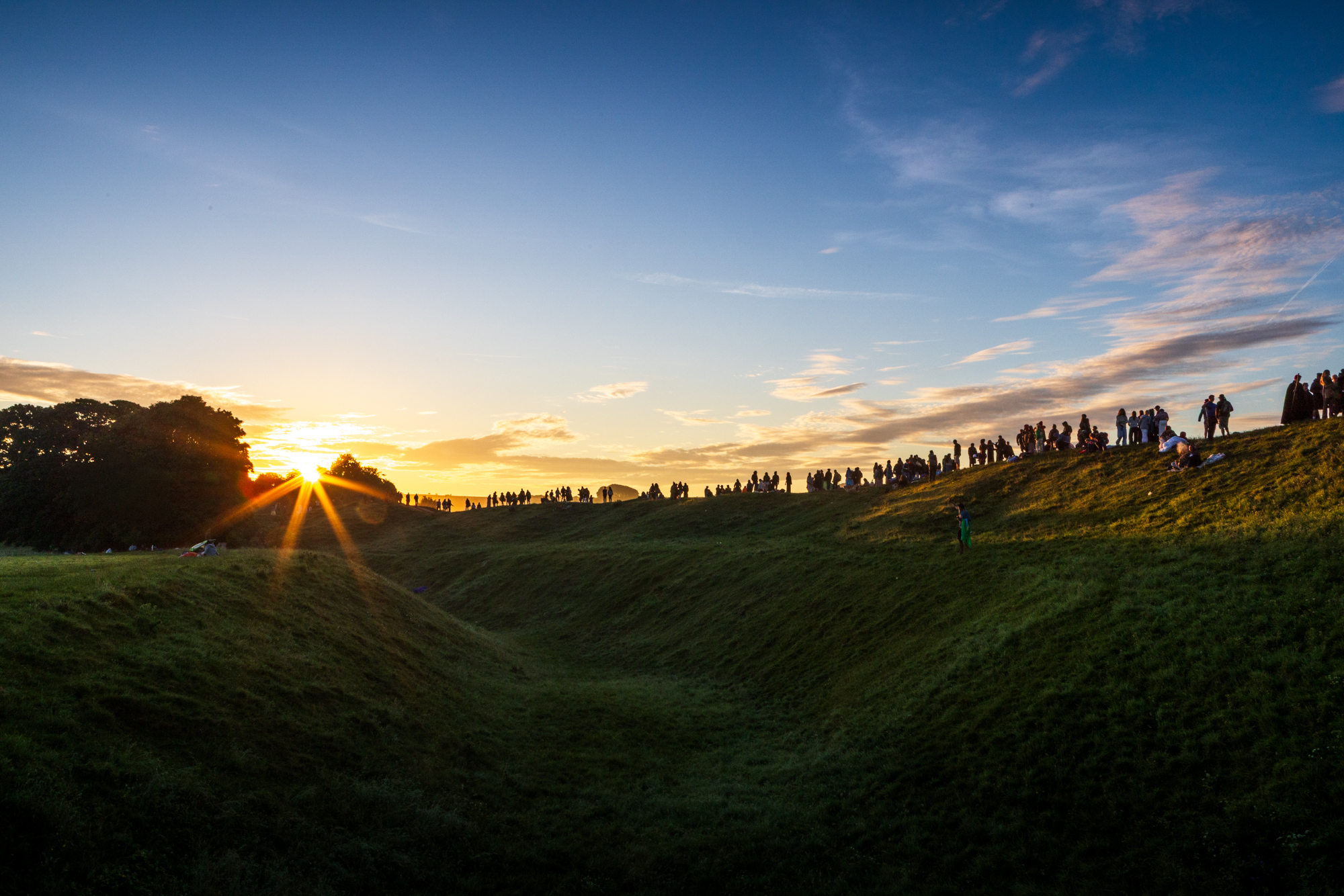
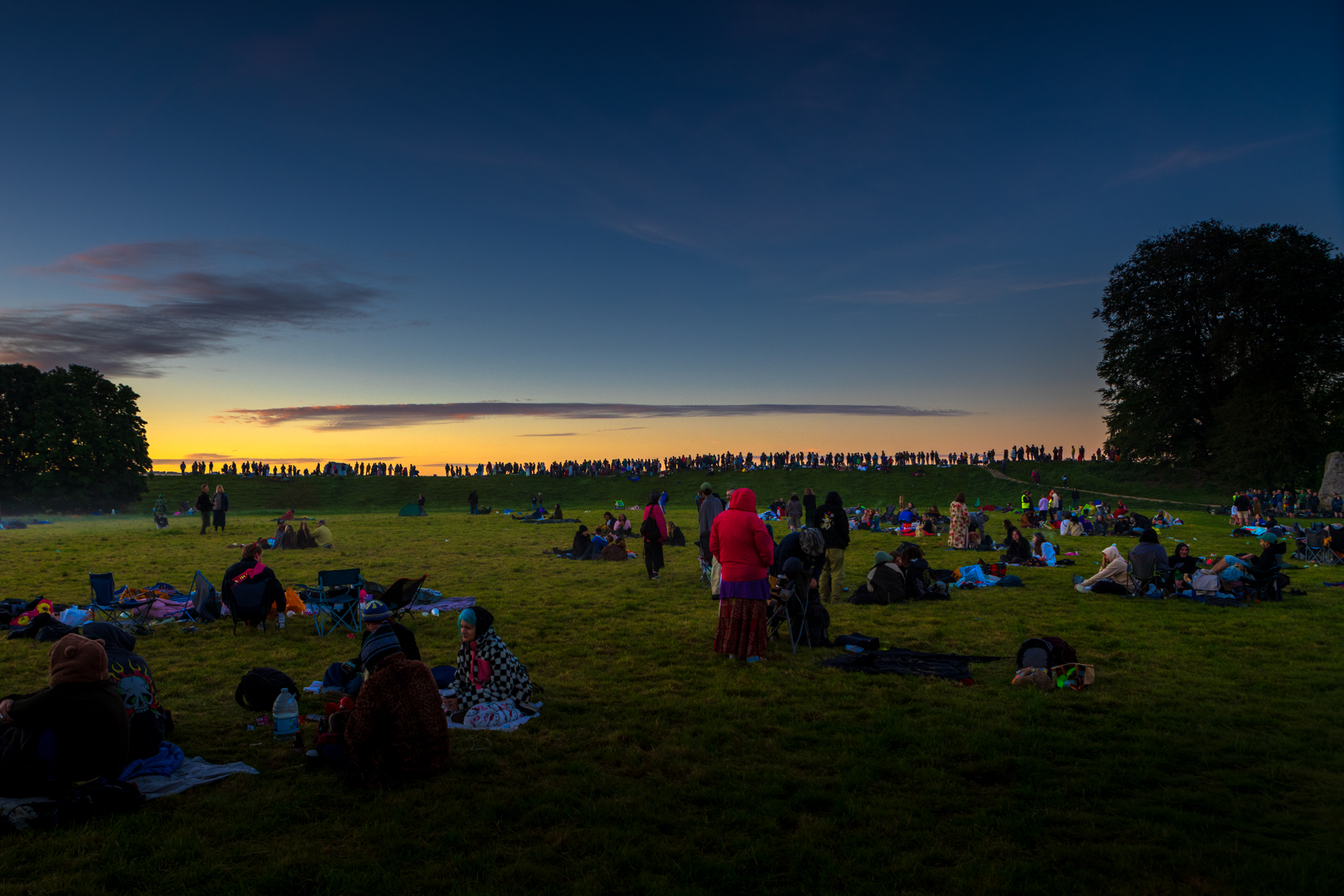
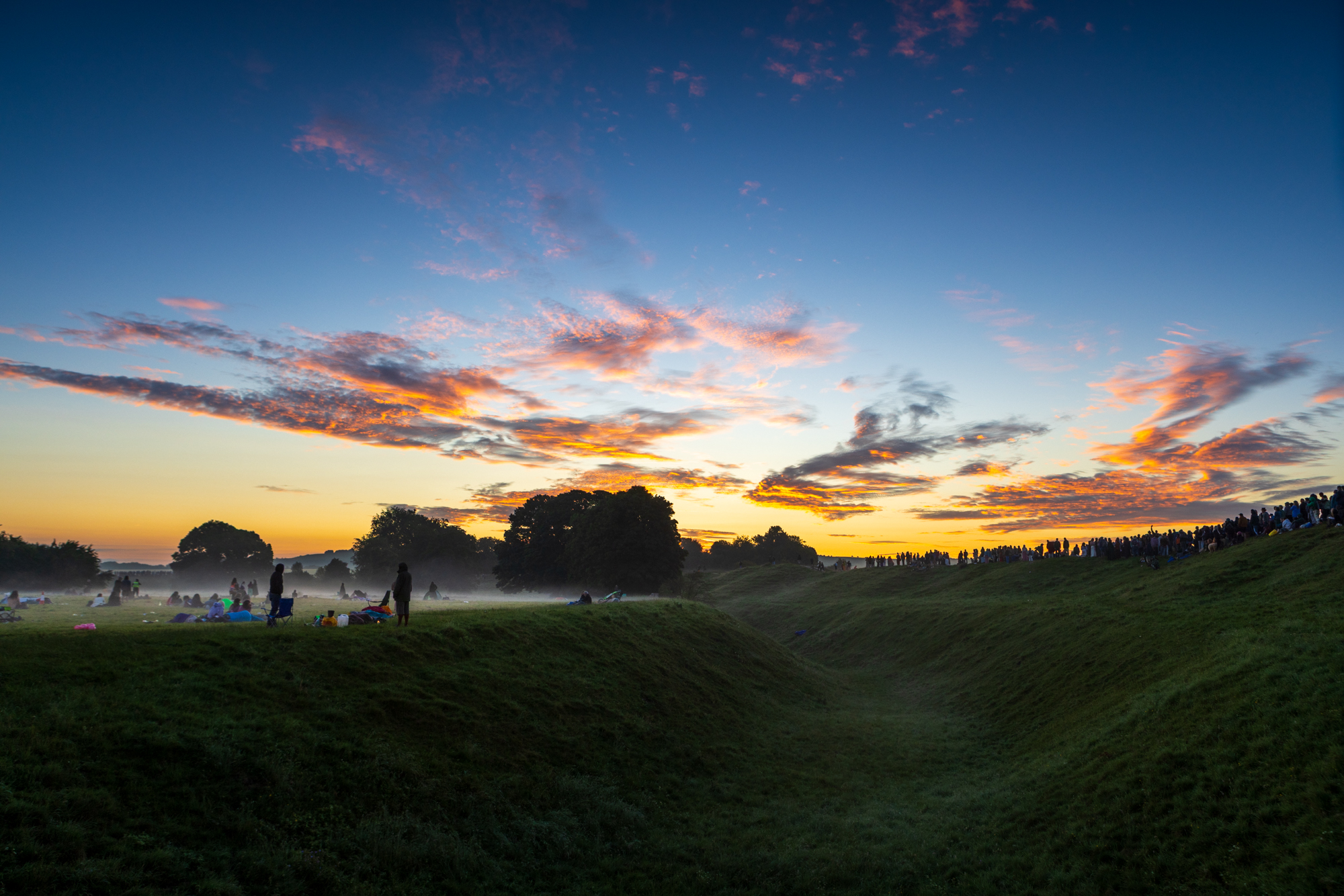
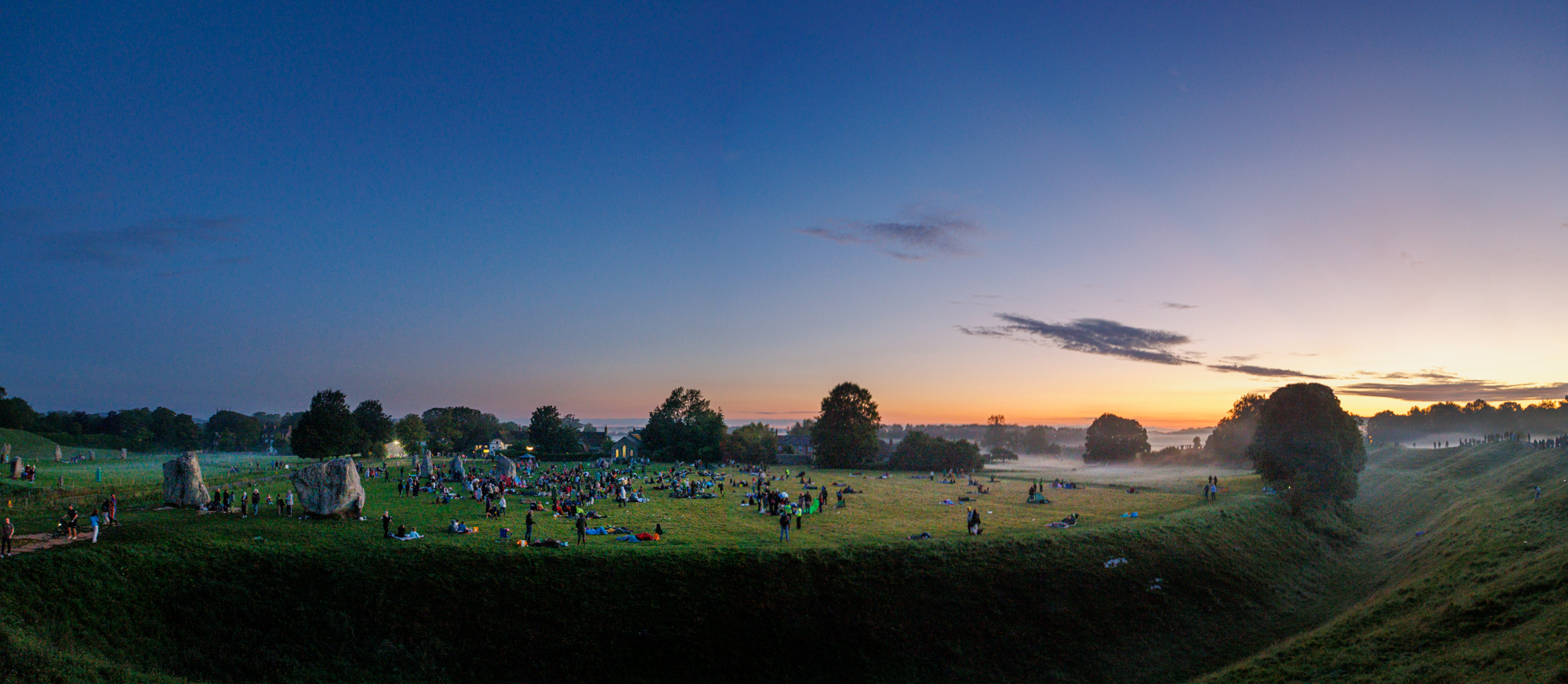
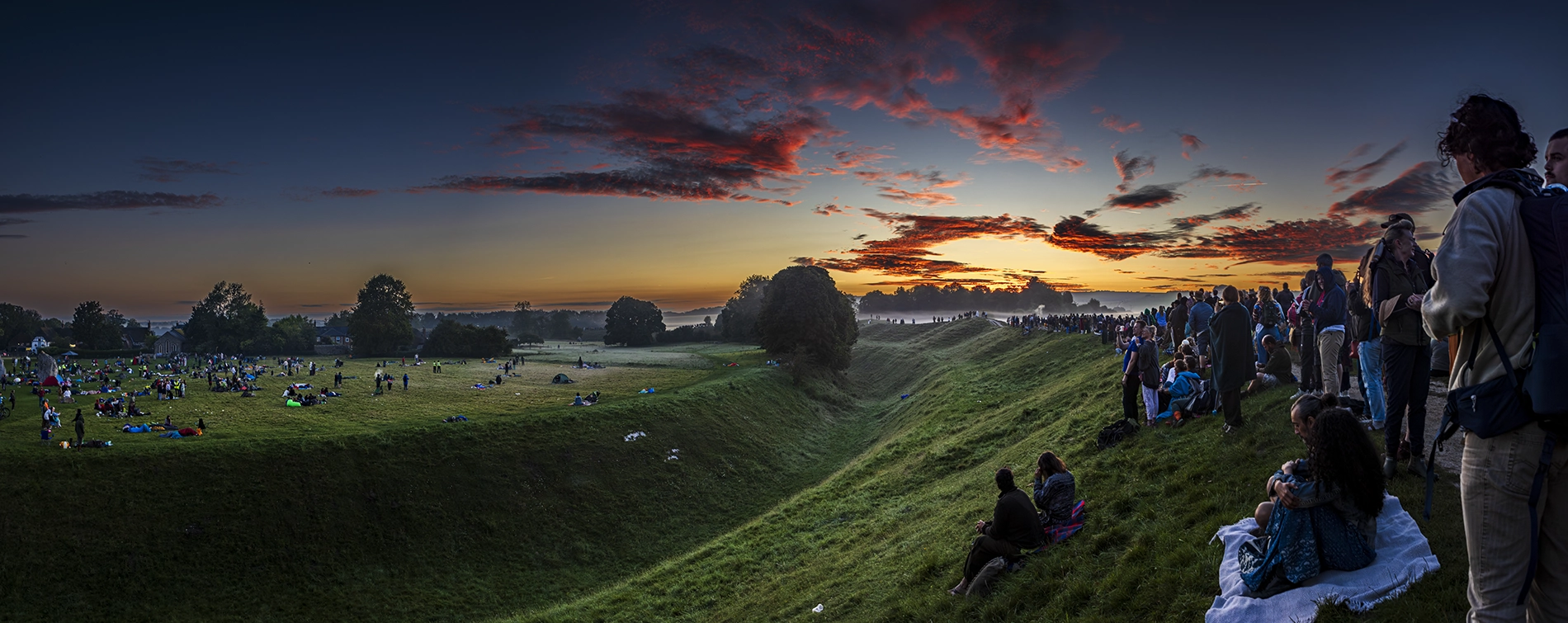
By the time I reached the stones, perhaps several hundred people were already there. More arrived steadily over the next hour — drummers, families with children wrapped in blankets, people in elaborate costumes, photographers with tripods, and a large number who had simply come to be present for the moment. The age range was extraordinary — from children who would remember this morning for the rest of their lives to elderly visitors for whom this was clearly a deeply familiar ritual.
What struck me immediately was the atmosphere. There was noise — drumming, music, conversation — but beneath it something quieter. A collective sense of occasion. People who had never met were talking easily, sharing flasks of tea, pointing out the faint line of light beginning to define the horizon to the northeast.
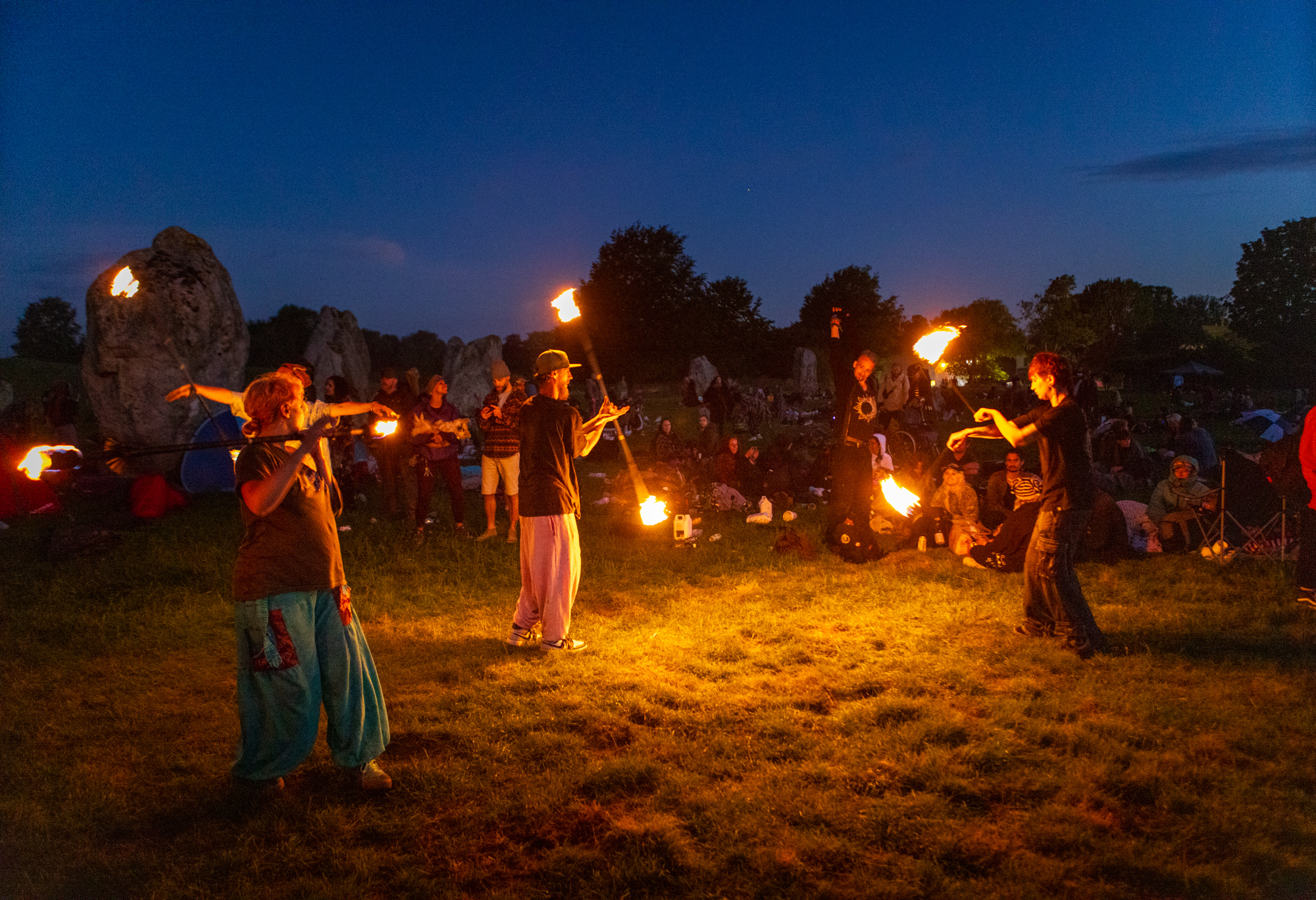
“There was noise — but beneath it something quieter. A collective sense of occasion.”
The Moment the Light Arrived
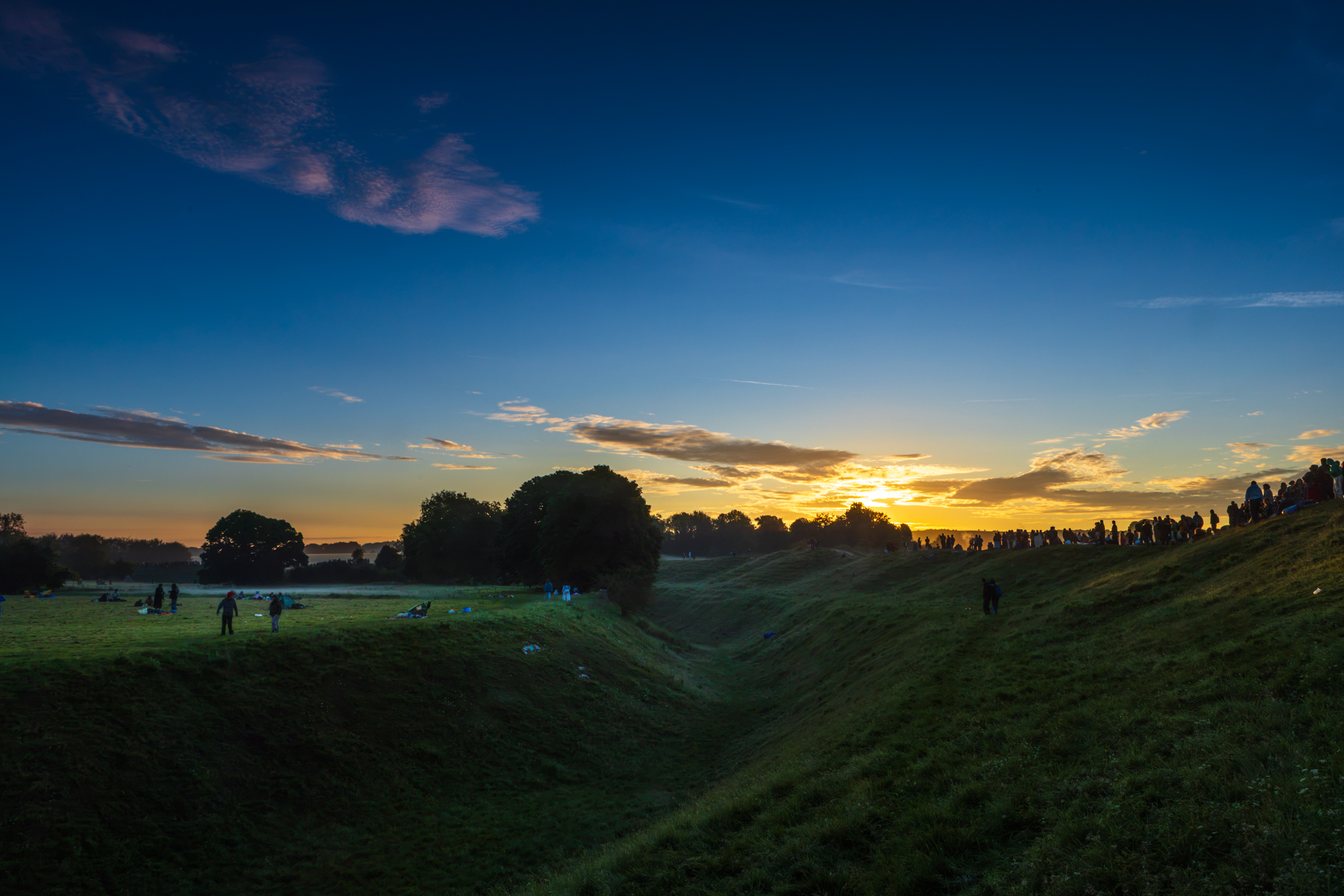
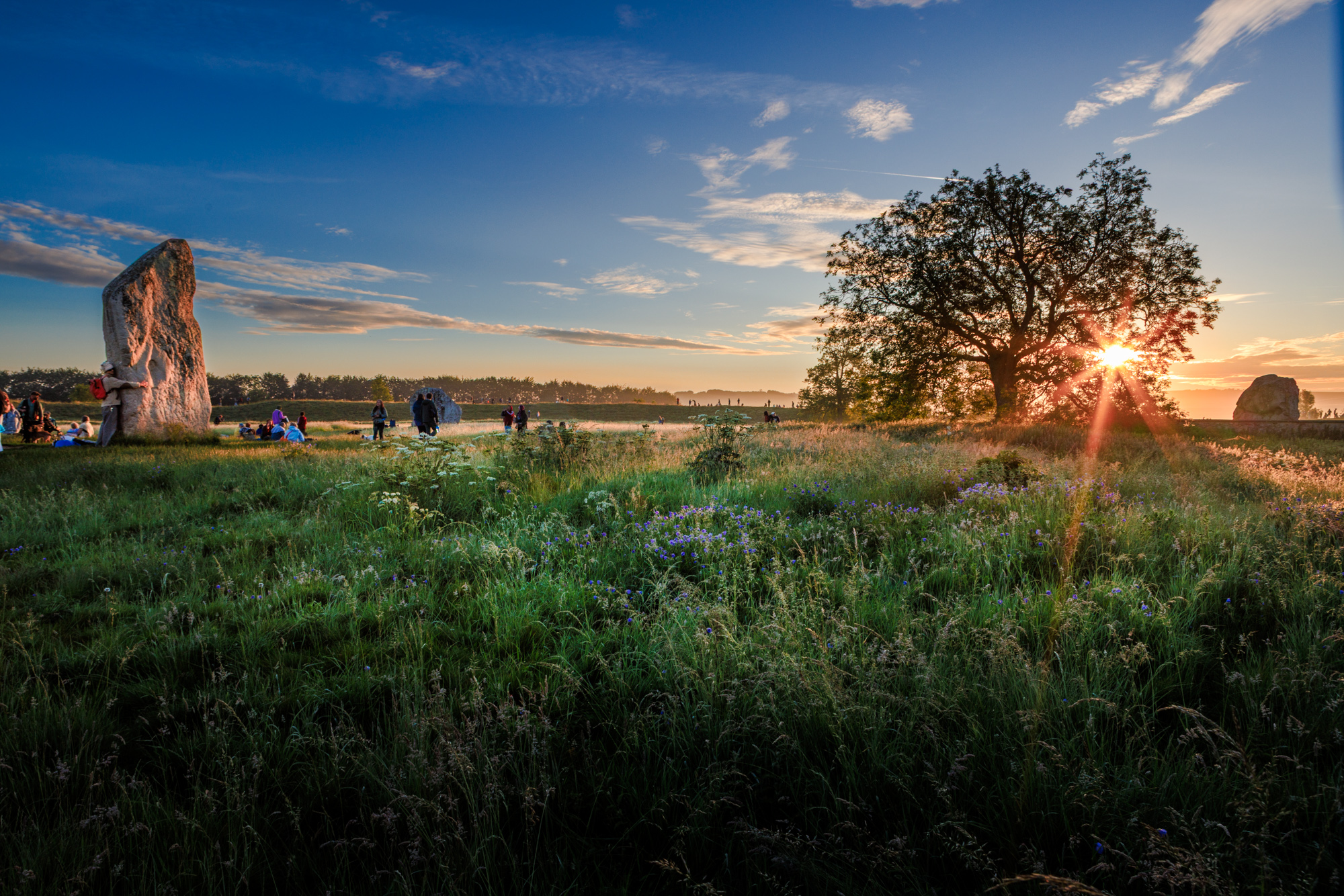
Sunrise on the summer solstice at Avebury is not the dramatic shaft of light that Stonehenge offers. The stones here are enormous — some of the largest standing stones in Britain — and the circle is vast enough that the light arrives gradually, touching different stones at different moments rather than illuminating the whole scene at once. This makes it both more complex to photograph and, in some ways, more interesting.
The first warm light fell across the northeast face of the stones at around 4.45am. The effect was immediate and profound — a shift from the cool blue-grey of pre-dawn to something golden and warm, the texture of the sarsen stones suddenly vivid, their surfaces alive with shadow and light in a way that no other time of day produces.
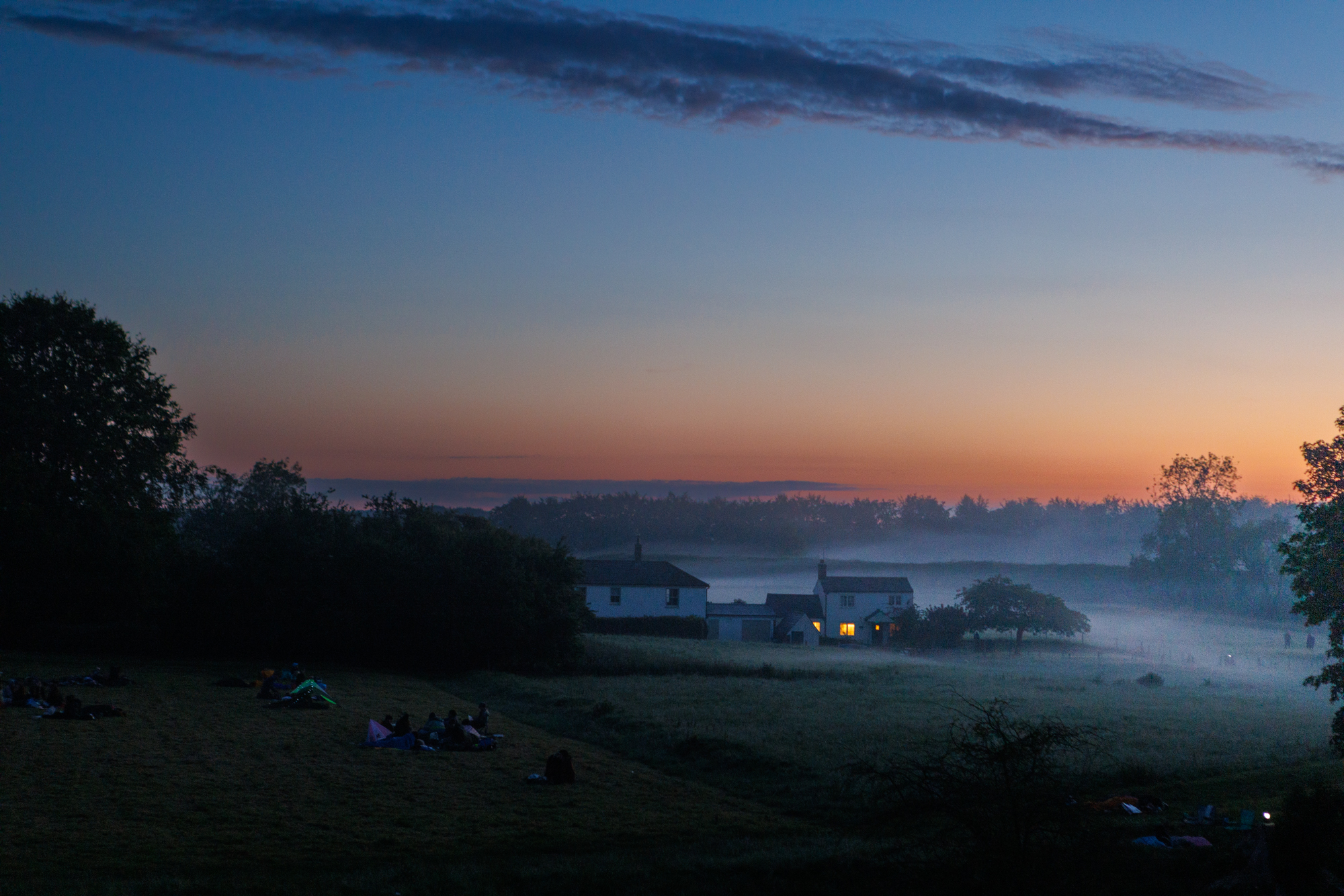
I had expected to be photographing landscape. What I found myself photographing was people — faces turned toward the light, arms raised, eyes closed. The pure emotion on people’s faces in those first minutes of solstice sunrise was something I hadn’t anticipated. This was not a photography event. It was a human one. The photographs I’m most pleased with from the morning are not of the stones at all — they are of the people standing among them, in the light.
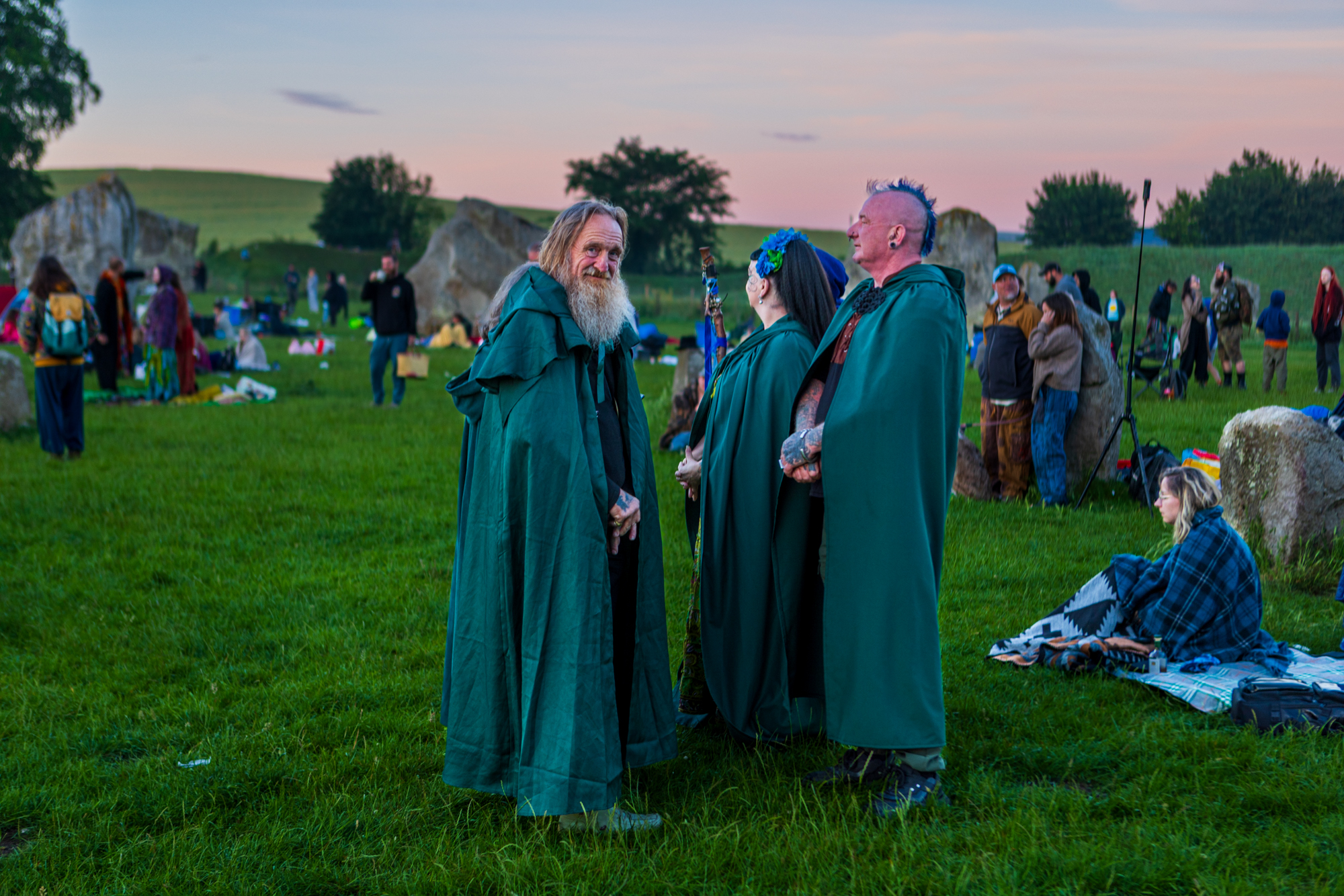
The pure emotion on people’s faces in those first minutes of solstice sunrise was something I hadn’t anticipated. This was not a photography event. It was a human one.
The Stones Themselves
Avebury is one of the largest Neolithic stone circles in the world — older than Stonehenge, less famous, and far more accessible. The henge encompasses the entire village of Avebury, with the stones arranged in a large outer circle and two smaller inner circles. Walking among them on any ordinary morning is already a remarkable experience. On the summer solstice, at sunrise, with several hundred people gathered in reverence and celebration, it is something else entirely.
The sarsen stones — some weighing over 100 tonnes — have stood in this valley for over 4,500 years. Whatever their original purpose — astronomical, ceremonial, territorial — they continue to draw people to this place at the turning points of the year with an intensity that says something important about what human beings need from landscape and from ancient things.
The Kit — Canon R5 and EF 24-70mm L
What I Used
Camera: Canon EOS R5 — high resolution sensor, excellent low-light performance for pre-dawn shooting
Lens: Canon EF 24-70mm f/2.8 L Series — older EF glass, not native RF mount
Adapter: Canon EF-EOS R Mount Adapter — seamless autofocus and aperture control, no compromise in performance
Settings approach: Pre-dawn in low light — higher ISO, wide aperture. As light improved, reduced ISO progressively. No tripod — the crowd made static shooting impractical and the handheld approach suited the more spontaneous, people-led images better.
The EF 24-70mm L on the R5 via adapter is a combination I use regularly for situations where versatility matters more than absolute sharpness wide open. The 24mm end gives you the environmental context — stones, sky, crowd — while 70mm lets you isolate details and faces without intrusion. For an event like Avebury solstice, where you’re moving constantly and the light is changing rapidly, a zoom is the right choice over a prime.
What I Took Away
I left Avebury around 7am with somewhere between twenty and thirty images I’m genuinely pleased with — which by any standard is an exceptional return from a single morning. But what I took away from the morning was less about the photographs and more about what the experience confirmed: that certain places and certain moments still have the capacity to produce genuine collective emotion in people who may otherwise have little in common.
Avebury on the summer solstice is not a spectacle. It’s a gathering. And photographing it requires the same patience and quiet attention that any good landscape photography demands — the willingness to wait, to watch, and to let the moment arrive rather than going to find it.
I’ve written previously about Avebury in a different context — the stones in winter, in quieter conditions. If you’d like to see that side of the location, the Avebury stone circle post covers it. And if you’re interested in the North Hampshire landscape work that makes up most of my photography practice, the landscape photography hub is a good starting point.
Frequently Asked Questions
Can you visit Avebury on the summer solstice?
Yes — unlike Stonehenge, Avebury is freely accessible at all times and the stones are open to the public throughout the year. On the summer solstice, several hundred people typically gather before sunrise to mark the occasion. There is no ticketed event — you simply arrive. The National Trust car park opens early on solstice morning; arriving by 3.30–4am is advisable to find parking and reach the stones before the crowd grows. Entry to the stone circle itself is free.
What time is sunrise at Avebury on the summer solstice?
On the summer solstice (around 21 June) in Wiltshire, sunrise is approximately 4.50–5.00am. First light begins to appear on the northeastern horizon from around 4.15–4.30am. For photography, arriving well before this — ideally by 3.30am — gives time to position yourself, assess the crowd, and be ready as the light begins to change.
Is Avebury better than Stonehenge for photography?
For most photographers, yes — and particularly on the solstice. At Avebury you can walk freely among the stones, position yourself wherever the light and composition demand, and photograph the stones at close range without barriers. Stonehenge offers a more dramatic solstice alignment but requires advance booking and restricts access. Avebury’s human element — the informal gathering of people from all walks of life — also adds a photographic dimension that Stonehenge’s more managed experience doesn’t offer.
What camera settings should I use for solstice sunrise photography?
Before sunrise, you’ll need to work at higher ISO — 1600–3200 on a modern full frame camera — with a wide aperture (f/2.8–f/4) and a shutter speed fast enough to avoid camera shake without a tripod. As light improves after sunrise, reduce ISO progressively. A zoom lens in the 24-70mm range gives the flexibility to capture both environmental context and closer details without changing lenses. A tripod is possible but the crowd at Avebury makes static shooting difficult — handheld with image stabilisation is often the more practical choice.
Where is Avebury and how do I get there?
Avebury is a village in Wiltshire, England, approximately 6 miles west of Marlborough and 25 miles north of Salisbury. The National Trust car park is signposted from the A4361. Postcode for the car park: SN8 1RF. The stones are a short walk from the car park through the village. On solstice morning, the car park fills quickly — arriving by 3.30am is strongly recommended.