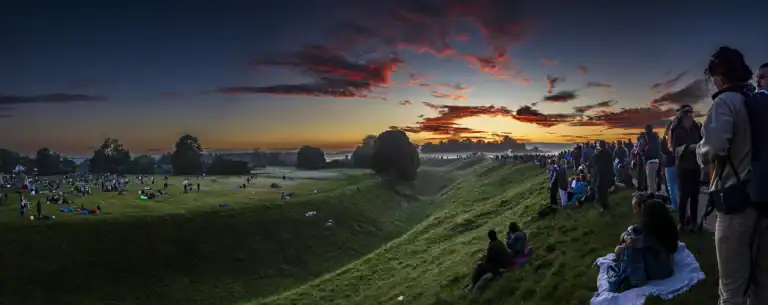

The Canon EOS R5 is the camera that replaced my Canon EOS 5DS R after years of faithful service — and the first outing told me almost immediately that the upgrade had been the right decision. I took it to Watership Down on a cool, overcast December morning with the Sigma 150-600mm Sport mounted, looking for Red Kites and whatever else the chalk hills chose to offer. What followed was one of those sessions where the equipment simply gets out of the way and lets you concentrate on the photography. This is an honest personal review built around real field use.

| Camera at a Glance — Canon EOS R5 | |
|---|---|
| Camera | Canon EOS R5 |
| Released | 2020 |
| Sensor | 45MP full-frame CMOS, DIGIC X processor |
| ISO Range | 100–51,200 (expandable to 102,400) |
| Autofocus | Dual Pixel CMOS AF II — Animal Eye AF |
| Burst Rate | 12fps mechanical / 20fps electronic |
| Viewfinder | 5.76-million-dot OLED EVF |
| Video | 8K RAW @ 30fps / 4K @ 120fps |
| Weather Sealing | Yes |
| Storage | CFexpress Type B + SD UHS-II dual slot |
| Weight | 738g body only |
| Lens Used | Sigma 150-600mm f/5-6.3 Sport (via adapter) |
| Location | Watership Down & Ladle Hill, Hampshire |
Why I Upgraded from the Canon EOS 5DS R
The Canon EOS 5DS R served me well for years. Its 50.6-megapixel sensor produces extraordinary landscape detail, and its lack of an anti-aliasing filter makes it genuinely exceptional for fine detail work — including scanning film negatives, which I continue to use it for. But autofocus had become the limiting factor. The 5DS R’s 61-point phase detection system, competent in its time, struggled with fast-moving wildlife — particularly birds in flight. Burst shooting at 5fps is limiting when a Red Kite is banking through a thermal at twenty miles an hour.
The R5 addresses both of these limitations emphatically. Dual Pixel CMOS AF II with Animal Eye detection changes wildlife photography in a way that is difficult to overstate until you experience it. Twelve frames per second on the mechanical shutter — twenty on the electronic — transforms what is achievable with fast-moving subjects. The sensor steps down slightly to 45 megapixels from the 5DS R’s 50.6, but gains enormously in dynamic range, high-ISO performance, and processing flexibility. For most purposes, it is not a trade-off at all.
| Feature | Canon EOS R5 | Canon EOS 5DS R |
|---|---|---|
| Resolution | 45 megapixels | 50.6 megapixels |
| Autofocus | Dual Pixel CMOS AF II — Animal Eye | 61-point phase detection |
| Burst Rate | 12fps mechanical / 20fps electronic | 5fps |
| ISO Range | 100–51,200 (expandable) | 100–6,400 (expandable) |
| Viewfinder | 5.76M-dot OLED EVF | Optical pentaprism |
| Video | 8K RAW @ 30fps | 1080p @ 30fps |
| Weight | 738g | 930g |
Watership Down and Ladle Hill — The Perfect Test Ground
Watership Down and its neighbouring ridge of Ladle Hill have been a constant in my photography for years. This is open chalk downland at its finest — wide skies, long views across the Hampshire and Berkshire borders, and a wildlife population that rewards patience and persistence. Red Kites were reintroduced to the Chilterns in the 1990s and have spread steadily south; they are now a regular and magnificent presence over the Downs, riding the thermals that build along the ridge on any morning with reasonable wind.
For testing a wildlife autofocus system, it would be difficult to choose a more demanding subject. Red Kites in flight are fast, unpredictable, and constantly changing direction. They cover ground quickly, drop suddenly, and have a wingspan that creates genuine depth-of-field challenges at longer focal lengths. If the R5’s Animal Eye AF could handle a Red Kite against a broken cloud sky, it could handle most things I was likely to point it at.

Red Kites in Flight — Animal Eye AF in Action
The Animal Eye AF on the R5 is genuinely revelatory for bird photography. With the Sigma 150-600mm Sport mounted via the Canon EF-EOS R adapter, I set the camera to Animal Eye detection mode and began tracking the first kite that came over the ridge. The autofocus locked onto it immediately — not just tracking the bird as a shape, but finding and holding the eye with a consistency that the 5DS R could not have approached in comparable conditions.
What makes the difference is not just the speed of acquisition but the intelligence of the tracking. When the kite turned and the eye briefly disappeared behind a wing, the system held its prediction and reacquired cleanly as the bird came back into profile. In a burst of twelve frames per second, the proportion of sharp, correctly focused images was dramatically higher than anything I had achieved with the 5DS R on equivalent subjects.


The autofocus didn’t just track the bird — it found the eye, held it through turns and banking manoeuvres, and reacquired cleanly every time. That is a different category of performance from anything the 5DS R could offer.
Sheep on the Hillside and a Robin on a Post
Not everything on Watership Down moves at speed. The sheep that graze the chalk grassland are indifferent to photographers, which makes them excellent subjects for testing image quality at more moderate distances and focal lengths. The R5’s 45-megapixel sensor brings out the texture of the wool and the subtle tonal variations in the Hampshire grassland with a resolution that rewards examination at 100%. Dynamic range in the RAW files is excellent — shadow detail recoverable well beyond what the 5DS R’s sensor offered at equivalent ISOs.

A robin on a fence post on the way back to the car provided one final test of the Animal Eye AF at close range and in the soft morning light. The system locked instantly — faster than I could consciously react — and the resulting frame was sharp at the eye with a background separation that the 600mm focal length at that distance delivered beautifully. It was the kind of effortless result that makes you realise how much time you previously spent fighting your equipment rather than photographing with it.
What Impressed Me Most
| Feature | Real-World Performance |
|---|---|
| Animal Eye AF | Outstanding — locked and held on Red Kites in flight consistently across a full session. Reacquires quickly after obstruction. A genuine step change from phase detection AF. |
| 12fps Burst Rate | Transformative for bird photography. Three times the burst rate of the 5DS R means a dramatically higher proportion of keeper frames from fast-moving subjects. |
| Dynamic Range | Excellent in RAW — shadow recovery well beyond the 5DS R, with highlight handling that handles the high-contrast downland light comfortably. |
| OLED EVF | 5.76 million dots — bright, detailed, and genuinely useful for tracking fast-moving subjects. The exposure preview in the EVF is a significant advantage over optical viewfinders. |
| Weight Saving | 192g lighter than the 5DS R body — noticeable across a full day in the field, particularly with a heavy lens mounted. |
| Weather Sealing | Confidence-inspiring in the damp Hampshire morning — no issues across a session that included light rain and heavy dew. |
Does the 5DS R Still Have a Place?
The Canon EOS 5DS R has not been retired. Its 50.6-megapixel sensor without an anti-aliasing filter remains outstanding for static landscape work where maximum resolution is the priority, and it continues to earn its place as my film negative scanning camera — a task for which its combination of high resolution and AA filter removal makes it genuinely difficult to better. The R5 has taken over wildlife and travel photography entirely. The two cameras serve different purposes and both earn their carry weight.
What Works Well
- Animal Eye AF — outstanding for birds in flight and wildlife
- 12fps burst rate — transforms keeper rate on fast subjects
- 45MP sensor — exceptional detail and dynamic range in RAW
- OLED EVF — bright, detailed, exposure preview in finder
- Weather sealing — confidence in difficult field conditions
- 192g lighter than the 5DS R — meaningful across a full day
- Dual card slots — CFexpress + SD for backup reliability
- 8K video capability — future-proofed for video work
Worth Knowing
- 8K video generates significant heat — monitor in extended sessions
- CFexpress cards add cost — budget for cards alongside the body
- EF lenses require adapter — adds slight bulk and cost
- EVF takes adjustment if coming from optical viewfinder cameras
- 45MP RAW files are large — storage and processing demands increase
Is the Canon EOS R5 good for wildlife photography?
Yes — it is one of the strongest wildlife cameras Canon has produced. The Animal Eye AF system is fast, accurate, and remarkably consistent on birds in flight, which is among the most demanding autofocus tests available. The 12fps mechanical burst rate ensures you capture peak action moments, and the 45MP sensor delivers files with enough resolution to crop significantly while retaining print quality. For my work photographing Red Kites over Watership Down, it has been the most capable camera I have used.
How does the Canon EOS R5 compare to the 5DS R?
The 5DS R has a marginally higher resolution sensor (50.6MP vs 45MP) and remains outstanding for static landscape and studio work. The R5 surpasses it in every other meaningful category — autofocus, burst rate, dynamic range, high-ISO performance, video capability, and weight. For wildlife and travel photography the R5 is the clear choice. For maximum resolution landscape work, the 5DS R still earns its place.
Can you use EF lenses on the Canon EOS R5?
Yes — Canon’s EF-EOS R mount adapter allows the full range of Canon EF lenses to be used on the R5 with complete functionality, including autofocus and image stabilisation where fitted. Third-party EF lenses like the Sigma 150-600mm Sport also work via the adapter, though autofocus performance may vary. For native RF lenses, see my review of the Canon RF 200-800mm and the Canon RF 28mm f/2.8 STM.
What memory cards does the Canon EOS R5 use?
The R5 has dual card slots — one CFexpress Type B and one SD UHS-II. For 8K video and high-speed burst shooting, CFexpress Type B cards are required in the primary slot. SD UHS-II cards work well for stills backup and lower-speed video. Budget for CFexpress cards alongside the body — they are a significant additional cost but essential for getting the most from the camera’s capabilities.
Is the Canon EOS R5 good for landscape photography?
Yes — 45 megapixels with excellent dynamic range in RAW files makes it a very capable landscape camera. The EVF with exposure preview is a genuine advantage over optical viewfinder cameras for careful landscape exposure. For maximum resolution landscape work at lower cost, the Canon EOS 5DS R remains competitive, but the R5’s combination of resolution, dynamic range, and weather sealing makes it an excellent all-round choice for landscape photographers who also shoot wildlife or travel.
Does the Canon EOS R5 overheat when shooting video?
The R5 can experience thermal throttling during extended 8K or 4K 120fps video recording — a widely discussed limitation at launch. For shorter video clips and mixed photo/video work this is unlikely to be an issue in normal field conditions. For sustained video recording, monitoring the camera’s temperature indicator and allowing cooling periods between takes is advisable. For photographers primarily using the R5 for stills, overheating is not a practical concern.
This article is part of my Photography Kit Reviews hub. For more camera and lens reviews, see my guides to the Canon EOS 5DS R, Canon RF 200-800mm, Canon RF 28mm f/2.8 STM, and Sigma 12-24mm lens review. For my film photography work, visit my Film Photography hub.