
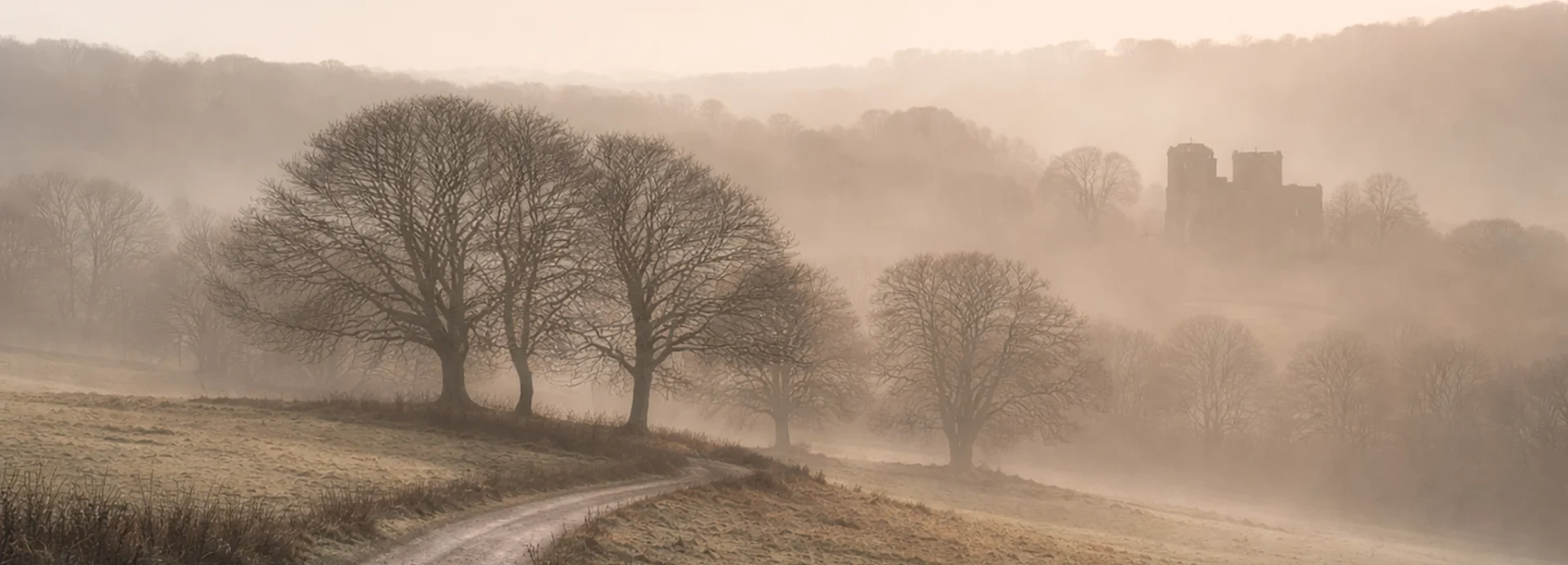

It was one of those flat, grey days at Aldermaston Wharf — the kind of light that usually works in my favour. Soft, even, and quiet.
I had the Bronica with me, loaded with Lucky SHD 400. Not the most refined film in the world, but that’s part of its charm. Sometimes it delivers something unexpected. Other times… not quite.
There was no real plan. Just a slow walk along the canal, watching how the scene unfolded. Still water, dull sky, very little contrast — the kind of conditions that lean more toward mood than drama.
But coming back to the images later, something became clear:
Not every photograph I take is meant to become a print.
When Film Doesn’t Quite Deliver
Film has a way of keeping you honest. Especially with cheaper stocks like Lucky SHD 400, there’s always an element of unpredictability, as talked about in my Guide for Beginners to Photography.

Sometimes everything aligns — tones, detail, atmosphere. Other times, things fall slightly short. Grain becomes a little too heavy, edges lose their sharpness, or the image just doesn’t carry the depth you hoped for.
That’s where these photographs sit.

They’re not bad. In fact, I quite like them. They hold the feeling of the day well. But there’s a difference between appreciating an image and offering it as something someone else would hang on their wall.
That distinction matters.
The Appeal of Imperfect Images
There’s still value in these frames.
They feel honest. Unpolished. A little rough around the edges. The kind of images that lean more into interpretation than precision.

In many ways, they say more about the experience than the outcome. The quiet walk, the stillness of the canal, the weight of the grey sky — it’s all there, even if it’s not technically perfect.

And that’s part of photography that often gets overlooked.
Not everything has to be finished. Not everything has to be flawless.
Some images exist simply because they were worth taking.
What Makes the Cut as a Print
But prints are different.
A photograph on a wall needs to do more than just capture a moment. It needs to hold its own over time. To keep drawing the eye back in, day after day.
For me, that means an image needs to have:
- Clarity where it matters
- Strong, balanced tones
- Enough depth to work at larger sizes
- And a presence that lasts beyond a quick glance
If it doesn’t meet that standard, it doesn’t become a print — regardless of how much I might like it personally.
Why That Standard Exists
I think it’s important to be clear about that.
Because when an image does make it into my print collection, it’s there for a reason. It’s been considered, not just captured.

It’s something I’d be happy to see on my own wall — and that’s the benchmark.
Part of the Process
These photographs from Aldermaston Wharf still matter. They’re part of the process. A reminder that not every frame needs to lead somewhere final.
Some images are just part of the walk.

And sometimes, that’s exactly what they’re meant to be.
This article is part of my Photography Guides hub series.
