
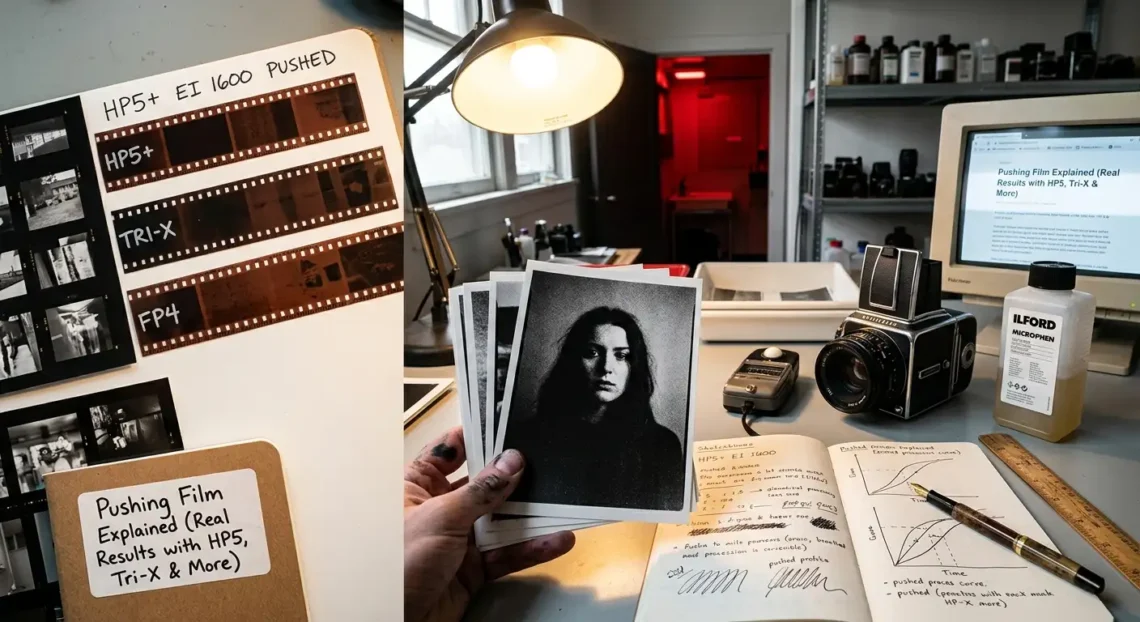
Pushing Film Explained (Real Results with HP5, Tri-X & More)
Pushing film is one of the most powerful techniques in film photography, allowing you to shoot in lower light while creating a distinctive, high-contrast look. It’s something I’ve used regularly when working in early morning conditions, overcast woodland, or when I simply want a more atmospheric result.
In this guide, I’ll explain exactly what pushing film is, why you might want to use it, and share real-world results using Ilford HP5 and Kodak Tri-X—two of the most reliable films for pushing. Development plays a key role when pushing film, as extended processing compensates for underexposure.
If you’re new to shooting film, you might find it helpful to start with my complete guide to film photography before diving into pushing techniques.
What Does “Pushing Film” Mean?
Pushing film means deliberately underexposing your film in-camera and then compensating during development.
In simple terms:
- You set your camera to a higher ISO than the film’s box speed
- Then extend development time to recover the exposure
For example:
- Shooting Ilford HP5 (ISO 400) at ISO 800 = 1 stop push
- Shooting it at ISO 1600 = 2 stop push
This technique allows you to work in lower light without a tripod, but it also changes the look of your images.
Why Push Film?
There are a few key reasons I push film in real-world situations:
- Low light conditions – especially at sunrise or in woodland
- Faster shutter speeds – useful for handheld shooting
- Increased contrast – great for black and white work
- Creative control – pushing gives a more dramatic, gritty feel
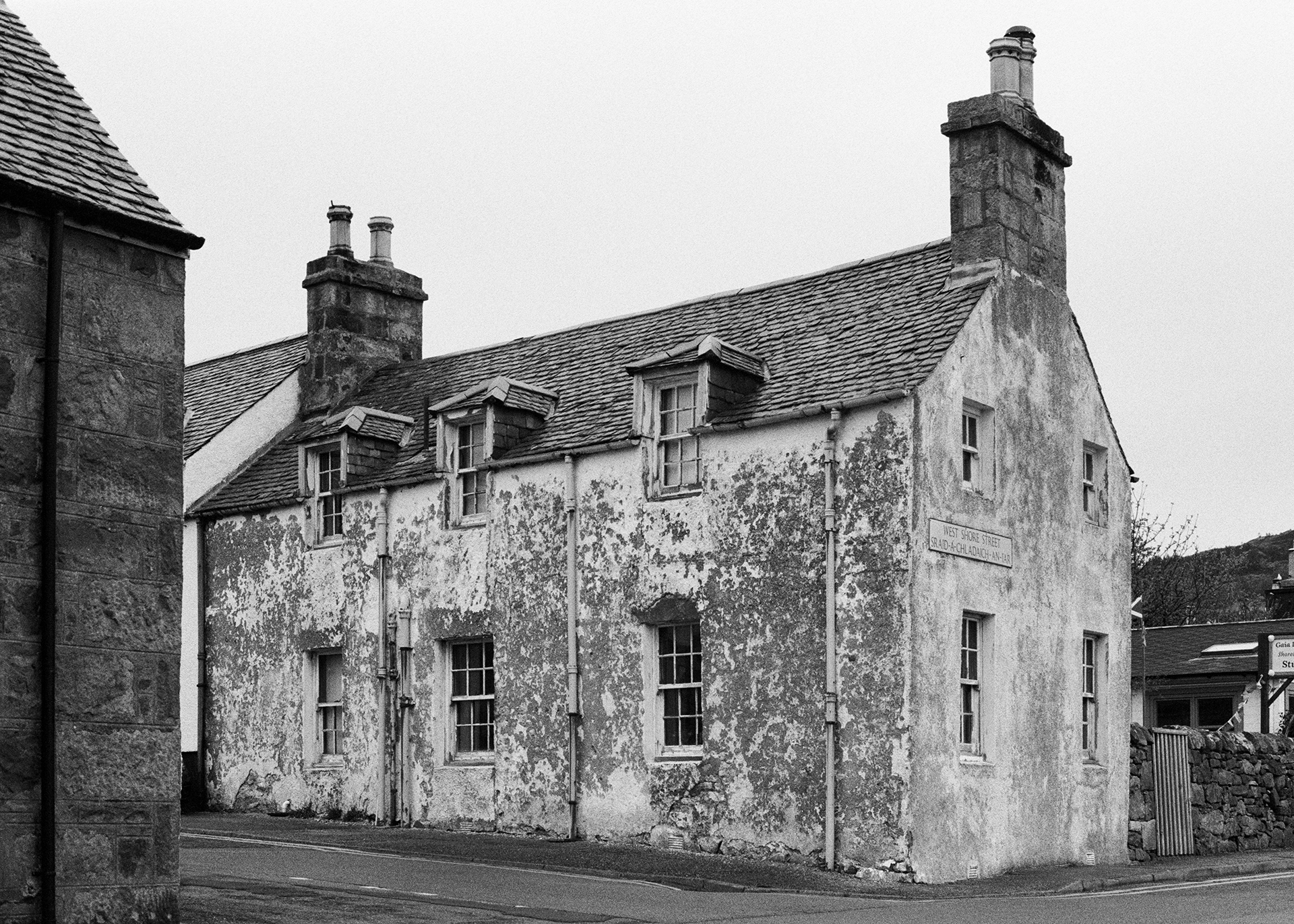
It’s not just a technical fix—it’s a stylistic choice.
Real Examples (From My Photography)
I’ve tested pushing film extensively, particularly with Ilford HP5 and Kodak Tri-X.
If you want to see real results, take a look at these:
These examples show how pushing affects contrast, grain, and overall mood in practical shooting conditions.
Best Films for Pushing
Not all films handle pushing equally well. These are the ones I trust:
- Ilford HP5 Plus – extremely forgiving and versatile
- Kodak Tri-X 400 – classic look with strong contrast
- Ilford FP4 (to a lesser extent) – can be pushed, but less flexible
HP5 and Tri-X are the standout choices if pushing film is something you want to explore seriously.
Pushing Film to 800, 1600 and Beyond
The further you push, the more the image changes.
ISO 800 (1 stop push)
- Slight increase in grain
- Noticeably more contrast
- Still good shadow detail
ISO 1600 (2 stop push)
- Strong contrast
- More pronounced grain
- Shadows begin to deepen significantly
Beyond 1600
- Very gritty, high-contrast look
- Loss of shadow detail
- More experimental and stylistic
Pushing Film Results Comparison
| ISO Setting | Push Level | Grain | Contrast | Shadow Detail |
|---|---|---|---|---|
| 400 | None | Low | Moderate | High |
| 800 | +1 Stop | Medium | Increased | Good |
| 1600 | +2 Stops | High | Strong | Reduced |
| 3200 | +3 Stops | Very High | Very Strong | Limited |
Personally, I find ISO 800 and 1600 to be the sweet spot depending on the conditions.
Pushing Film vs Pulling Film
Pushing and pulling are opposite techniques.
- Pushing film = underexpose + overdevelop
- Pulling film = overexpose + underdevelop
Pushing increases contrast and grain, while pulling reduces contrast and can retain more highlight detail.
Does Pushing Film Increase Grain?
Yes—pushing film does increase grain.
But it’s not just about grain size. You’ll also notice:
- Stronger contrast
- Deeper blacks
- Reduced shadow detail

With films like HP5 and Tri-X, this grain often adds character rather than detracting from the image.
When NOT to Push Film
Pushing isn’t always the right choice.
Avoid it when:
- You need maximum detail in shadows
- You’re shooting high dynamic range scenes
- You want a clean, low-grain image
- Light isn’t actually an issue
Sometimes shooting at box speed will give you a better overall result.
Final Thoughts
Pushing film is one of those techniques that blends technical understanding with creative intent. It’s not just about getting the shot in difficult conditions—it’s about shaping the final look of your image.
For me, pushing Ilford HP5 and Kodak Tri-X has become a reliable way to capture mood, especially in early morning light and quieter, more atmospheric scenes. I regularly use this technique when shooting handheld with my Bronica ETRSi in low light conditions.
If you haven’t tried pushing film yet, start with HP5 at ISO 800 and see how it changes your results. From there, you can experiment and find the balance that works for your style.
Also explore films like Fomapan 400 for creative exposure techniques. See my full Film Photography Guide for more tips and tutorials.
If you’re building your skills with film, I’ve covered the fundamentals in my film photography guide.

Stephen Paul Young
I’m Steve (Stephen Paul Young), a landscape, digital and film photographer with a deep love for capturing the beauty of nature, light, and atmosphere. Whether I’m out at dawn chasing the perfect sunrise, exploring woodland trails, or experimenting with black-and-white film, photography is my way of seeing the world. I’m drawn to the small details and the big vistas alike, always looking for that moment where light, texture, and emotion come together. For me, photography isn’t just about taking pictures—it’s about storytelling, connection, and the joy of being present in the landscape.
You May Also Like

Exploring Motion Blur Photography with Film

Kentmere Pan 100 Review: Testing with Canon AE-1P & Canon 300V
