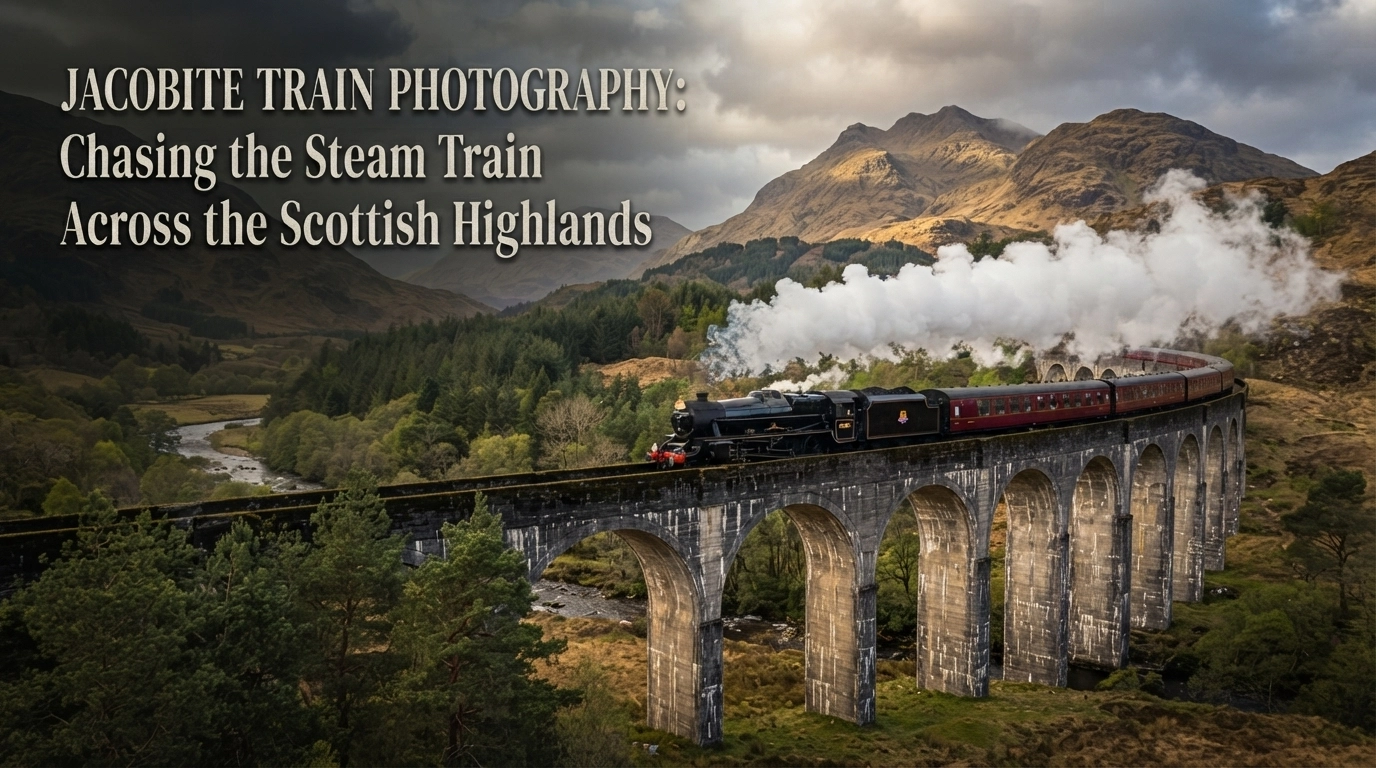
Location: Glenfinnan Viaduct, Fort William, Scottish Highlands · Camera: Canon EOS 5DSR
Chasing the Jacobite steam train across the West Highland Line, as part of an NC500 road trip through Scotland — lens dilemmas, patience, and the Hogwarts Express in real life.
Fort William and railway photography in Scotland — where I embarked on a journey to capture the enchanting steam train experience in the breathtaking landscapes of Scotland.
As an avid photographer with a deep appreciation for the nostalgic charm of steam trains, my desire to capture the essence of the Jacobite Train led me on an extraordinary adventure through the picturesque Scottish countryside. In this personal narrative, I invite you to join me as I delve into the art of photography, chasing the perfect shot while embracing the timeless allure of steam train travel — and yes, riding the Harry Potter train too.
Photographing Scotland’s Landscapes
Immersed in the rolling hills, mist-laden lochs, and ancient castles, Scotland’s landscapes provide the perfect canvas for capturing the Jacobite Train through the lens of a camera. As the train meanders through the Scottish Highlands, it traverses some of the most awe-inspiring vistas in the world.
Picture yourself standing amidst the majestic Glenfinnan Viaduct, its arches stretching gracefully against a backdrop of sweeping greenery. The mist hangs low, adding an air of mystique to the scene. The rugged mountains embrace the tracks, creating a sense of seclusion and grandeur. It is here that the Jacobite Train emerges, chugging and steaming, as if from a bygone era.
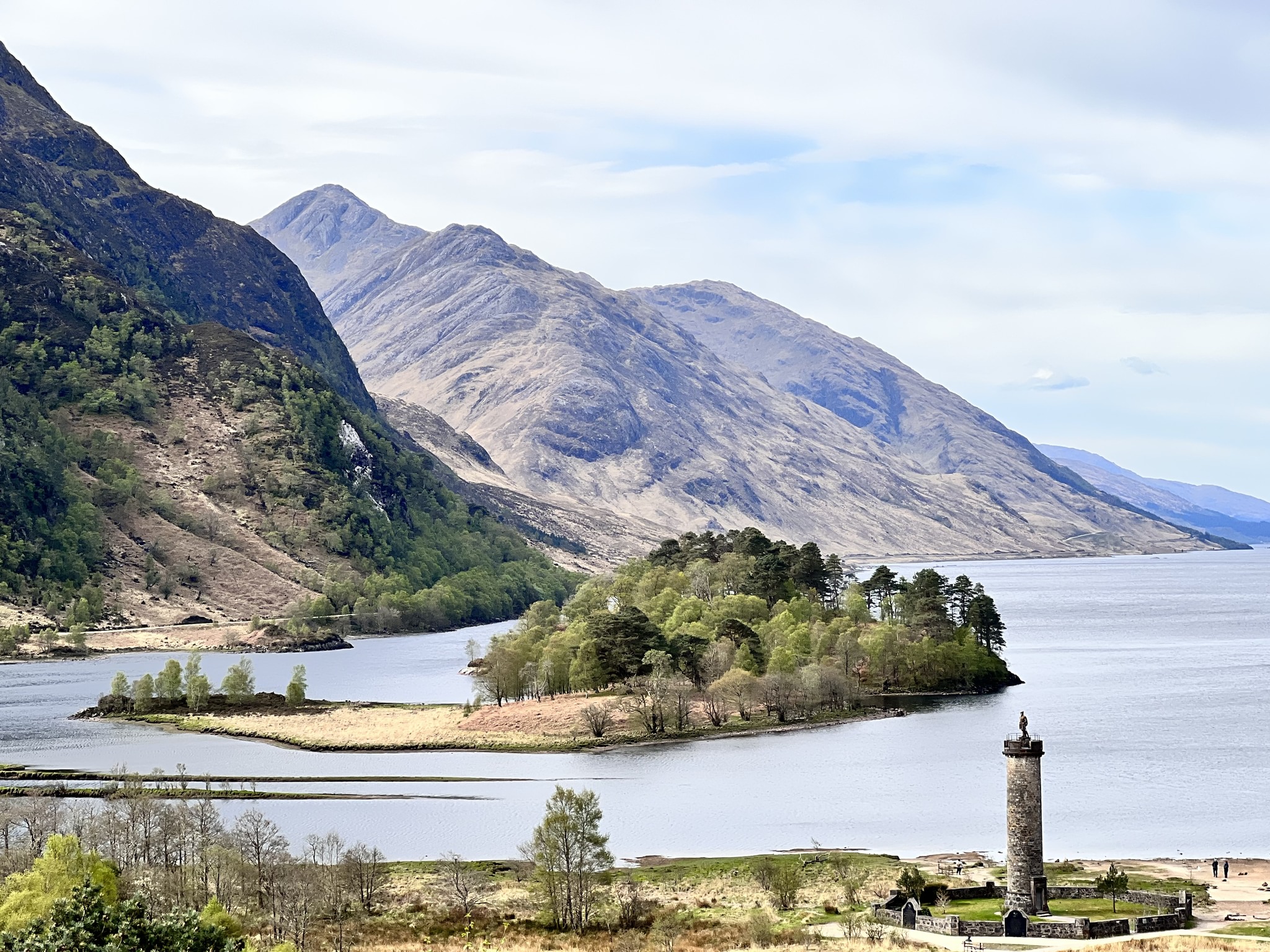
The landscape around Glenfinnan Viaduct — mist, mountains, and the tracks below.
The Scottish Highlands, with their untamed beauty and raw wilderness, captivate both the soul and the camera lens. From the serene Loch Shiel, reflecting the vivid colours of the surrounding landscape, to the dramatic peaks of Ben Nevis, the highest mountain in the British Isles, Scotland offers an abundance of natural wonders to frame a photographic journey.
But it is not only the grandeur of nature that mesmerises; Scotland’s quaint villages and historic landmarks are equally enchanting. Imagine capturing the steam train as it passes through towns like Fort William, Mallaig, or charming Glenfinnan, where the historic Glenfinnan Monument stands proudly, commemorating Bonnie Prince Charlie’s Jacobite rebellion.
In this corner of the world, time seems to stand still, allowing full immersion in the magic of the Jacobite Train and its surroundings. Note: the three landscape photographs in this section were taken on an iPhone 13.
Preparing for the Adventure
As I eagerly prepared for my Jacobite Train photography adventure in Scotland, part of a wider NC500 road trip, I knew that careful planning and research would be key to capturing the essence of this remarkable steam train journey.
The first step was to immerse myself in the rich history and heritage of the Jacobite Train — its origins as a working steam train and its transformation into a beloved tourist attraction. Understanding its significance added depth and meaning to the photographic mission.
Next, I set out to find the best vantage points along the train’s route, using a Sigma 150-600mm Sport lens to scout distant compositions. Through extensive research, I discovered hidden gems and secret spots offering breathtaking perspectives — from viewpoints overlooking the Glenfinnan Viaduct to secluded areas by the shores of Loch Shiel.
Choosing the Right Lens
In photography, choosing the right lens can make all the difference in capturing that perfect shot. I found myself in a situation where my Sigma 150-600mm Sport lens proved too much for the task at hand, while my trusty 24-70mm fell short. It was then I realised the lens that would have been ideal was the 70-200mm — its versatile focal length range would have struck the perfect balance between reach and flexibility, capturing subjects near and far with clarity and detail.
The 70-200mm would have provided the ideal compromise, bringing distant subjects closer while maintaining a sense of intimacy and depth. Lesson learned — next time, the 70-200mm comes with me. For another example of finding the right telephoto reach, see my review of the Canon RF 200-800mm.
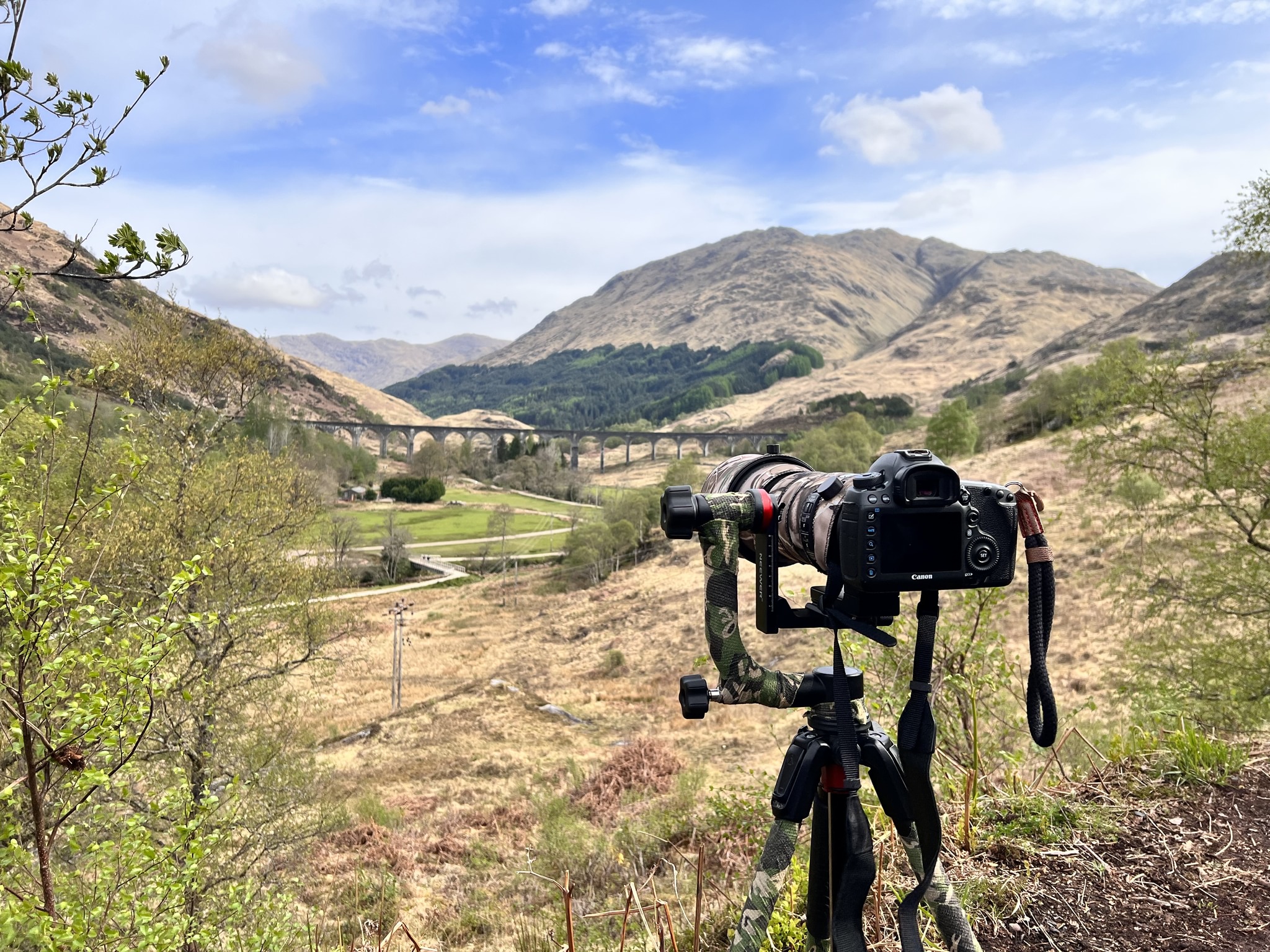
Camera and lens pointed toward the viaduct, waiting for the train.
Viaduct Views
It’s worth the five-minute walk up the hill beside the Glenfinnan Viaduct visitor centre, for which you’ll be rewarded with a breathtaking panorama straight down Loch Shiel to the south and straight up Glen Finnan to the north.
This is a fantastic viewpoint for the Glenfinnan Viaduct, a renowned feat of Victorian engineering and the longest concrete railway bridge in Scotland. It carries the West Highland Railway over the River Finnan, 100ft below, on its journey between Fort William and Mallaig — and in my opinion, is one of the most picturesque train rides in the world.
From this viewpoint, you can follow the puff of smoke as you marvel at the sight and sound of the Jacobite train traversing the hillside and crossing the viaduct — made famous by the Harry Potter films as the “Hogwarts Express.”
Timing was crucial. I studied the train’s schedule meticulously, considering lighting conditions, weather patterns, and the desired atmosphere for the photographs. Patience became my closest companion as I waited for the perfect moment to capture the train in all its splendour.
Capturing the Magic: A Photographic Adventure
Armed with anticipation and a keen eye, I set out to capture the magic of the Jacobite Train through the lens of the camera. Each click of the shutter became an opportunity to freeze time and immortalise the essence of this remarkable steam train journey.
I experimented with various techniques, manipulating aperture and shutter speed to convey the sense of motion and power the train exuded, playing with light and shadow to capture the interplay between sunlight and the billowing steam.
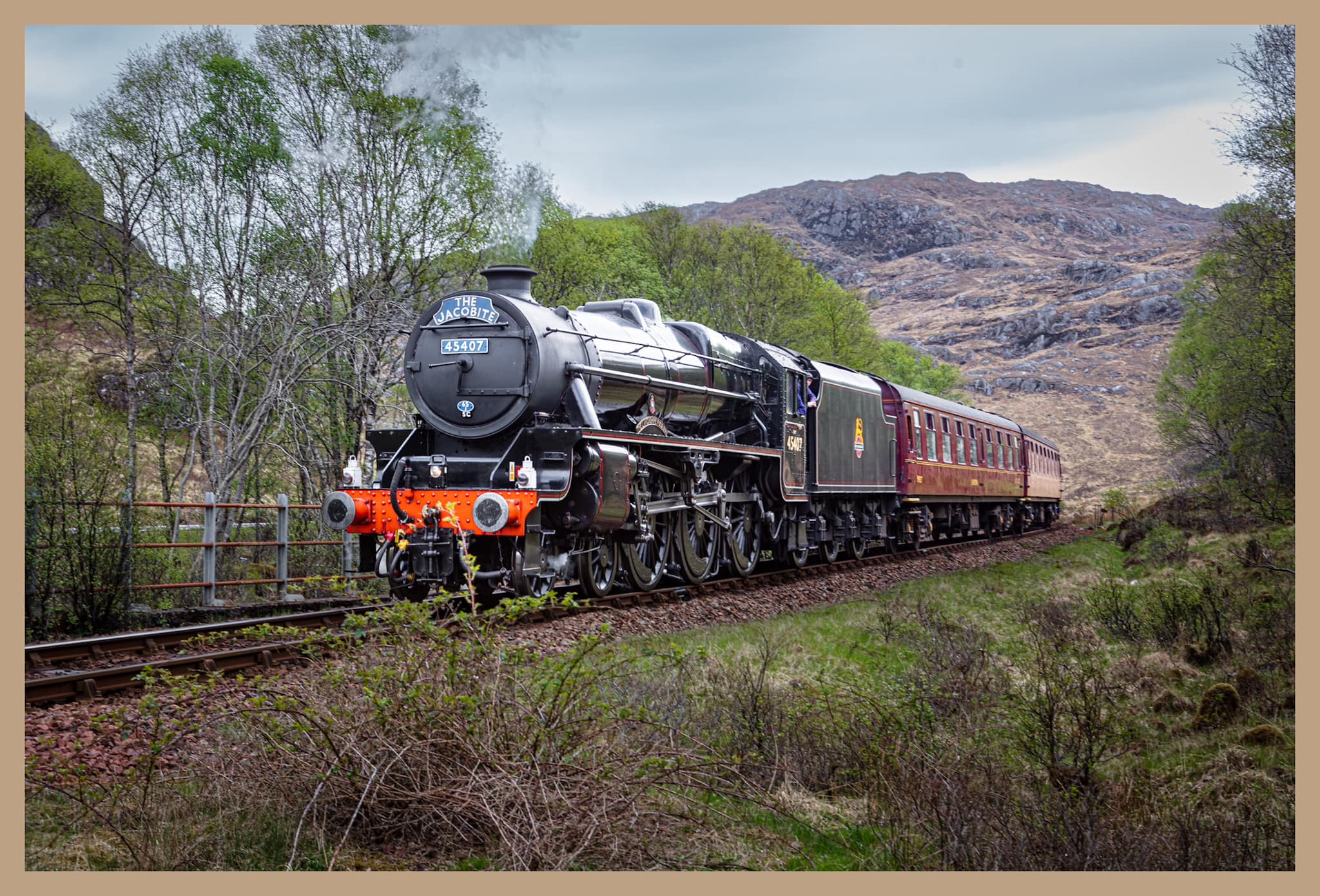
The Jacobite steam train, mid-journey along the West Highland Line.
Patience became my greatest ally as I waited for those perfect moments — whether the train chugging across the iconic Glenfinnan Viaduct, framed by the arches and surrounded by breathtaking landscapes, or the steam billowing dramatically as it meandered through the curves of the tracks. This kind of patient waiting is something I’ve come to rely on again and again, much like revisiting familiar photography locations and simply letting the moment arrive.
Witnessing the Jacobite Train
The long-awaited moment finally arrived. Standing on the chosen vantage point, anticipation coursing through my veins, I caught the distant sound of the Jacobite Train’s whistle. The ground beneath me seemed to vibrate in harmony with the approaching locomotive.
As the train emerged from the horizon, it was a sight to behold. The polished metal gleamed in the sunlight, while the rhythmic chuffing of the engine echoed through the air. The train moved with grace and power, enveloped in a cloud of steam that added an ethereal quality to the scene.
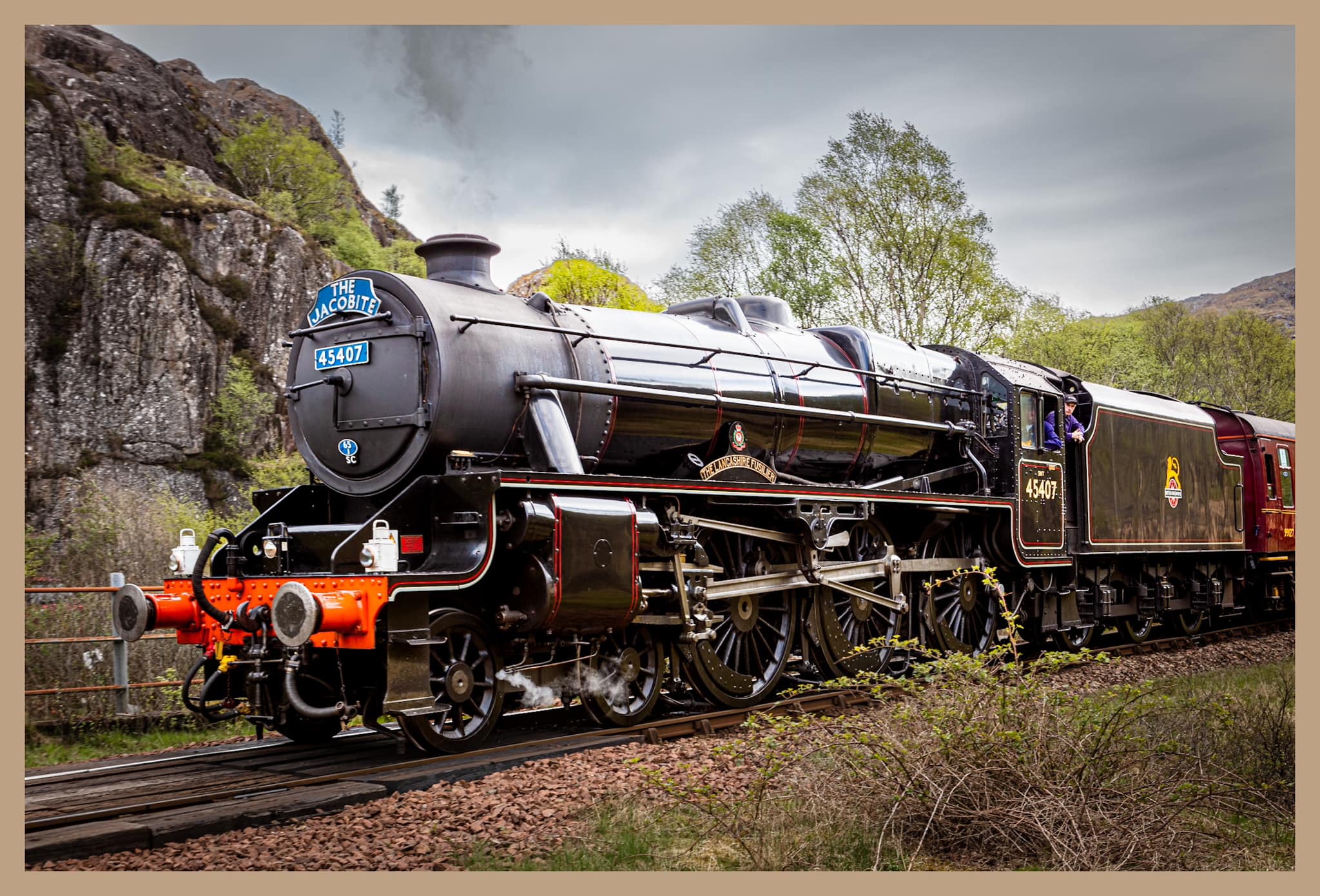
The engine itself, gleaming as it approached.
My heart raced as I aimed the camera, capturing the train as it passed by. The click of the shutter became a symphony of capturing the sights and sounds — the iron wheels on the tracks, the billowing steam, and the mesmerising motion of the steam train.
Filmed on an iPhone mounted to the camera, recording the live action while shooting stills.
The Aftermath: Reflections and Lasting Memories
As the train faded into the distance, leaving behind a trail of memories, I couldn’t help but reflect on the incredible journey I had undertaken. The Jacobite Train photography adventure had not only allowed me to capture captivating images but had also etched indelible memories into my heart.
Interactions with fellow enthusiasts and locals added depth to the journey — conversations sparked by shared passions, stories of the train’s significance in local communities, and warm camaraderie built along the way, all reminders of the power of travel and photography to connect people.
The Jacobite Express, recorded at Fort William, Scotland.
Conclusion
Jacobite Train Photography — immortalising the steam train journey in Scotland — had taken me on an extraordinary adventure, blending a passion for photography, history, and the allure of steam trains. Through the lens, I had captured the magnificence of the Jacobite Train against the backdrop of Scotland’s enchanting landscapes, freezing fleeting moments in time and preserving the nostalgia and grandeur of this iconic mode of transport.
So, grab your camera, embrace the spirit of adventure, and embark on your own steam train photography odyssey. Remember to respect any safety guidelines, local rules, and the natural environment when photographing the Jacobite train and the Glenfinnan Viaduct.
| Element | Details |
|---|---|
| Location | Glenfinnan Viaduct, Fort William, Scottish Highlands |
| Camera | Canon EOS 5DSR |
| Lenses Used | 24-70mm, Sigma 150-600mm Sport |
| Lens Wished For | 70-200mm |
| Trip Context | Part of an NC500 Scotland road trip |
| Focus | Steam, motion, viaduct composition, patience |
Where can I photograph the Jacobite train?
The Jacobite train, famously known as the “Hogwarts Express” from the Harry Potter films, operates on the West Highland Line in Scotland. Good locations include the Glenfinnan Viaduct, Glenfinnan Station before departure, and various scenic points along the West Highland Line itself.
Which side of the Jacobite train is best for photography?
The right-hand side, when facing the direction of travel, is usually considered best, since the train typically runs with the more scenic views on that side.
Where is the best place to take pictures of the Glenfinnan Viaduct?
Recommended spots include the viewpoint near the visitor centre, the elevated perspective from the Glenfinnan Monument, and the shore of Loch Shiel for a reflection-based composition.
How do you photograph the Glenfinnan Viaduct?
Check the train schedule so the crossing coincides with your visit, shoot during golden hour for warm, soft light, experiment with different angles including the arches and surrounding landscape, and use a tripod for sharpness in low light or long exposures.
What lens is best for photographing the Jacobite train?
A 70-200mm offers the best balance of reach and flexibility for most viaduct compositions — long enough to isolate the train, short enough to keep the surrounding landscape in frame.
What time of year is best to photograph the Jacobite train?
The train runs from spring through autumn, with each season offering a different character — misty spring mornings, green summer hillsides, or golden autumn colour around the viaduct.
Do you need a tripod for photographing the viaduct?
A tripod helps significantly, particularly for long exposures in low light or when using longer telephoto lenses where stability becomes more important.
Is drone photography allowed at Glenfinnan Viaduct?
Drone photography may be possible with proper authorisation, but local regulations and privacy considerations should always be checked and respected before flying.
This article is part of my Landscape Photography hub series.