
Some lenses announce themselves immediately. Others reveal their strengths slowly, over the course of a walk, a season, or a familiar stretch of water revisited under different light. The Canon RF 28mm f/2.8 STM firmly belongs in the latter category.
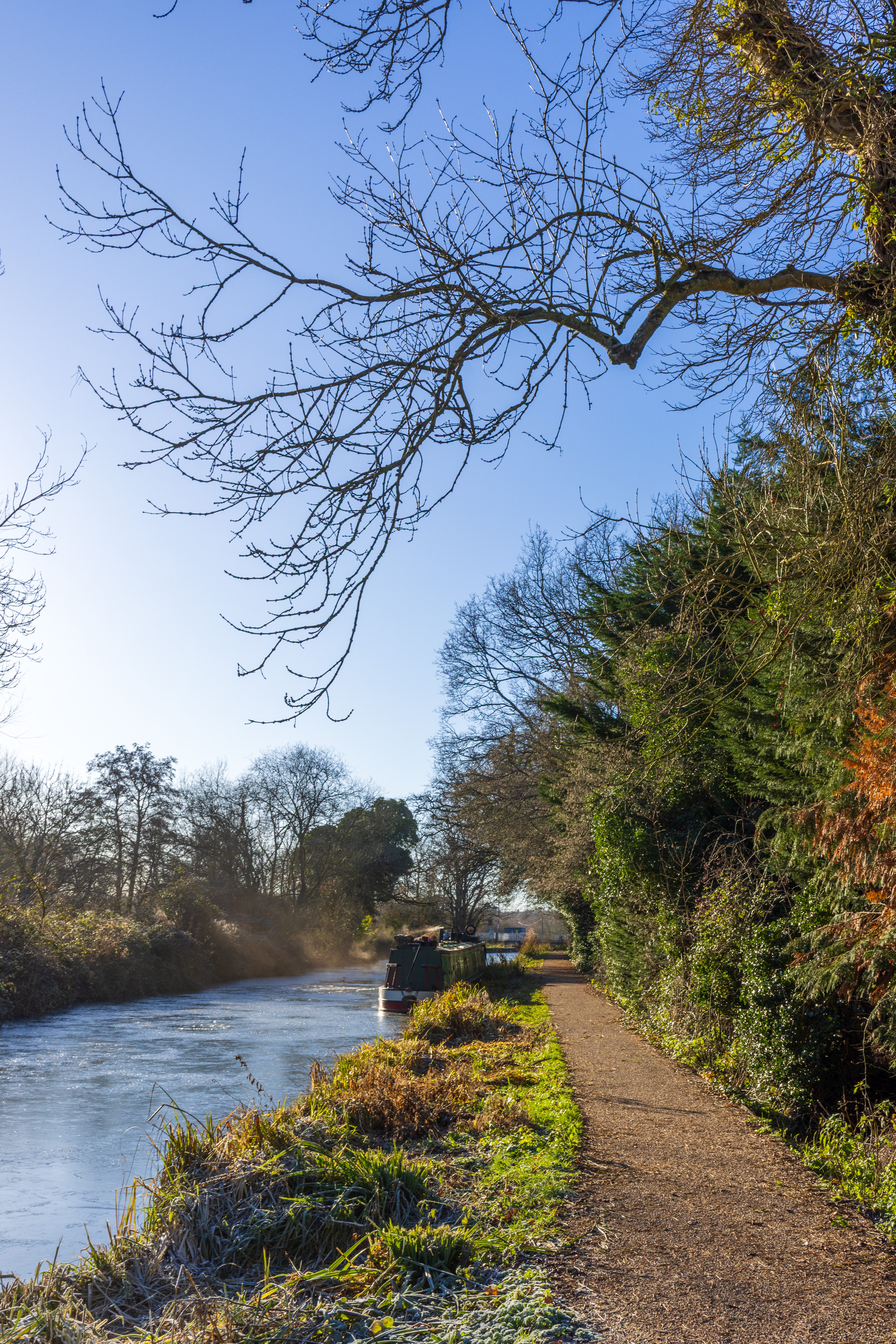

I field-tested this lens in early January, walking the Kennet and Avon Canal with my Canon R5. The day was bright but cold, the winter sun sitting low enough to skim the water and challenge flare resistance. These are conditions I know well — the sort that quickly expose whether a lens is merely competent, or genuinely enjoyable to use.
This review isn’t based on test charts or studio measurements. It’s based on walking, stopping, noticing, and photographing — which, for me, is where a lens truly earns its place. See my Photography Beginners Guide for more.
Why the 28mm Focal Length Still Matters
The 28mm focal length sits in an interesting space. It’s wide without being dramatic, expansive without becoming theatrical. For documentary, landscape, and reflective walking photography, it offers context without distortion.
On the Canon R5’s full-frame sensor, 28mm feels natural. It allows the environment to breathe while still letting subjects exist quietly within it — towpaths, winter trees, boats moored for the season, and the subtle geometry of water and light.
This is a focal length I often return to when I want to stay observant rather than intrusive.
Build Quality and Handling
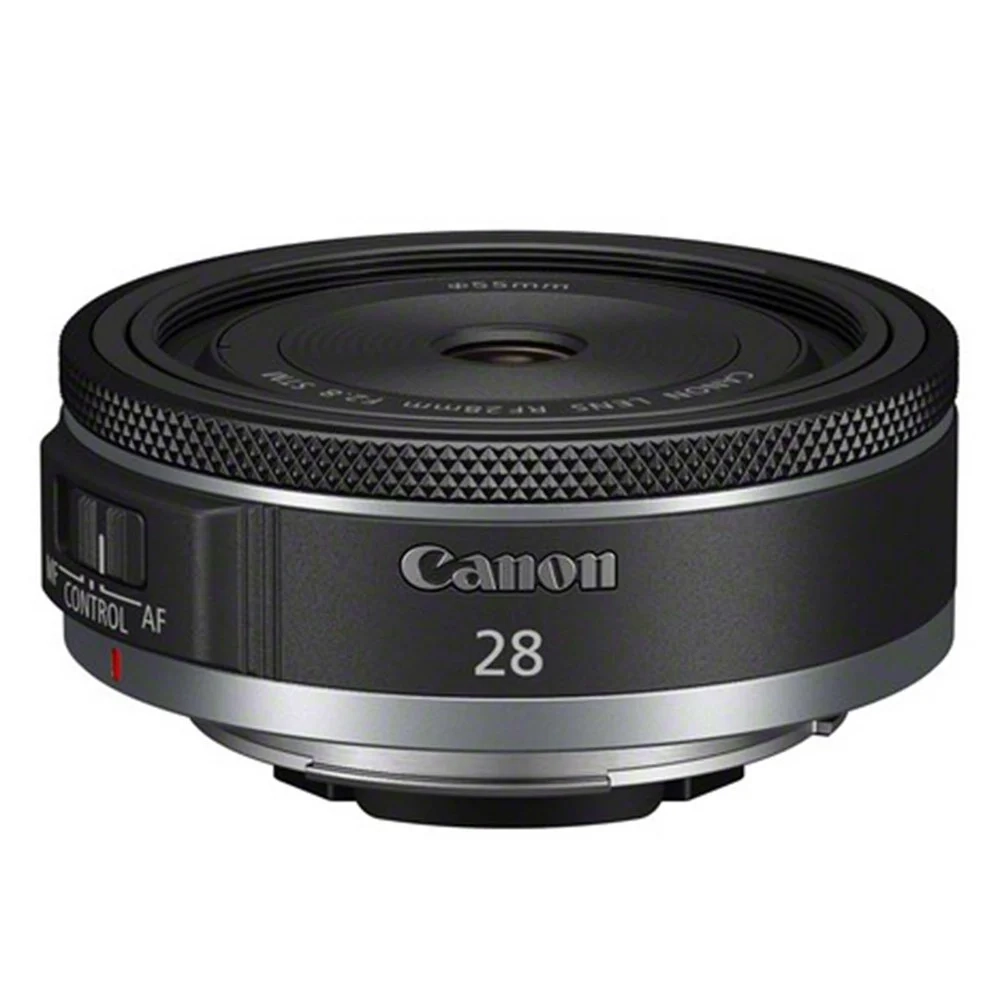
The Canon RF 28mm f/2.8 STM is compact, light, and unassuming. It doesn’t draw attention, either visually or physically. Mounted on the R5, it creates a surprisingly well-balanced setup — one that encourages longer walks without fatigue.
The lens barrel is clean and minimal, with a combined focus/control ring that works smoothly for manual focus or exposure adjustments. There’s no unnecessary bulk here, and that restraint suits the lens’s intended role.
This isn’t a lens designed to impress on paper. It’s designed to be carried.
Buying Second Hand: Condition and Confidence
This particular lens was purchased second hand, described as being in mint condition — a description that proved entirely accurate. The glass was spotless, the mount unmarked, and the lens body indistinguishable from new.
I bought it from LCE (London Camera Exchange), a UK-based specialist in used photographic equipment. Their grading is clear and, in my experience, conservative. Starting with a lens in genuinely excellent condition meant I could assess performance with confidence, without second-guessing alignment, focus accuracy, or optical flaws.
Buying used has long been part of my photographic practice. It fits well with a slower, more deliberate approach — and often removes the pressure of expectation that comes with buying new.
In the Field: Walking the Kennet & Avon Canal


The Kennet and Avon Canal is an ideal testing ground. Open water, narrow paths, reflective surfaces, winter vegetation, and a constantly shifting relationship between sun and subject.

The low January sun produced strong highlights and frequent flare opportunities. Shooting into the light was unavoidable — and intentional.
In these conditions, the RF 28mm f/2.8 STM performed with quiet confidence. Contrast held up well, colours remained natural, and while lens flare was present when shooting directly into the sun, it was controlled rather than chaotic. In some frames, the flare added atmosphere rather than distraction.
This is a lens that seems comfortable with imperfection — and that suits my way of working.
Autofocus Performance on the Canon R5
Autofocus is fast, silent, and accurate. The STM motor pairs well with the R5’s AF system, locking focus without hesitation whether photographing still subjects or moving reflections on the water.
For walking photography, this matters. I want focus to disappear as a consideration, allowing attention to remain on framing and light. In that respect, the lens performs exactly as it should.
Manual focus is equally usable, particularly when working slowly or pre-focusing for layered compositions.
Image Quality: Sharpness, Rendering, and Character

Sharpness is more than sufficient across the frame, even wide open. But what interested me more was rendering — the way the lens transitions between focus and softness, and how it draws edges without harshness.
On the R5’s high-resolution sensor, the lens holds detail well while avoiding an overly clinical look. Textures remain believable, particularly in winter scenes where subtle tonal shifts matter more than micro-contrast.
This is not a lens that demands attention. It supports the image rather than dominating it.
Flare, Filters, and Future Accessories
Shooting into a low winter sun revealed predictable flare behaviour: occasional veiling flare and small artefacts when the sun entered the frame directly. In most cases, these effects were manageable — and sometimes welcome.
At the time of testing, the lens was used without a filter or lens hood, which provided a clean baseline for evaluating flare behaviour. I’ve since ordered a K&F UV filter and a third-party lens hood, both of which I plan to test and review separately.
Starting with a clean, unfiltered lens made it easier to understand how accessories might alter contrast, flare control, and overall rendering — something I’ll explore in more detail in a future review.
Technical Specifications
| Specification | Canon RF 28mm f/2.8 STM |
|---|---|
| Mount | Canon RF |
| Focal Length | 28mm |
| Maximum Aperture | f/2.8 |
| Minimum Aperture | f/22 |
| Autofocus Motor | STM |
| Minimum Focus Distance | Approx. 0.23m |
| Filter Thread | 55mm |
| Weight | Approx. 120g |
| Format Coverage | Full Frame |
Who This Lens Is For
This lens will appeal to photographers who value:
- walking and observational photography
- documentary and environmental work
- lightweight, unobtrusive setups
- quiet, reliable performance over technical spectacle
It’s particularly well suited to photographers who prefer to work slowly, respond to light, and revisit familiar places.
Who It Might Not Suit
If you’re looking for:
- extreme subject isolation
- dramatic wide-angle distortion
- weather-sealed, pro-grade construction
…then this may not be the right tool. And that’s fine — this lens isn’t trying to be everything.
FAQ: Canon RF 28mm f/2.8 STM
Is the Canon RF 28mm f/2.8 STM sharp enough for high-resolution cameras like the R5?
Yes. It holds up well across the frame and resolves plenty of detail for real-world use.
How does it handle flare?
Shooting into the sun produces some flare, but it’s generally controlled and often aesthetically pleasing rather than disruptive.
Is it suitable for landscape photography?
Absolutely, especially for photographers who favour context, layering, and atmosphere over extreme wide-angle effects.
Does it balance well on larger bodies?
Surprisingly well. On the R5, it creates a comfortable, walkable setup.
Is it worth buying second hand?
Yes — provided it’s from a reputable dealer and well graded. In this case, condition was indistinguishable from new.
Final Thoughts
The Canon RF 28mm f/2.8 STM isn’t a lens that shouts. It walks alongside you, does its job quietly, and lets the photograph take precedence.
Used along the Kennet and Avon Canal on a bright, cold January day, it proved itself reliable, unobtrusive, and enjoyable — qualities I value more with every passing year.
It’s a lens I expect to keep mounted often, particularly when the intention is simply to walk, look, and respond.
Disclosure
This lens was purchased independently, second hand, with no sponsorship or incentive from Canon or LCE (London Camera Exchange). All observations are based on personal use in the field.



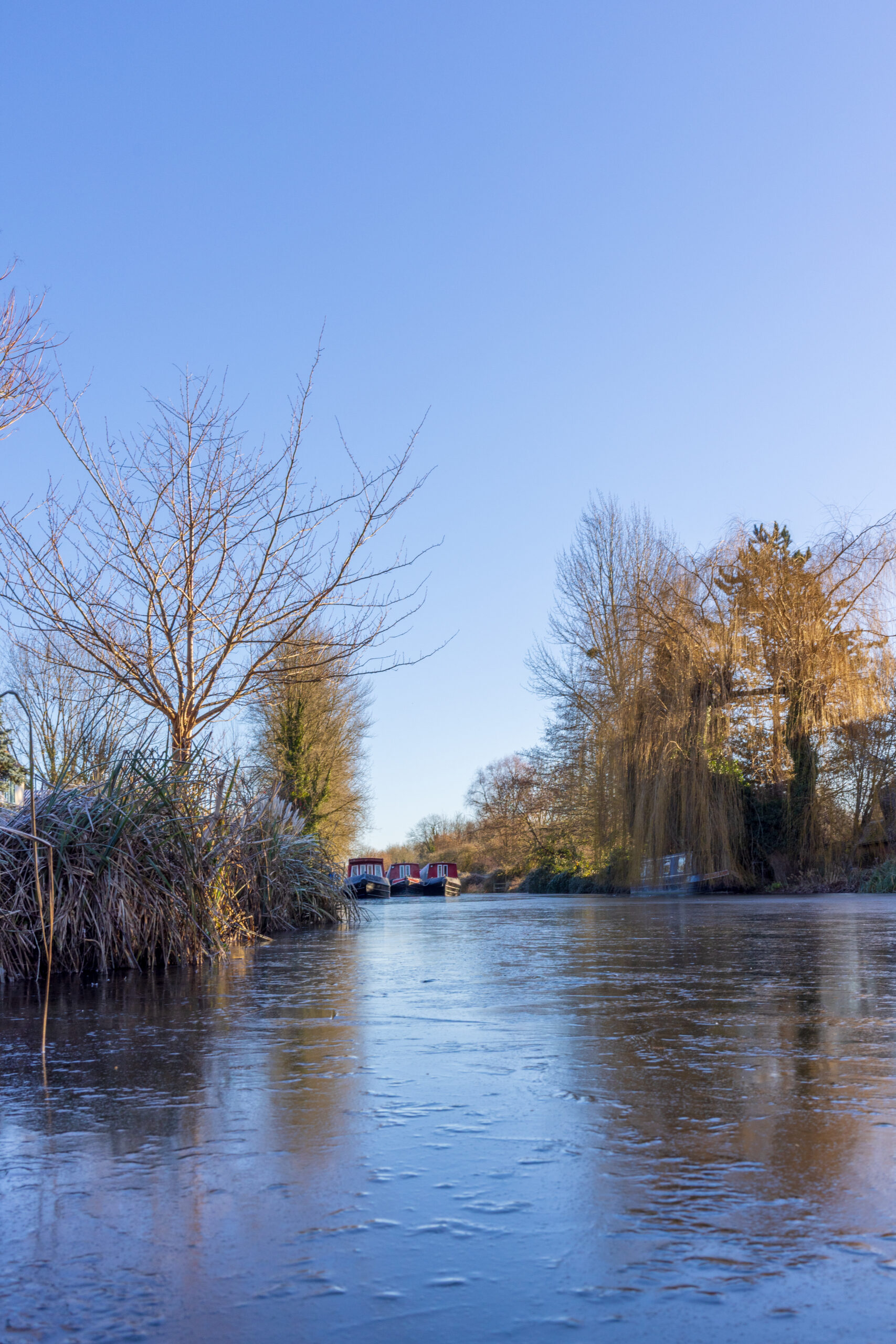

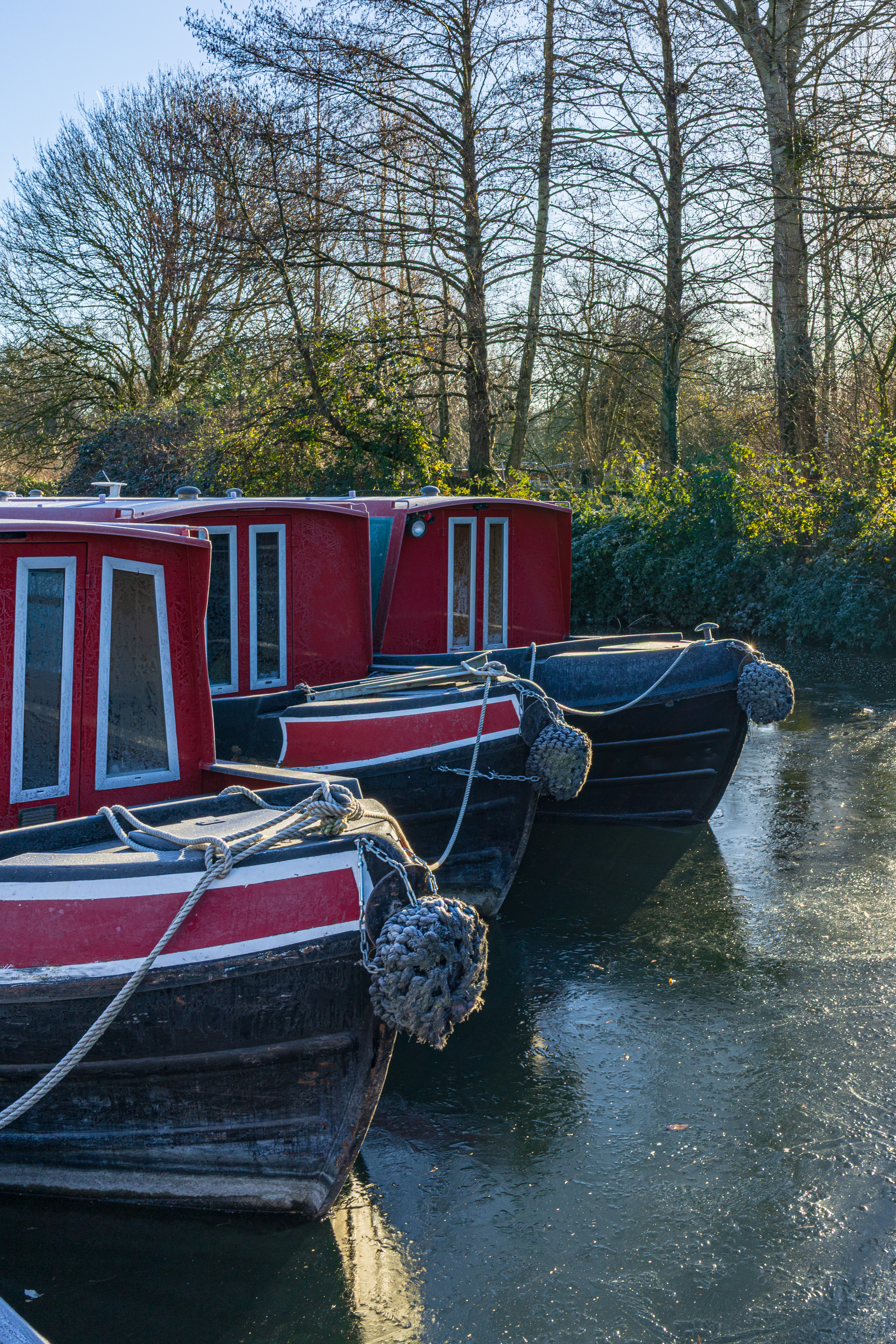

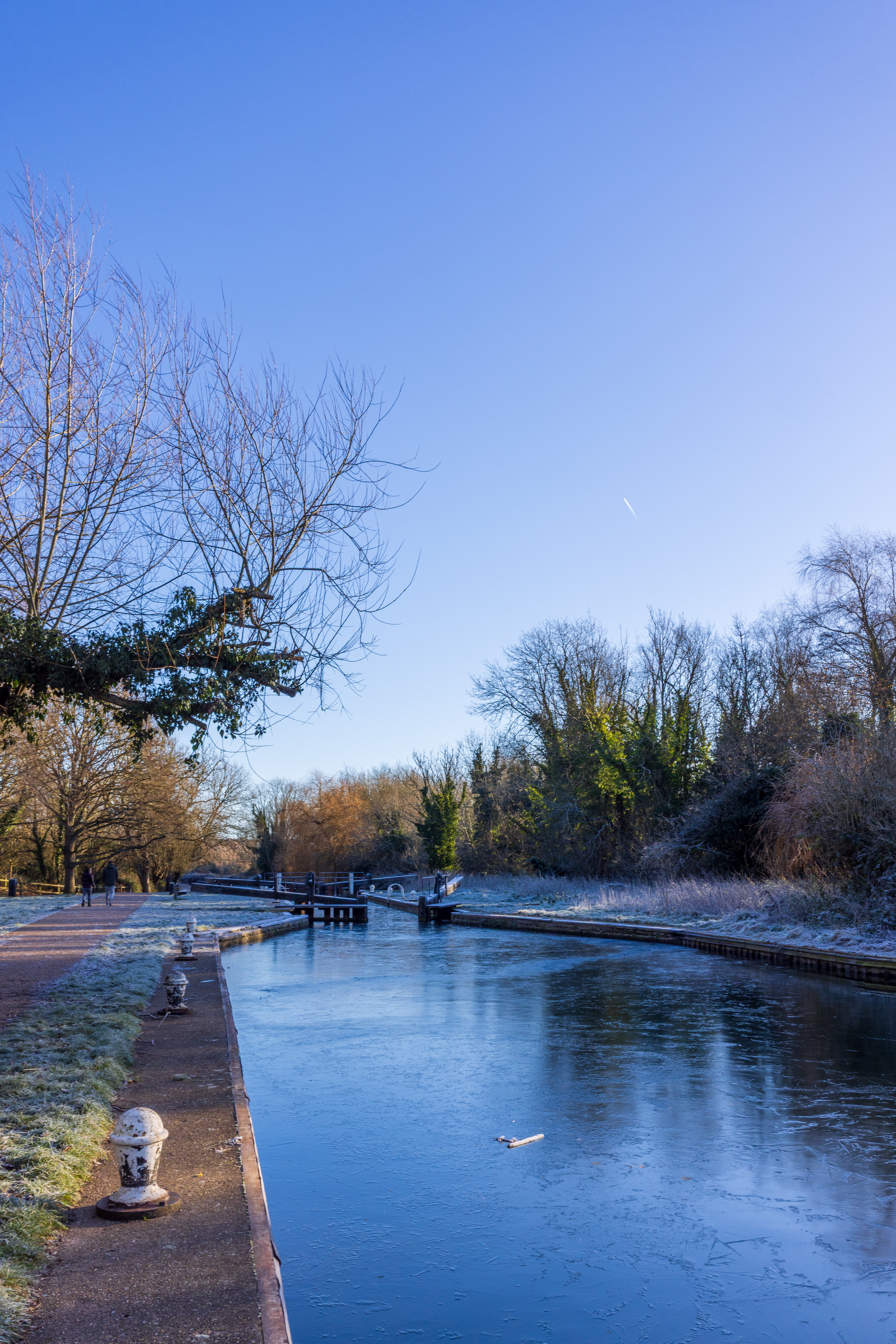
Image Set from this Test
This article is part of my Photography Kit Reviews hub series.