

There are places where history feels distant—reduced to dates, fragments, and museum glass. And then there are places like Calleva Atrebatum, where the past sits quietly in the present, waiting to be noticed.
Here, the walls do not speak loudly. They do not instruct or explain. They simply remain. This is a place to walk slowly, to observe, and to photograph not just what is visible—but what is felt.
If you’re interested in a more practical approach to working with soft, diffused light, I’ve also written a beginner’s guide to photographing British landscapes, which explores how overcast conditions can shape mood and composition.
A Roman Town Beneath the Grass
Calleva Atrebatum was once a thriving Roman settlement, its streets laid out with precision, its walls enclosing a structured world of trade, governance, and daily life. Today, much of it lies beneath open fields.
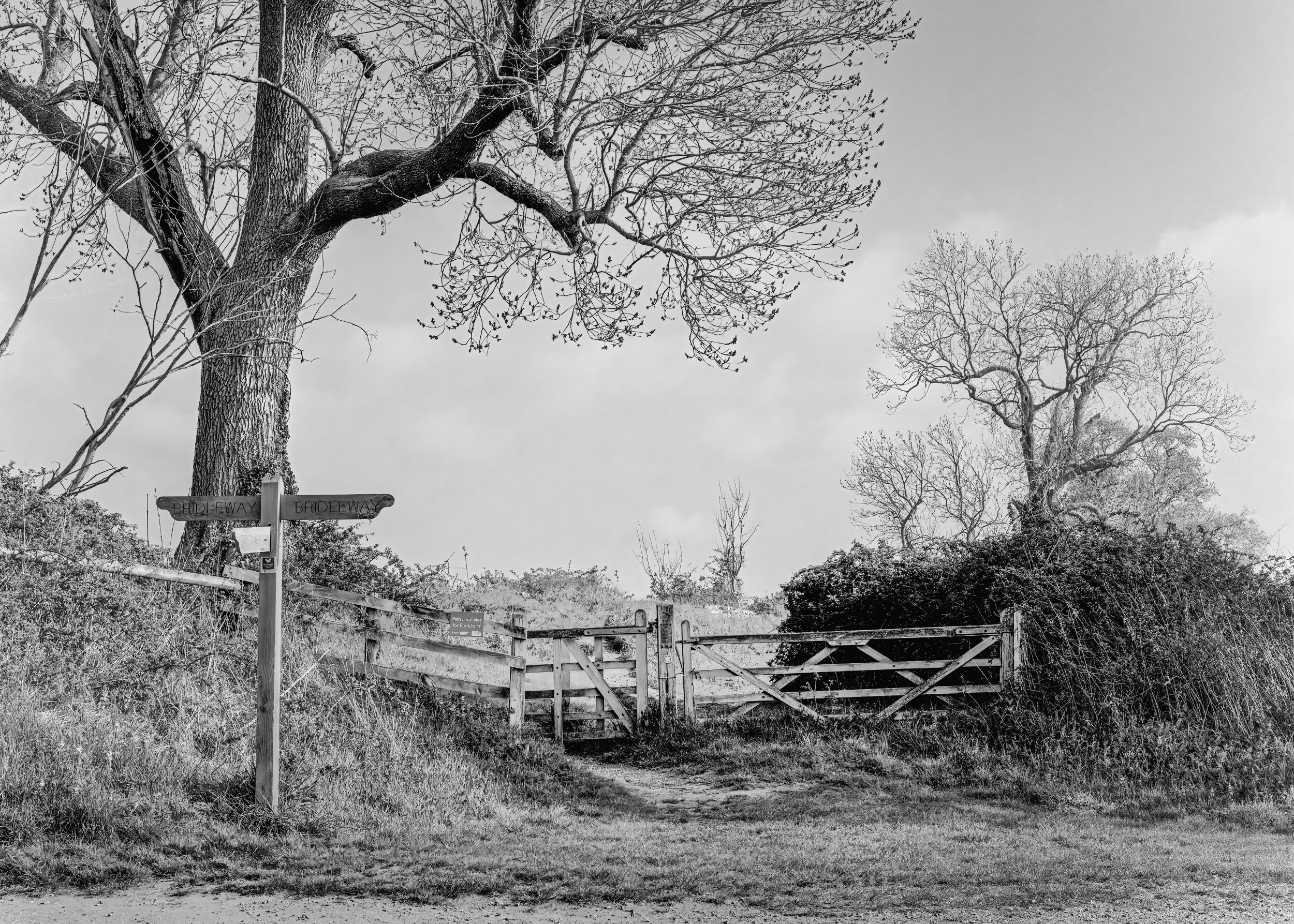
The geometry remains, but softened.
Earth has reclaimed stone. Grass grows where roads once ran. And the surviving walls—weathered, broken, and incomplete—trace the outline of something that refuses to fully disappear.
Photographing here is not about documenting ruins. It is about responding to absence.
Black and White as a Language of Time
Colour can distract. It can anchor an image too firmly in the present. Black and white, by contrast, creates distance.
It simplifies the scene, allowing texture, light, and form to take precedence. The stone of the walls, the grain of the surrounding fields, the softness of the sky—these elements begin to speak in quieter, more deliberate ways.
In a place like this, black and white photography feels less like a stylistic choice and more like a necessity. It aligns the image with the subject.
This way of working closely connects with a broader approach to minimal and atmospheric photography, where simplicity and restraint become central to the image.
Why Film Matters Here
Digital photography is precise, efficient, and endlessly flexible. But it often feels too immediate for a place defined by time.
Film slows everything down.
Using 35mm and medium format cameras introduces a deliberate process:
- Fewer exposures
- Greater consideration of composition
- A deeper awareness of light and timing
If you’re exploring film more deeply, you may find my thoughts on shooting black and white film in natural light useful, particularly when working in quiet, overcast conditions.
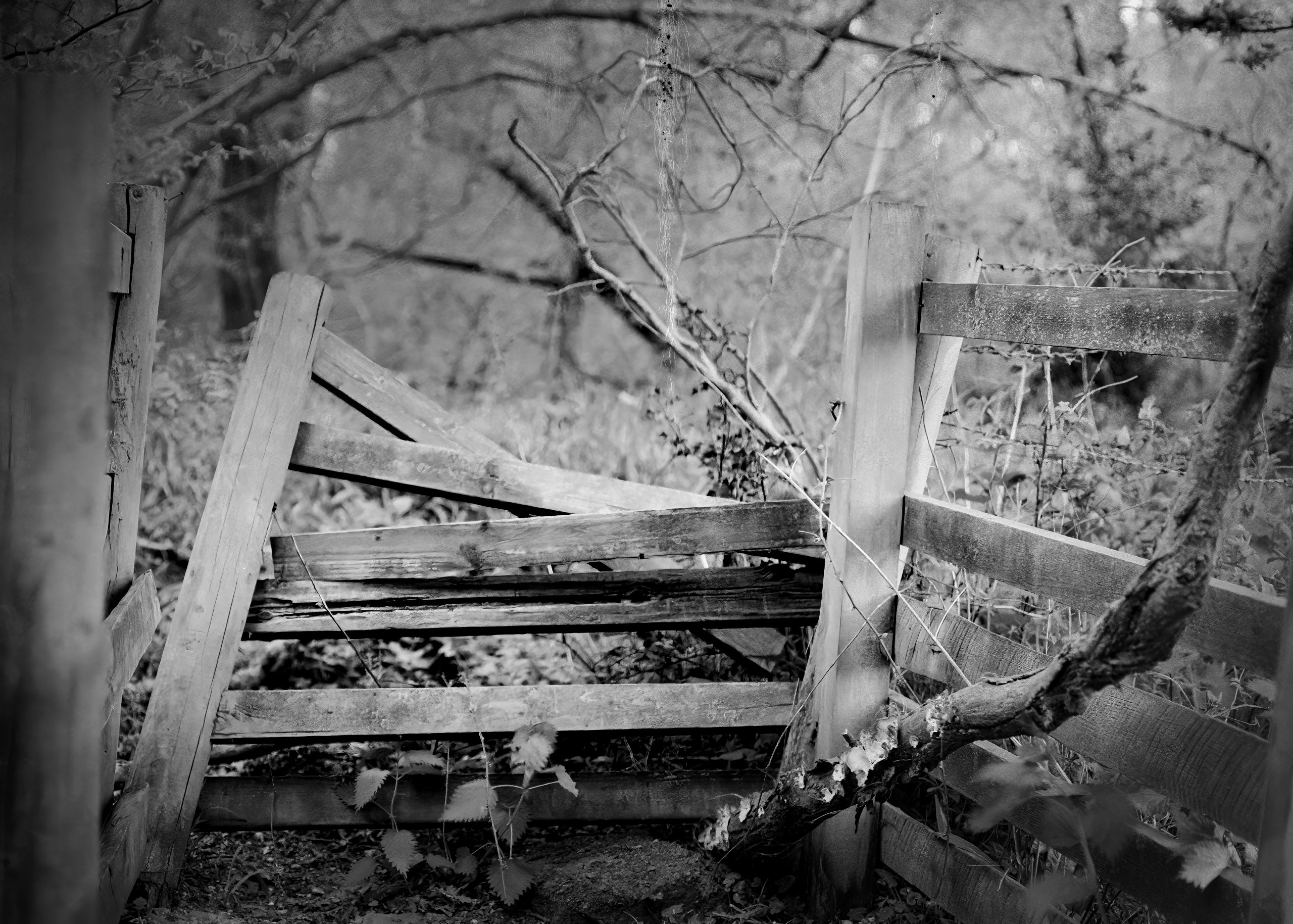
Each frame becomes a decision rather than a reaction.
Film also renders the landscape differently. Grain softens the image. Highlights roll gently. Shadows hold detail without harshness. The result is not clinical—it is interpretive.
This matters when photographing somewhere like Calleva Atrebatum.
You are not trying to record it exactly as it is. You are trying to respond to how it feels.
35mm vs Medium Format in the Landscape
Both formats offer something distinct when working in black and white.
35mm Film
- More spontaneous
- Lighter, easier to carry
- Well suited to walking and responding quickly
35mm allows for a more fluid experience. You can move, observe, and react without interruption.
Medium Format Film
- Slower, more deliberate
- Greater tonal depth
- Stronger presence in the final image
Medium format encourages stillness. It asks you to pause, to consider the frame more carefully, to commit fully before releasing the shutter.
Neither is better.
Both shape the way you experience the place.
And that, ultimately, is what matters.
Walking the Site
There is no single viewpoint here.
No obvious composition.
The most compelling images often emerge from:
- Edges of the walls
- Transitions between field and stone
- Subtle changes in elevation
- The quiet presence of St Mary’s Church, Silchester beyond the Roman perimeter
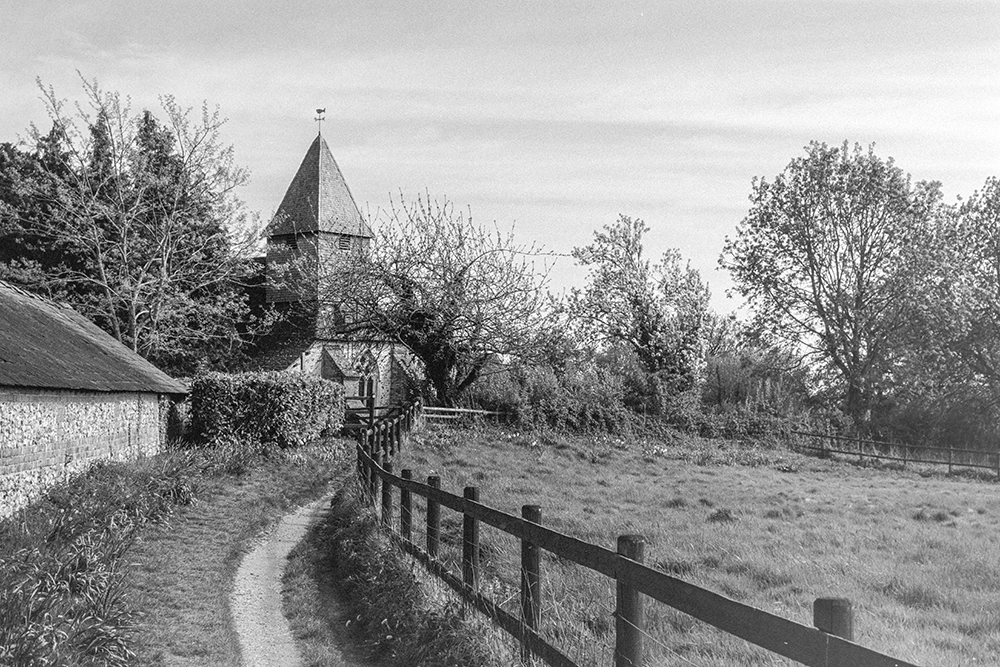
You walk. You stop. You wait.
And slowly, the place begins to reveal itself—not through spectacle, but through repetition and quiet detail.
Photographing Absence
What makes this landscape powerful is not what remains, but what is missing.

The town is gone.
The people are gone.
What persists are fragments—suggestions of structure, traces of intention.
Photography, in this context, becomes less about capturing subjects and more about acknowledging absence.
Empty space matters. Soft light matters. Restraint matters.
Much of my work across the British countryside follows a similar quiet, observational approach, particularly when working in soft light and minimal conditions.
A Slower Way of Seeing
Working with black and white film in a place like Calleva Atrebatum encourages a different rhythm.
You are not chasing images. You are allowing them to emerge.
Overcast skies, shifting light, and quiet conditions are not limitations—they are essential. They reduce distraction and bring the subtle qualities of the landscape forward.
This is not dramatic photography.
It is attentive photography.
Where the Wall Whispers
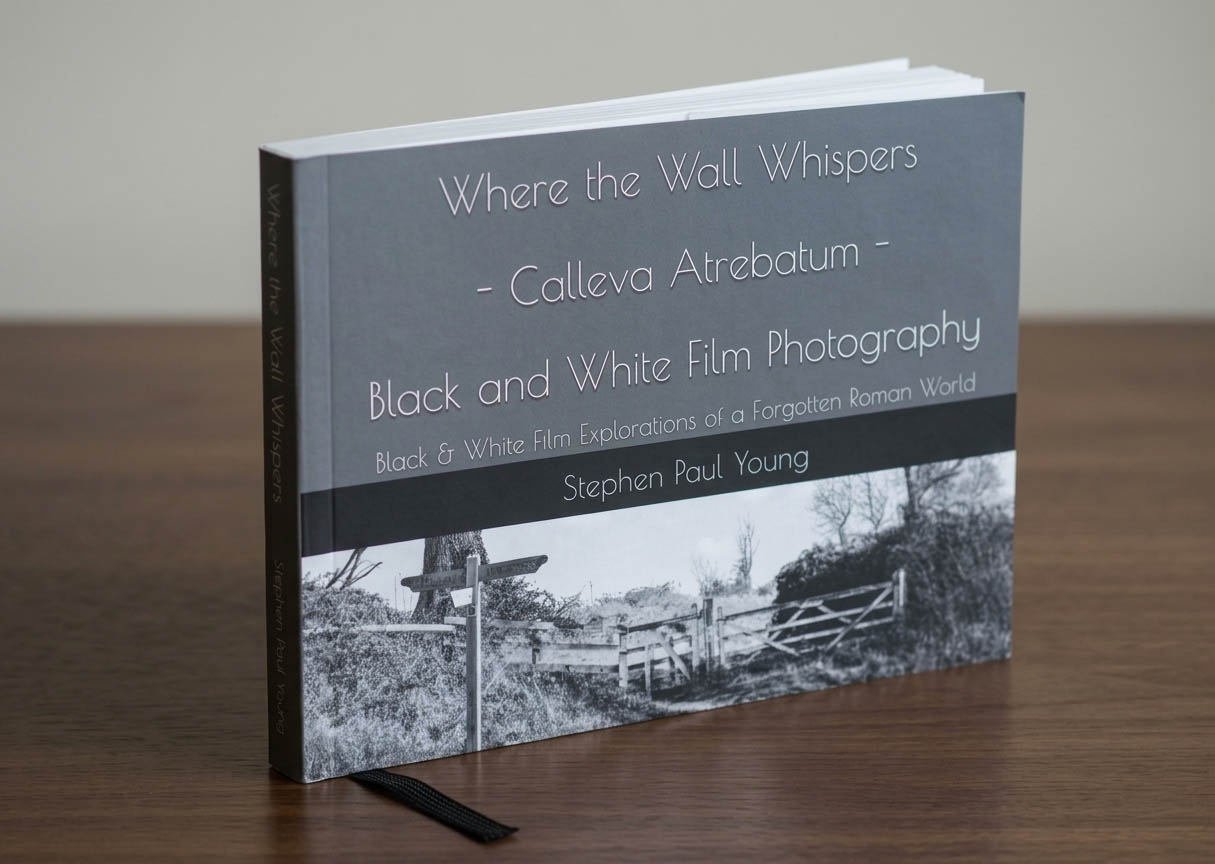
This approach, and these repeated visits, form the basis of my book:
Where the Wall Whispers: Calleva Atrebatum — Black and White Film Photography
The book is not a guide. It does not teach technique or offer instruction.
Instead, it is a visual exploration—a quiet study of a place where history, landscape, and photography intersect.
It invites you to slow down, to observe, and to experience something that cannot be easily explained.
Final Thoughts
There are many remarkable landscapes to photograph.
Few ask for stillness in the way this one does.
Calleva Atrebatum is not about spectacle. It is about presence.
And sometimes, the most meaningful images are the ones that whisper rather than shout.
