
A practical buying guide for film photographers
Black & white film photography has always involved compromise — between speed and grain, contrast and flexibility, convenience and control. Recently, though, one compromise has become unavoidable: cost.
Film prices have risen, availability can be unpredictable, and photographers are increasingly asking a simple question after choosing a film stock:
“Where should I actually buy it?”
This guide is here to answer that — calmly, realistically, and without pretending there’s a single perfect solution.
If you’re still deciding which film to shoot, you may want to start with Choosing the Right Film
👉 https://fineartpics.co.uk/choosing-the-right-film
What Do We Mean by “Affordable” Film?
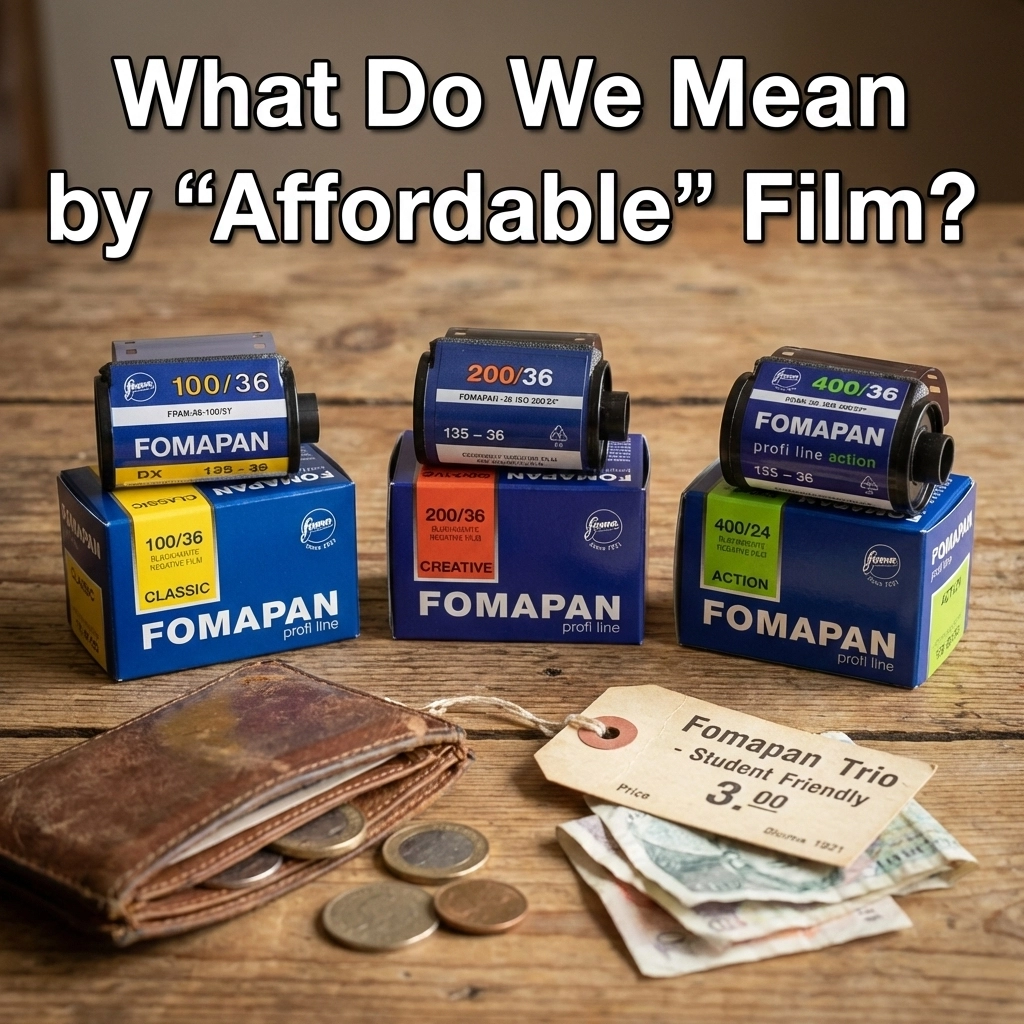
In this context, affordable doesn’t mean disposable or low quality. It means:
- Film you can shoot regularly without hesitation
- Stocks that are forgiving enough to learn with
- Traditional emulsions with known behaviour
- Sensible pricing relative to what they offer
Affordable film often comes with trade-offs — simpler packaging, less marketing polish, or slightly less consistency between batches. But for many photographers, that’s a fair exchange for accessibility.
If you’re new to film entirely, it’s worth grounding yourself first in What Is Film Photography?
👉 https://fineartpics.co.uk/what-is-film-photography
A Real-World Example: Budget Film in Practice
One reason “budget” films generate so much discussion is that they’re unpredictable — sometimes frustrating, sometimes surprisingly good.
A good example is Lucky SHD400, a high-contrast black & white film that divides opinion but remains popular because of its price and character.
I’ve written about my experience with it here:
👉 https://fineartpics.co.uk/lucky-shd400-review
It’s a useful reference point for understanding what affordable film actually looks like once it’s been exposed, developed, and scanned.
UK-Based Retailers Worth Knowing
For most photographers in the UK, buying locally is still the simplest and most reliable option.
Rather than ranking shops by price, it’s more helpful to understand what each is good for.
Analog Wonderland
A widely used retailer with a broad range of black & white film, including less common and imported stocks when available.
Best for:
- Exploring unfamiliar emulsions
- One-stop browsing
- Reliable dispatch
AG Photographic
Well established and particularly respected by darkroom users.
Best for:
- Traditional black & white films
- Developers, paper, and chemistry
- Long-term consistency
Analogue Films
Often competitive on price and a good option for buying multiples of the same stock.
Best for:
- Stocking up
- Familiar, dependable emulsions
Nik & Trick
Smaller and more curated, with a personal feel.
Best for:
- Thoughtfully chosen stock
- Supporting independent analogue retailers
Silverprint
A long-standing name in UK analogue photography.
Best for:
- Classic films
- Darkroom-focused workflows
Buying from Europe: When It Makes Sense
European suppliers can be useful, but they’re not always the best choice for casual purchases.
Retailers such as Fotoimpex or Maco Direct sometimes have better access to traditional or niche films — particularly Fomapan or ORWO stocks.
Buying from Europe tends to make sense if:
- You’re ordering in bulk
- A specific film is unavailable in the UK
- You’re comfortable with VAT and import charges
For single rolls or everyday shooting, UK retailers are usually simpler.
Affordable Black & White Films to Look For
These films appear frequently in discussions about value and accessibility:
- Kentmere 100 / 400 – consistent, forgiving, and widely available
- Kentmere 100 review: https://fineartpics.co.uk/kentmere-pan-100-review
- Kentmere 400 review: https://fineartpics.co.uk/kentmere-pan-400-review
- Fomapan 100 / 200 / 400 – traditional look with strong contrast options
- Fomapan 100 review: https://fineartpics.co.uk/fomapan-100-review
- Fomapan 200 review: https://fineartpics.co.uk/fomapan-200-review
- Fomapan 400 review: https://fineartpics.co.uk/fomapan-400-review
- Lucky SHD400 – characterful, imperfect, and divisive
If you want a broader overview of how these films fit into the wider analogue landscape, Black & White Film Photography is a useful companion piece:
👉 https://fineartpics.co.uk/black-and-white-film-photography
A Note on Buying Film Here
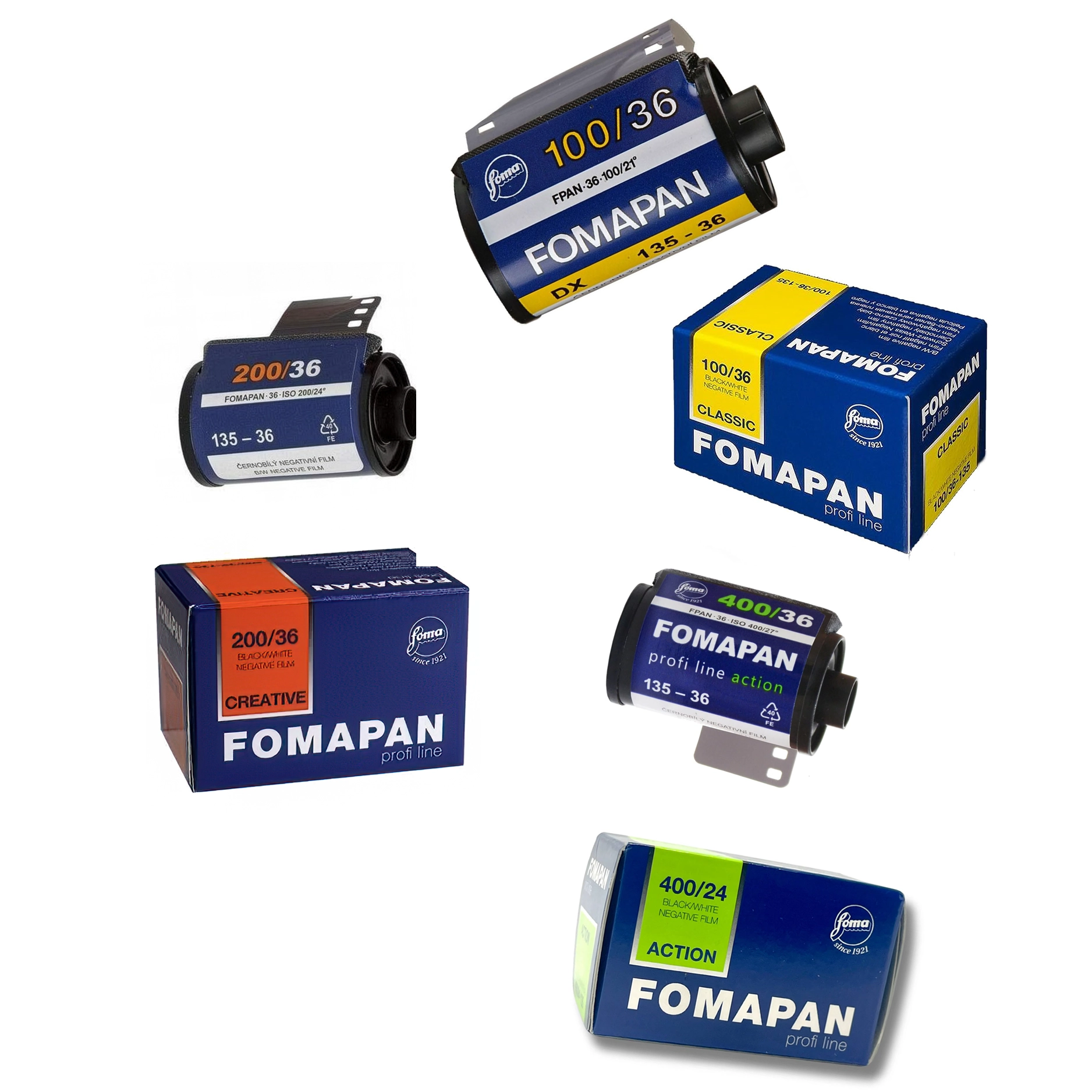
Alongside writing about film photography, I also stock a small, curated selection of black & white film.
I don’t try to carry everything. The films available here are ones I’ve:
- Shot myself
- Written about in detail
- Come to understand through use
If you prefer buying film with context — knowing how it behaves and what it’s best suited to — you can find what’s currently available here:
👉 https://fineartpics.co.uk/shop
Common Pitfalls When Buying “Cheap” Film
Before choosing purely on price, it’s worth keeping a few realities in mind:
- Datasheets may be limited or outdated
- Development times can vary by batch
- Contrast may be higher than expected
- Testing one roll before committing is wise
None of these are deal-breakers — but they reward photographers who approach affordable film deliberately rather than casually.
If you’re still learning how different films behave, Film Photography Guide is a good grounding resource:
👉 https://fineartpics.co.uk/film-photography-guide
Final Thoughts
Affordable black & white film keeps photography accessible. It encourages experimentation, reduces hesitation, and makes it easier to keep shooting — even when conditions aren’t perfect.
Whether you buy from a major UK retailer, a specialist European supplier, or directly through this site, the important thing is not where the film came from, but what you do with it.
Film rewards those who keep loading cameras.
No Responses